

If we are going to see something at the Munich IAA , it is undeniably SUV cars . This trend makes sense when considering the importance of these vehicles in the market. However, the real novelty lies in the motorization . The great European Motor Show has increasingly turned into a platform for the electric revolution , with brands such as Volkswagen , Mercedes , and Leapmotor leading the charge. Among these, one brand is determined to not only spotlight a more electric category but aims to redefine how we charge our vehicles : Porsche .
Tomorrow, from September 14 , Porsche will unveil its new Cayenne Electric . Curiously, in the company’s press release, it only detailed two characteristics: its innovative ‘electrofluorescent’ paint and a groundbreaking feature dubbed ‘Porsche Wireless Charge’ .
Porsche Wireless Charge
As the name suggests, Porsche’s new system revolves around wireless charging technology . This method isn’t entirely new; BMW introduced its system back in 2011 with the BMW 530E . Siemens also contributed to this technology, and various third-party brands have offered their solutions since then.
Essentially, these systems involve a charging platform placed on the floor, allowing the car to be parked directly on it. By aligning the car’s inductive coil with the charger, the vehicle can begin charging. For user convenience, the infotainment screen will guide drivers on how to align the vehicle with the charger.
What makes this new offering innovative is its power capability . While BMW’s system offered a maximum of 3.2 kW , Porsche claims it will be the first to market with an 11 kW charging system . Porsche explains, “The inductive charge is applied similarly to how smartphones and electric toothbrushes are charged.” The operation mirrors that of the wireless chargers we use daily—but on a much grander scale.
This charging platform operates without the need for connection to a wall box or control unit. It features a transmitter coil that transfers energy wirelessly to the car’s receiver coil; the energy is converted into direct current that can be stored in batteries. Notably, the coil is positioned between the front wheels and is designed to withstand stones and other environmental factors.
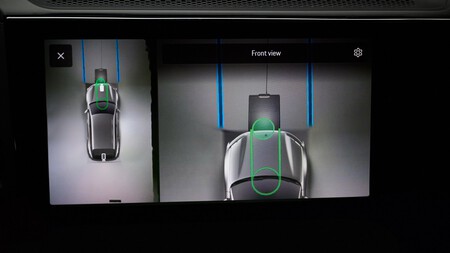
On the screen, we see the load platform and get help to align the coils
Requiring significant floor space, the platform measures 1.17 meters in length , 78 centimeters in width , and 6 centimeters in height . It can be utilized in both residential garages and outdoor areas, weighing in at 50 kilos . The Cayenne Electric will be the first model to offer an optional pre-installation of the Porsche Wireless Charge and the Porsche Wireless Plate .
Notably, the charging plate is equipped with a movement detector that halts charging automatically if a person or object obstructs the charging path.
Challenges in Wireless Charging
However, it is crucial to address the downsides associated with wireless charging . Users with mobile devices equipped with this feature have likely noticed increased heating during charging. This phenomenon occurs as wireless methods typically deliver less power due to energy loss in the form of heat. Thus, while wired solutions achieve greater energy transmission efficiency, the same cannot always be said for wireless alternatives.
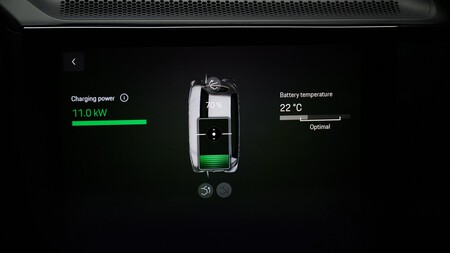
This results in a definitive heat loss, making it less efficient than wired options. To counteract this, the Cayenne lowers its profile to remain as close as possible to the charging base, which enhances energy transfer efficiency. Porsche claims they achieve a 90% transfer efficiency , allowing a mere 10% loss in energy through heat rather than impacting battery performance directly.
Despite these challenges, the convenience of wireless charging technology is evidently noteworthy. At home, this innovation has made everyday tasks simpler. Imagine a professional fleet of electric vehicles being charged in their parking lot without individual charging stations for each vehicle. The potentials for such systems on public roads are impressive.
The expansion of the charging network is critical for the widespread adoption of electric cars. Recent developments in the Netherlands have led to a surge in charging points , positioning the country alongside Norway —a haven for electric vehicles—boasting one of Europe’s most advanced charging infrastructures. Porsche emphasizes that “ease of use, daily utility, and charging network infrastructure are decisive factors for electric mobility acceptance,” suggesting that wireless charging platforms will play a significant role in this transition.
Currently, 11 kW may seem trivial when juxtaposed with the 400 kW DC charging that the Cayenne can achieve via a cable; however, German automotive innovation consistently aims to improve efficiency and power over time. Notably, the technology’s debut in the Cayenne underscores its significance, as it remains the brand’s most popular model (in terms of sales).
Ultimately, this evolution demonstrates how modern vehicles increasingly resemble smartphones on wheels , with each advancement echoing opportunities for further innovation in automotive technology.