
In the realm of digital information, Google’s search results page stood as a beacon of web links, representing the very foundation of the Internet. However, we are witnessing a transformative shift as AI technologies are reshaping not only how we search but also how content is shared and monetized online. This evolution brings with it a myriad of implications, particularly for media outlets and content creators.
Ironically, Google’s messages appear to be at odds with each other. On one hand, executives convey an optimistic narrative about the health of web traffic, while on the other, they hint at challenges that could threaten the digital landscape.
Contradictory Messages from Google Executives
In early August, Liz Reid, who leads Google’s search division, published an article asserting that the click volume from search results had remained “relatively stable” compared to the previous year. In May, Nick Fox, another key player at Google, echoed this sentiment during a podcast called AI Inside, stating that “from our point of view, the web is thriving.” Meanwhile, Sundar Pichai, Google’s CEO, claimed in a Decoder interview that the search engine is effectively directing traffic to a diverse range of sources and editorial groups.
However, internal documents recently unveiled during the U.S. antitrust trial against Google reveal a different narrative. The company conceded that “The open web is in rapid decline.” This stark admission contradicts the previously projected optimism about web traffic and raises alarm about the future of online media.
Compounding the situation, Penske Media, the parent company of notable publications such as Rolling Stone and Variety, has filed a lawsuit against Google, claiming the tech giant’s use of AI-generated summaries is unfairly siphoning off traffic from original sources. These summaries provide quick answers to users’ queries, which potentially reduces the motivation for users to visit the source articles, jeopardizing the revenue streams for content creators reliant on website traffic.

José Castañeda, a spokesman for Google, responded to these allegations, asserting, “With AI Overviews, users find the most useful search results, leading to greater discovery of content.” He pointed out that Google continues to send billions of clicks to websites globally, emphasizing that AI-generated summaries direct traffic to a broader variety of sites.
The Evolving Landscape for Media Outlets
According to a study conducted by Press Gazette, only five out of the top 50 media outlets analyzed experienced growth in web traffic between August 2024 and August 2025. Prominent names like The New York Times saw traffic declines of 7%, while CNN, The Washington Post, and Forbes faced even steeper drops of 38%, 40%, and 50%, respectively. These statistics offer a clear view of a troubling trend: traditional traffic that was once a staple of Google’s search results is diminishing rapidly.
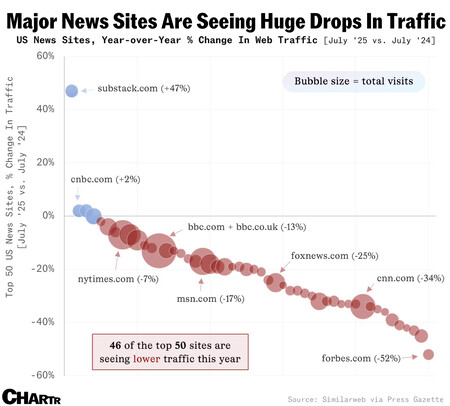
Source: Sherwood News graph with data from Press Gazette.
This decline can be attributed to the evolving nature of Google’s search results pages, where AI-generated summaries now often precede traditional links. Instead of listing multiple blue links to websites, users are presented with condensed information that fulfills their queries—often without the need to visit the original sources.
The Future of Search: From Links to Conversational AI
Google appears to be certain about the direction it wants to take. The introduction of *AI Overviews * marks the beginning of a broader rollout of conversational search capabilities. Logan Kilpatrick, head of Google AI Studio, highlighted that the new *AI Mode *, which mimics conversational interactions, is already operational on a limited basis (google.com/ai).
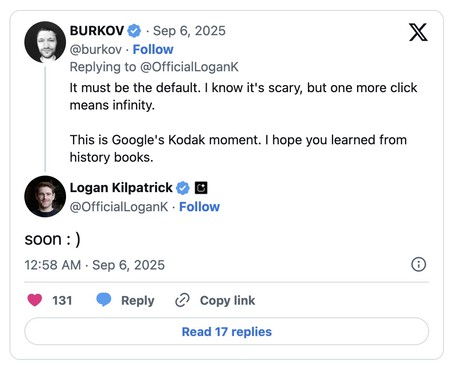
Responses to these developments have been mixed. While some users advocate for AI Mode as the future of search, others caution that this shift could compromise the integrity of traditional SEO practices. Experts suggest that while SEO may not disappear, it may face irrelevance as the AI system takes precedence in delivering answers directly to users.
The stakes are high not just for content creators, but for Google itself. As traffic decreases for publishers, so too will ad visibility, impacting Google’s advertising revenue model. Plans are reportedly in motion for Google to integrate ads directly into these AI summaries, potentially creating new revenue streams while raising ethical questions about content monetization and ownership.
As this situation unfolds, the future landscape of online content and media remains uncertain. Understandably, many creators are apprehensive about how these changes will impact their livelihoods and the very fabric of the digital ecosystem.
Image | Solen Feyissa