
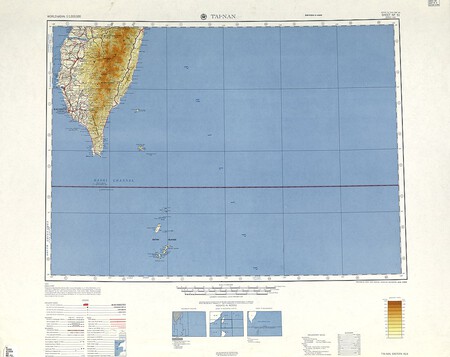
Taiwan: A Strategic Balancing Point
For some time now, Taiwan’s position in the global strategic balance has transformed into a focal point of power competition between the United States and China. The island symbolizes not just a political identity for Beijing but also a commitment to democratic values for Washington. Geographically, Taiwan serves as a crucial node within the military architecture of the Pacific.
The Importance of Maritime Distances
Maritime access to Taiwan, along with the surrounding air routes, plays a critical role in defining how far Chinese forces can project their power and how effectively they can be contained. This narrow strategic corridor does not merely represent physical distance but geopolitical stakes that can deeply influence international relations.
The Shifting Landscape of Geopolitical Borders
The emerging crisis surrounding Taiwan is composed of specific islands and narrow maritime corridors, illustrating how local decisions can evolve into broader geopolitical implications. Such developments have turned small communities into unforeseen geopolitical battlegrounds.
The Bashi Channel: A War Strait
Recent reports underscore the United States’ ongoing strategy to control the Western Pacific straits, evident through continuous military exercises and missile deployments in the northernmost islands of the Philippines. The province of Batanes, once a tranquil territory dedicated to fishing, has garnered attention due to its strategic position at the southern end of the Bashi Channel connecting the South China Sea to the Pacific.
The Arrival of the U.S. Military Arsenal
A near-permanent military presence established in the Philippines features mobile missile systems aimed at blocking surface ships. This ongoing military buildup highlights the First Island Chain, intended to contain China’s influence beyond its coastal waters. Such military readiness alters daily life for local populations, who remain aware of historical precedents that could change their routines drastically.
Bashi is located between Mavulis Island and Orchid Island.
The Paradox of Philippine Policy
The Philippine government finds itself in a precarious situation, unwilling to be embroiled in a potential conflict but recognizing the geographical implications should hostilities arise. President Ferdinand Marcos Jr.’s administration has significantly renewed military cooperation with the U.S., facilitating expanded access to bases in Luzon and increasing joint military exercises.
Preparing for Possible Contingencies
In anticipation of a conflict over Taiwan, the Philippines has begun preparing for potential scenarios, including the return of Filipino workers from the island. This preparation includes contingency plans to manage agricultural and logistical processes, reflecting a state of caution amid uncertainty.
China’s Perspective on Reunification
For Beijing, the Taiwan question is an internal matter. The Chinese leadership views reunification as an inevitable and historic direction, holding that any foreign intervention violates its sovereignty. This assertion reinforces the interpretation of U.S. military actions as attempts to restrict China’s operational freedom.
Washington’s Strategic Ambiguity
In the realm of diplomacy, former President Donald Trump has reiterated that Xi Jinping understands the consequences of any aggression towards Taiwan while maintaining a strategic ambiguity regarding U.S. military involvement. This ambiguity serves to deter Beijing while also preserving decision-making capabilities for Taipei.
The Importance of Key Islands
Preparation for a potential conflict is not confined to power centers; it occurs in island territories where civilians rely on supply lines. This delicate balance between military presence and local life means that future conflicts will not solely be resolved at diplomatic summits but also through the actions taken in these small, strategic territories.
Conclusion: A Shifting Balance
The combined military presence of the U.S., the Chinese maneuvers, and the opaque stance of Washington create an unstable equilibrium that profoundly affects life in the Philippines and surrounding regions. The future of this area may redefine not only regional dynamics but also the broader global order.