

The Revival of Railroads in Latin America: A Journey Towards Modernization
The advent of the railroad and its subsequent infrastructure expansion marked the dawn of a new era in mobility for both people and goods. However, this transformation did not unfold uniformly across the globe. While the United States prioritized the transportation of goods, other regions such as Europe , Japan , and China placed greater emphasis on passenger mobility. In contrast, the history of railroads in Latin America is complex, characterized by significant challenges and aspirations to modernize, fueled by substantial investments and international partnerships, particularly with China .
Difficulties abound when discussing Latin America as a collective whole. Each country has its unique attributes, yet several share common challenges, particularly regarding topography . The region is dotted with formidable natural barriers, such as mountains and jungles , complicating the construction of railroads. Additionally, the vast geographical dispersion within many of these countries raises costs when connecting distant and isolated regions. This scenario starkly contrasts with the extensive plains found in the U.S. and Europe.
Priorities during the initial development of railroad networks in Latin America did not align with current needs. Instead of constructing comprehensive systems aimed at efficiently moving people and goods between major cities, many rail lines were built with specific objectives, such as connecting agricultural or mining operations to export ports. This narrow focus resulted in incomplete networks that largely failed to facilitate efficient transportation within countries, contributing to fragmentation and underdevelopment. Political conflicts and privatization efforts over the years have exacerbated this issue, leaving many nations with limited vision for long-term developments.
Change of course is evident as countries begin to recognize and address these gaps. Nations like Argentina , Mexico , and Brazil experienced a railroad boom in the early 20th century, only to witness a decline in their systems thereafter. However, current initiatives indicate a revival. The Mayan Train , Mexico’s ambitious tourist project, aims to connect significant archaeological sites, promoting tourism without overwhelming transportation infrastructures. Furthermore, Claudia Sheinbaum’s administration plans to extend approximately 3,000 kilometers of railroads connecting major cities in central Mexico with both Texas and Arizona .
Beyond Mexico, other countries like Argentina, with a projected investment of $16 billion for road modernization backed by Chinese financing, are also moving forward with their railway projects. Chile and Peru are working on coastal network enhancements, while Colombia is also pursuing modernization efforts. Notably, Brazil’s plans are expected to be among the largest in the region.
Latin America is dreaming big. There are multiple rail initiatives. Most countries seek to improve and modernize their rail systems to build non-pollutant networks, says Héctor Varela, CAF Transport Specialist.
Estimated plans in Brazil encompass 50 projects requiring around $81.6 billion . These proposals include not only metro projects but also substantial expansions of passenger networks, aiming to create a transport system compared to the Panama Canal in terms of significance but for trains. The country’s objective is to extend its transport network from 2,007 kilometers to 4,500 kilometers by the year 2054 .
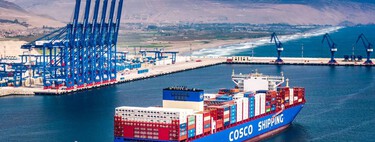
The Bioceanic Ferrovia , an ambitious project connecting Brazil and Peru, aims to create a rail corridor spanning 3,700 kilometers , linking the ports of Santos and Bayóvar . This initiative is projected to facilitate the transport of over 10 million tons of goods annually, emphasizing agricultural and mineral exports. Often referred to as the “Panama Canal by train,” it stands to enhance trade between Brazil and its neighboring countries while positioning China as a crucial player in regional trade dynamics.
Currently, around 155 rail projects are projected in Latin America, with total investments estimated at $384 billion by 2050 . The need for funds is spread fairly evenly across various countries. Brazil, for instance, would require $81.6 billion , while Colombia would need about $74.2 billion . Peru and Mexico follow closely behind with $63.9 billion and $63.2 billion , respectively.

Despite these ambitious projections by the Development Bank of Latin America and the Caribbean , numerous challenges exist. Issues like climate change impacts, particularly heavy rainfall that disrupts construction, as well as the intricacies of coordinating interstate projects amid fluctuating political climates will pose hurdles. As these initiatives take shape, the potential for a rail renaissance in Latin America appears promising.