
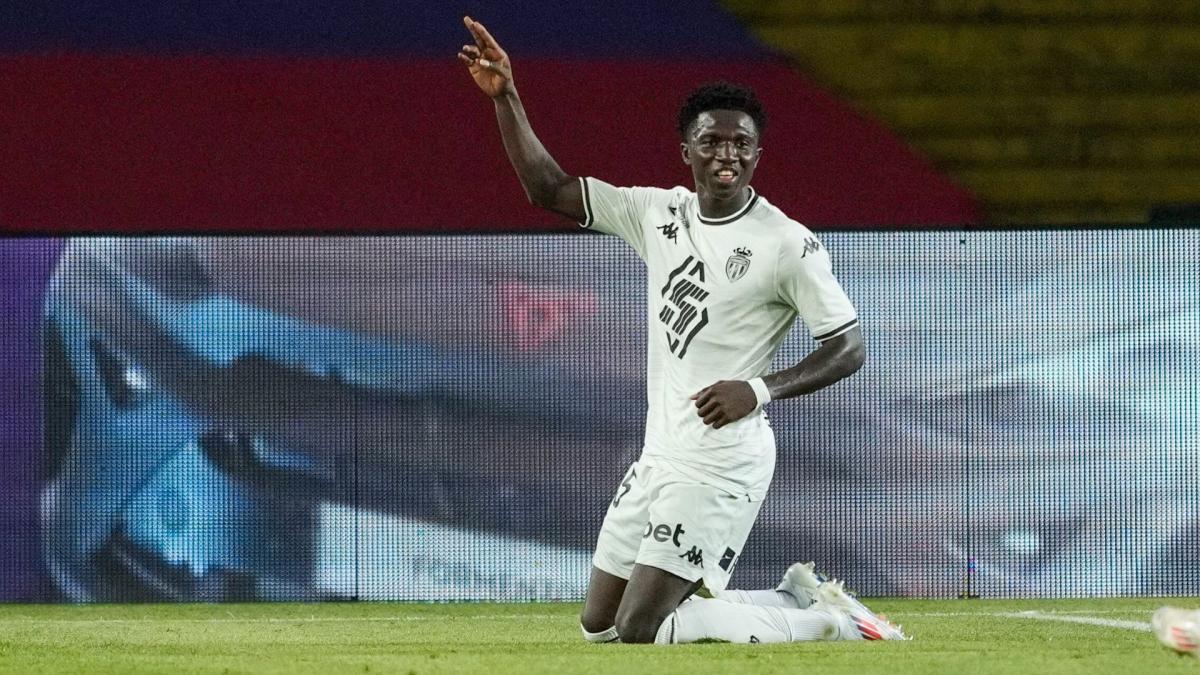
## Lamine Camara Breaks Silence
Lamine Camara recently faced the media ahead of an important clash against Marseille, marking his first public comments since the controversial tackle on Lucas Chevalier during the Monaco-PSG encounter on November 29. This incident has sparked significant discussions in the football community, especially given that what many deemed a reckless challenge led to only a yellow card rather than a red card, a decision later criticized by the Refereeing Department.
## The Controversial Tackle
Camara’s challenge on Chevalier raised eyebrows for its intensity and potential risk of injury. Following the match, viewers and analysts alike were left uncertain about the appropriateness of the referee’s decision. Many believed that a red card would have been the more suitable punishment for such a muscular intervention.
### Referee’s Decision Under Scrutiny
The aftermath of the event saw the Refereeing Department acknowledge the misjudgment, which fueled further debate in the sporting community. Two weeks post-incident, the Monegasque public and football enthusiasts were eager to hear Camara’s perspective on the matter.
## Camara Responds
During the press conference, Camara addressed the incident directly.
> “To give myself a red card? No, never. It was not intentional,” he stated, attempting to clarify his intent during the match.
His remarks aim to highlight that while the tackle was physical, it was not meant to injure or harm. He continued,
> “It’s still football. Afterwards, it’s not me who makes the decisions. It’s the referee. He didn’t give me a red card. I was happy to stay on the field to help my team.”
These comments, however, are unlikely to soothe the frustrations of Chevalier and his supporters, as many continue to feel that the decision was unjust.
## The Fallout
The tension surrounding this episode continues to simmer. With tensions high leading into the bout against Marseille, both teams are under pressure not only to perform but also to manage the emotional aftereffects of contentious moments from prior matches. Camara’s tackle has become a rallying point for discussions on player safety and referee accountability in the sport.
### Public Response and Community Sentiment
In the aftermath of the incident, the sentiment within the Monegasque community has been mixed. Many fans continue to support Camara, viewing him as a crucial player for the team’s ongoing campaign. Others, however, find the referee’s leniency unacceptable and demand better enforcement of rules to protect players on the field.
## Conclusion: Looking Ahead
As Monaco prepares for their upcoming match against Marseille, all eyes will be on Camara. How he performs under the pressure of scrutiny—and the potential backlash from his previous actions—will be critical. This incident not only emphasizes the fine line players walk during heated moments in matches but also signals a call for more robust discussions around accountability in football officiating. The league will undoubtedly keep a close watch as this narrative unfolds on the pitch.