
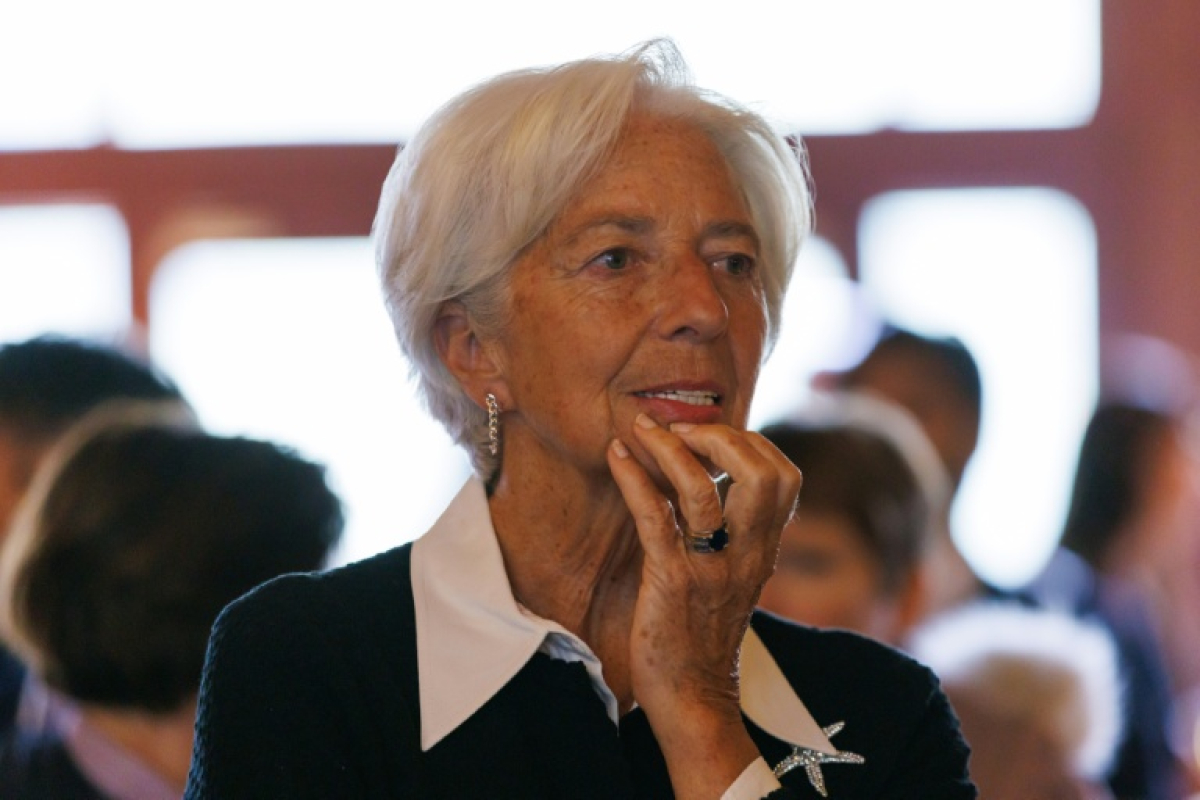
Christine Lagarde’s Response to Trump’s EU Criticism
In recent months, the tensions between the United States and the European Union (EU) have reached a boiling point, especially concerning trade policies and international relations. Christine Lagarde, the President of the European Central Bank (ECB), has emerged as a prominent voice in defending the EU amid harsh criticisms from President Donald Trump. In a recent interview with German broadcaster ARD, Lagarde condemned Trump’s "terrible language" regarding the EU, addressing the president’s assertion that the bloc was formed to "harm" the United States.
The Historical Context of the EU
Lagarde emphasized that the US has historically encouraged the formation of the EU. She firmly stated that claiming the EU was established with the intention of negatively impacting the US is "completely counterintuitive." This perspective challenges the narrative that positions the EU as an adversary, reinforcing the notion that collaboration and mutual benefit have long been the aim of transatlantic relations.
Trump’s Trade Policies
President Trump has made several remarks throughout the year regarding the EU, particularly concerning trade deficits. Earlier this year, he threatened to impose hefty tariffs on the bloc, citing its significant trade surplus with the US. This threat created significant anxiety among EU member states and has heightened the urgency for establishing a united front within the EU.
Lagarde’s Call for Dialogue
In response to Trump’s provocations, Lagarde stressed the importance of open dialogue between the EU and the US. She recognized that such criticisms are unfortunately part of a pattern that has developed in recent years. "We must engage in dialogue, we must work with his team and listen to their proposals," she asserted. For Lagarde, sitting idle and pretending the situation does not exist is not an option. This insistence on proactive engagement highlights her commitment to diplomatic solutions and reinforces the belief that negotiation is more beneficial than confrontation.
Recent Developments in Trade Relations
In a recent escalation of the trade dispute, President Trump threatened to impose a staggering 50% tariff on EU products starting from June 1. However, after a conversation with Ursula von der Leyen, the head of the EU, Trump decided to postpone the implementation of these tariffs until July 9. This development reveals the fluid nature of the trade discussions and the potential for negotiations to yield results.
Lagarde’s assessment of the situation underscores the complexities of international trade, particularly between powerful entities like the US and the EU. The current 10% tax on imports, which Trump enacted last month on various countries, adds another layer of difficulty to the situation for EU countries. Additionally, tariffs on essential commodities like cars, steel, and aluminum remain in place, affecting the EU’s economic stability and growth prospects.
Importance of Cooperation
Given the interconnectedness of the global economy, the necessity for cooperation between the US and EU is more pronounced than ever. Lagarde’s advocacy for dialogue reflects an understanding that mutual interests can often transcend individual nationalistic policies. By working together, both parties can potentially create a more stable economic landscape and set an example of international diplomacy.
Moreover, Lagarde believes that it is crucial for the EU to stand firm and demonstrate unity in the face of external pressures. "We need to make proposals, and we need to negotiate," she emphasized, indicating that the EU must not only respond to threats but also take proactive steps toward fostering stronger transatlantic ties.
Analyzing the Bigger Picture
The current tensions serve as a reminder of the broader challenges facing international relations today. Trade disputes often result in retaliatory measures, which can spiral into full-blown conflicts, causing significant economic repercussions. The ongoing dialogue initiated by leaders like Lagarde is essential for mitigating such risks and fostering a constructive relationship between disparate entities.
In summation, Christine Lagarde’s remarks encapsulate a pivotal moment in EU-US relations. As both sides navigate the turbulent waters of trade, her insistence on dialogue and cooperation stands out as a beacon of hope for a more collaborative future. The ability to bridge differences through negotiation will determine the trajectory of not just economic relations but also diplomatic ties in the years to come.
La présidente de la Banque centrale européenne (BCE), Christine Lagarde, le 20 mai 2025 à Banff, dans l’Alberta, au Canada. ( AFP / Cole Burston/ )