
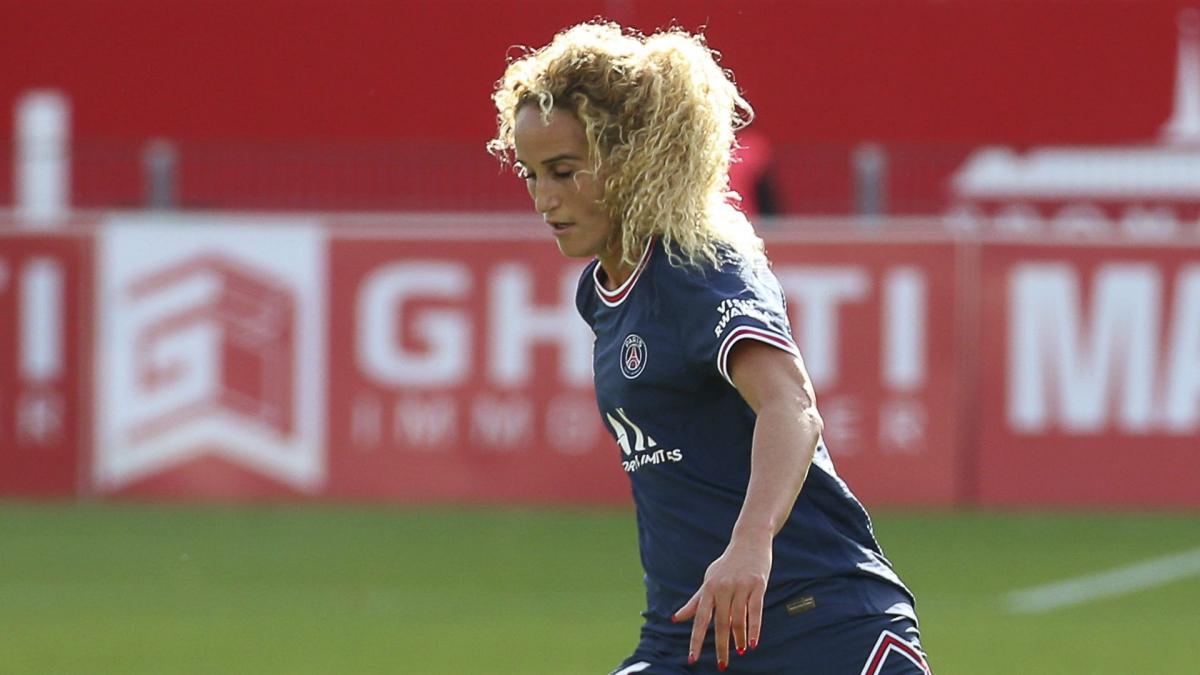
## Paris Industrial Court Rules Against Kheira Hamraoui
On Tuesday, the Paris Industrial Court delivered a significant ruling in favor of Paris Saint-Germain (PSG) regarding the ongoing legal dispute with former player Kheira Hamraoui. The court’s decision comes as a blow to Hamraoui, who had filed a lawsuit for moral harassment against the club, claiming damages amounting to €3.5 million. However, the court ultimately rejected all of her claims.
### Background of the Dispute
Kheira Hamraoui, a 35-year-old former French international, initiated legal action following a traumatic incident in November 2021, where she was assaulted. Hamraoui argued that the aftermath of this attack led to professional and personal distress that constituted moral harassment by PSG. Her lawsuit highlighted the profound effects that this incident had on her life, raising significant issues concerning player welfare and club responsibility.
Interestingly, the case was overshadowed by another high-profile legal matter involving PSG’s star player Kylian Mbappé. Unlike Hamraoui, who faced rejection of her claims, Mbappé’s case resulted in PSG being ordered to pay a staggering €61 million to the player. This contrast raises questions about equity and treatment within the football world when it comes to legal disputes involving different players, particularly between male and female athletes.
### Court Findings and Implications
The Paris Industrial Court not only rejected Hamraoui’s claims but also dismissed PSG’s counterclaims. This dual rejection indicates a comprehensive evaluation by the judges, suggesting they found insufficient grounds for the allegations presented by both parties. The outcome is significant not just for Hamraoui but also for PSG, whose reputation has been challenged in light of these serious accusations.
The court’s ruling underscores the challenges faced by athletes, particularly women, in navigating issues of harassment and workplace safety within professional sports. Despite Hamraoui’s attempts to seek redress through the legal system, the outcome may lead to further considerations regarding the treatment of players post-incident and the mechanisms in place for addressing grievances.
### The Broader Context of Athlete Welfare
Hamraoui’s case sheds light on a critical conversation surrounding athlete welfare in professional sports, particularly concerning mental health and support systems. The ruling serves as a reminder that legal recourse may not always provide the desired outcomes for those seeking justice. It raises pertinent questions about how clubs like PSG can foster an environment that prioritizes the well-being of their players, ensuring that incidents are handled sensitively and transparently.
Moving forward, it is essential for sports organizations to examine their internal policies regarding player treatment and support. Events such as Hamraoui’s assault and the subsequent legal battle can serve as catalysts for change, pushing sports entities to reassess how they protect their players’ rights and address misconduct.
### Conclusion
In conclusion, the ruling from the Paris Industrial Court represents a pivotal moment in Kheira Hamraoui’s legal battle with PSG. Ultimately, it brings home the need for ongoing discussions about athlete welfare, the responsibilities of sports organizations, and the effectiveness of legal frameworks in supporting athletes. As the landscape of professional sports continues to evolve, it is imperative that the voices of athletes—especially those facing violence or harassment—are heard and addressed.