
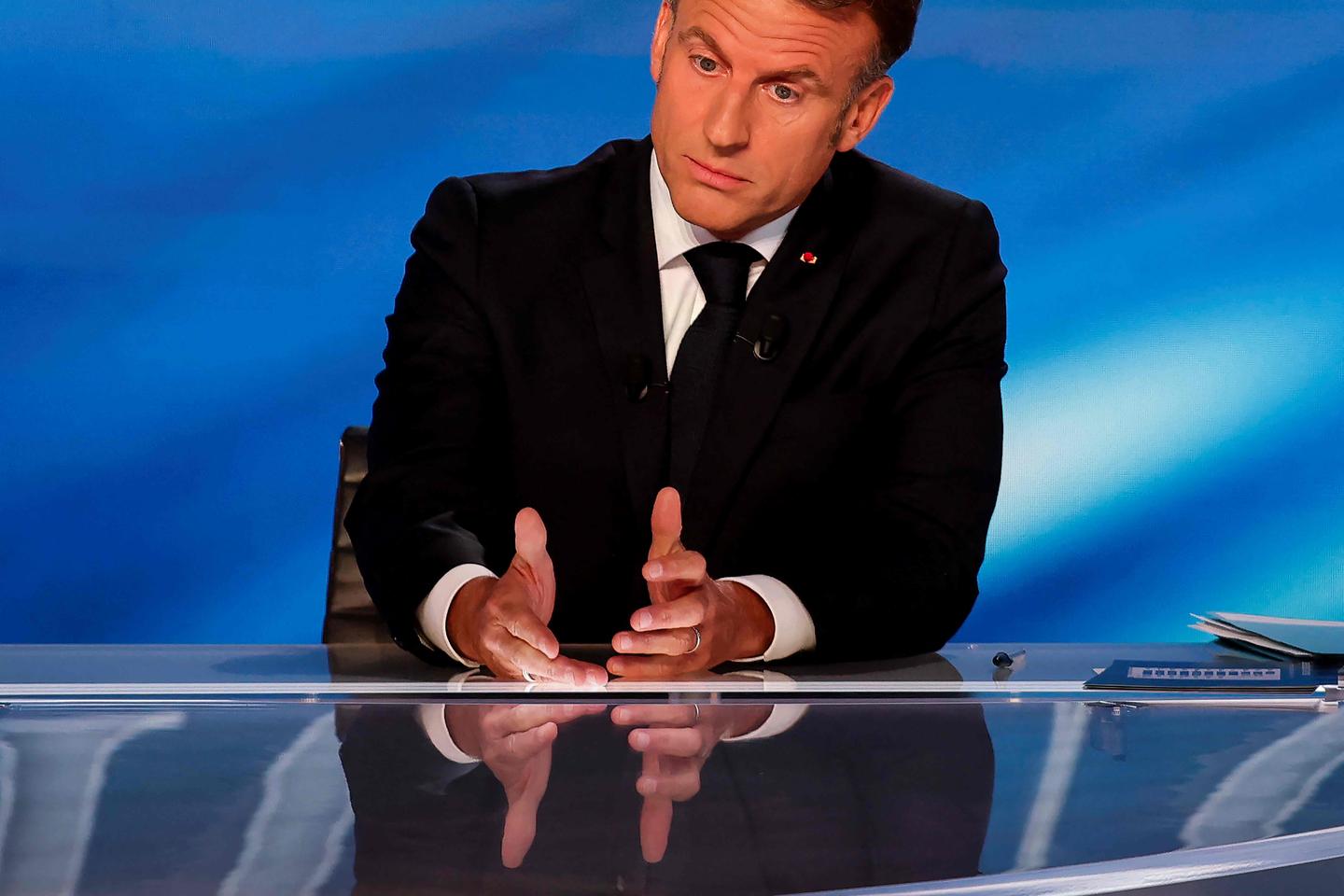
On May 13, 2025, President **Emmanuel Macron** engaged in a lengthy defense of his eight years of action at the **Elysée Palace** during a comprehensive interview on TF1. He tackled various **international issues** while maintaining a firm stance on his internal policy reforms.
For over three hours, responding to journalist **Gilles Bouleau** and various stakeholders, Macron, who has confined himself to a diplomatic role since the dissolution of the Assembly, reinvested in national policy matters, such as **prisons**, **taxation**, and the **financing of social models**. He suggested the establishment of an **”In the coming weeks”** social conference to discuss various issues.
During the interview, Macron emphasized the need for **social negotiations** about the quality and evolution of forms of work. He mentioned that he is open to conducting a **referendum** on several significant reforms in the coming months, covering various **economic**, **educational**, and **social reforms**. This is aimed at tackling what he termed the **”financing of our social model,”** which he believes has been overly reliant on labor.
The possibility of a referendum on the end of life
When asked about the **end of life**, especially in light of a testimony from former journalist **Charles Belery**, who suffers from **Charcot’s disease**, Macron expressed hope that existing legislation would pass. He did not rule out the potential for a **referendum** if parliamentary discussions become stalled.
Moreover, Macron defended his administration’s economic and social policies, specifically highlighting his tax reforms initiated in 2017, the pension reform passed under article **49.3**, and his environmental achievements. He firmly stated that there would be no room for a referendum on the pension reform, despite mentions of potential referendums being widespread before the program aired.
Addressing security and immigration concerns
When confronted by Béziers Mayor **Robert Ménard** about **insecurity** and immigration, Macron proposed extending the powers of municipal police. He advocated for a new law that would facilitate prisoner contributions toward their own detention costs and suggested the rental of prison spaces abroad when necessary.
On social issues, Macron confirmed that age verification would be required for adolescents wishing to register on social networks, citing concerns about the impact of these platforms on youth. He also voiced opposition to the wearing of religious symbols, like the **Islamic veil**, in sports competitions, while allowing federations discretion for non-competitive events.
International Relations and Sanctions
On the international front, Macron reiterated his stance on the ongoing conflict in **Ukraine**. He declared that France would impose **sanctions** should Russia continue its non-compliance with ceasefire agreements. He stressed that **secondary sanctions** might be imposed on parties supporting Russia, particularly those involved in financial and energy services. Regarding the potential use of frozen Russian assets, he maintained there is currently no legal framework to repurpose them, deeming it an ineffective solution.
Addressing the humanitarian crisis in **Gaza**, Macron criticized the actions of Prime Minister **Benyamin Netanyahu**, asserting they were unacceptable, yet chose to leave historical interpretations to historians rather than labeling it genocide directly.