
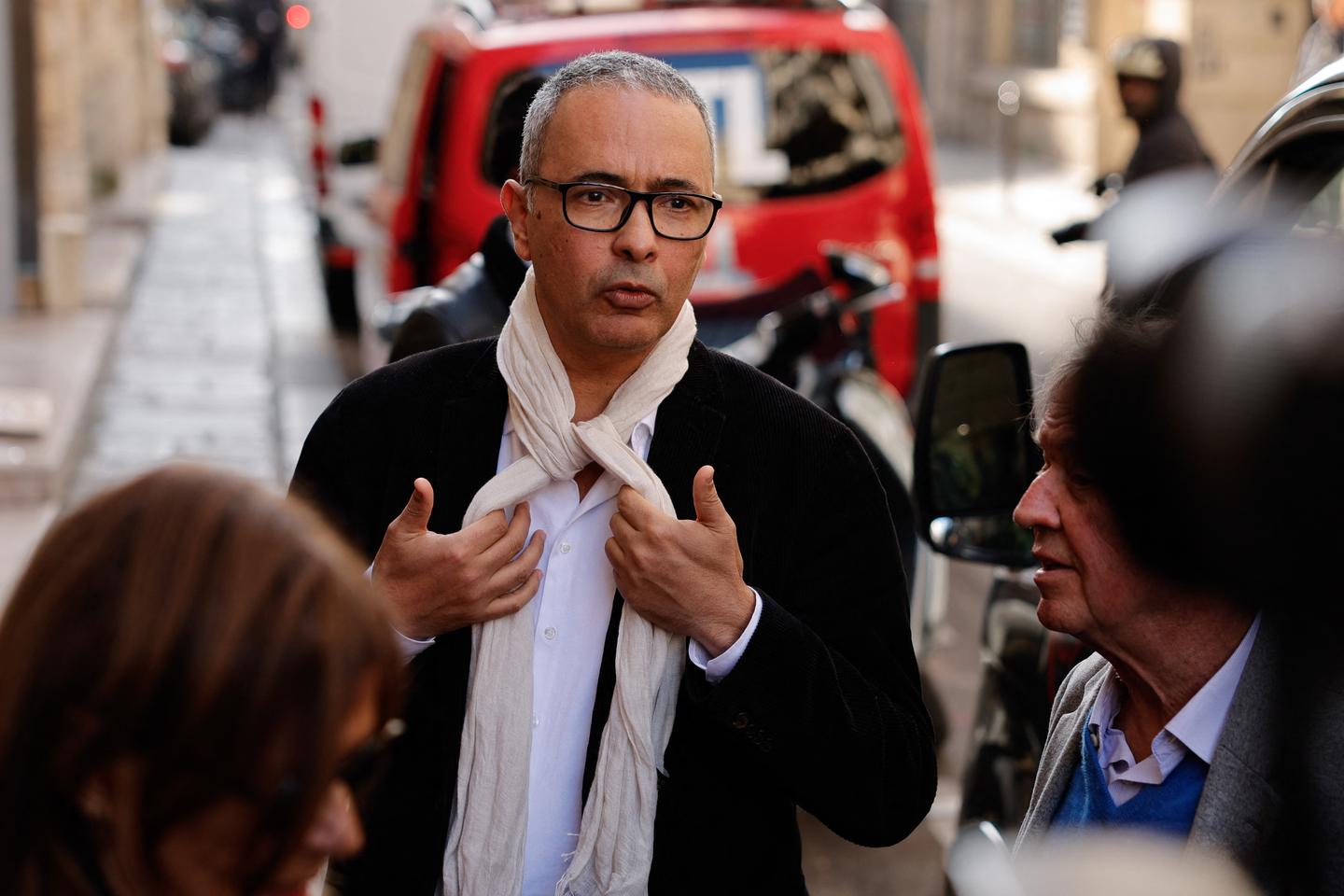
Kamel Daoud: Controversy Surrounding “Houris”
Franco-Algerian writer **Kamel Daoud** recently found himself embroiled in a legal controversy surrounding his acclaimed novel, **”Houris.”** Released in the summer of 2024, the book not only captured the literary world’s attention but also won the prestigious **Goncourt Prize**. However, Daoud’s triumph was overshadowed by allegations from **Saâda Arbane**, an Algerian woman, who claims that Daoud “stole” her traumatic story, using it as the basis for his narrative.
“Forced parallels or publicly claimed inaccurate details… reflect a distortion of the history of the book,” Daoud remarked in a joint press release with his publisher, **Gallimard**. He expressed that the accusations would not transform **”Houris”** into a biography or self-fiction.
The Nature of “Houris”
Daoud’s **”Houris”** is described as a **work of imagination**. The **plot** weaves together **characters** and events inspired by Daoud’s experiences, historical events, and widely known **criminal** incidents from **Algeria’s past**. The defense stressed that such sources of inspiration are common in literature and are legally protected under **French law**.
In a world where literary freedom often intersects with privacy rights, the case raises essential questions regarding the boundaries of artistic creation. Is inspiration from real-life events and experiences a crime? Daoud’s lawyer emphasized, “These sources of inspiration specific to any novelist are free in France.”
Judicial Persecution Claim
In November 2024, Daoud faced a court’s acceptance of Arbane’s claim against him and his psychiatrist. The allegations center around the use of a patient’s story for novel writing without proper consent. Arbane survived a **massacre** during Algeria’s civil war, which lasted from 1992 to 2002, resulting in over **200,000 deaths**. With an international arrest warrant issued by Algeria, the situation has grown increasingly contentious.
On May 14, Daoud described the unfolding events as “a form of judicial persecution,” in an interview published by **Le Figaro**. His sentiments echoed a broader concern regarding the **freedom of expression** and creative liberties as a writer. His lawyer, Me **Jacqueline Laffont**, also drew comparisons between Daoud’s situation and that of another Franco-Algerian writer, **Boualem Sansal**, who faced similar issues.
Media and Judicial Attacks
Laffont condemned the **media** and **judicial** attacks on Daoud, suggesting they stem from biased reporting and distorted portrayals of facts. She argued that such actions threaten not only Daoud’s credibility but also the integrity of the literary world as a whole. “These attacks aim to discredit the work of the writer and the probity of his loved ones,” she stated.
Daoud’s defense stands firm on the notion that **”Houris”** is a fictional narrative deeply rooted in historical facts interwoven with his artistic imagination. Laffont asserted, “Contrary to what Saâda Arbane supports, Houris is a work of fiction… but also of cross-checks of testimonies and historical facts linked to the Algerian civil war.”
Confidentiality and Public Story
The legal dispute raises significant questions regarding **medical confidentiality**. Laffont mentioned that Arbane’s story was made public prior to the book’s publication, emphasizing that she is not the only survivor from that tragic era in Algeria. Laffont further clarified that Daoud’s work does not constitute a violation of medical confidentiality. **”Houris”** touches upon collective memories and trauma experienced by many during the civil war, suggesting that the narrative reflects broader human experiences rather than solely Arbane’s personal journey.
The Echo of a Troubling Past
Arbane expressed her desire for the justice system to recognize her injuries publicly. The allegations against Daoud provide a glimpse into the complex interplay between **creativity**, **memory**, and **trauma**. The discussion extends beyond Daoud and Arbane, prompting a reevaluation of how stories are told and who gets to tell them within the context of **historical trauma**.
The case is especially significant within the **Algerian** literary context, where freedom of expression has historically faced constraints. The outcome of this legal battle could set a precedent that may impact future literary pursuits in **Algeria** and beyond. Amidst the tension, Daoud remains steadfast in his artistic vision, asserting his right to utilize his lived experience and historical context in crafting compelling narratives.