
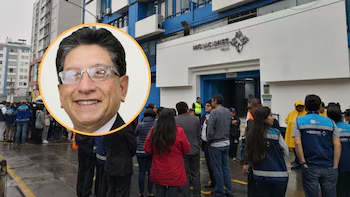
Who is Manuel Balladares Ramírez?
Manuel Alberto Balladares Ramírez has been formally appointed as the new national superintendent of Immigration by the government of José Jerí. This decision was announced through supreme resolution No. 360-2025-IN, published in the official journal, The Peruvian. His extensive background includes roles as a university professor, former member of the Mining Council, and previous head of the National Superintendency of Control of Security Services, Weapons, Ammunition and Explosives for Civil Use (Sicamec).
Transition of Leadership in Immigration
Along with Balladares’s appointment, the government accepted the resignation of Armando Benjamín García Chunga as the head of the immigration institution through supreme resolution No. 359-2025-IN, thanking him for his service. This change comes at a critical time as the nation navigates complex immigration challenges.
Reasons Behind the Leadership Change
Reports suggest that the transportation sector leaders met with the Minister of the Interior, Vicente Tiburcio, advocating for García’s dismissal. Critics claimed that under his administration, the immigration process had become lenient, allegedly facilitating the entry of individuals with criminal backgrounds. This situation has raised concerns about national security and rising crime rates.
Current Immigration Challenges
Balladares assumes his new role amid increasing migrant flows and the necessity for stronger border controls. The influx of Venezuelan citizens into Peru has been significant, with nearly 300,000 individuals entering between 2017 and 2019 alone. Unfortunately, many of these entries were not properly documented in the immigration system, causing a backlog in processing and an inability to track their status.
The Situation of Venezuelan Migrants
Approximately 1.2 million Venezuelans are recorded in migration databases, but only around 600,000 have regular status or are in the process of regularization. The lack of updated records leaves a substantial number unaccounted for, either out of the country or residing illegally. The situation has been exacerbated by porous borders, contributing to a lack of clear data on the current immigration climate.
Looking Ahead
Balladares’s leadership is pivotal as Peru strives to address broader immigration issues. The record of refugee applicants stands at about 400,000, with the information managed by the Chancellery for international protection purposes. There’s considerable uncertainty regarding the overlap between these refugee cases and the larger pool of Venezuelans in irregular situations.
As Balladares embarks on this challenging journey, the integration of a robust immigration control system and effective management of migrant populations will be essential for sustainable governance.