
Incident Overview
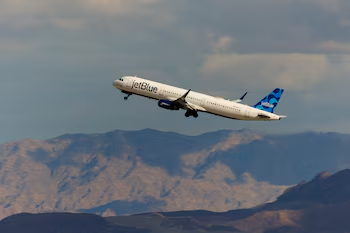
A recent incident involving JetBlue Flight 1129 required the aircraft to return to T.F. Green Airport in Rhode Island shortly after takeoff. The flight, bound for New York’s JFK Airport, left the ground but was forced to turn back due to a collision with a coyote.
The Airbus A320 took off at 6:16 AM and, after a brief climb, the crew announced their return to Providence approximately fifteen minutes later, stating, “If anyone heard that blow, it was because we hit a coyote and we are going back.” More than 120 passengers and six crew members were aboard the flight, according to the Federal Aviation Administration (FAA).
Incident Details
After landing around 6:40 AM, emergency teams awaited to inspect the plane for any potential damage. Passengers were asked to disembark while a thorough investigation was conducted. Witness accounts from passengers like Erin Drozda, who heard the sound upon takeoff, described the harrowing moment when the aircraft collided with the animal.
Fortunately, initial inspections revealed no major damage to the plane, allowing passengers to re-board after a brief delay. JetBlue emphasized that the decision to return was a precautionary measure to prioritize passenger safety.
Wildlife Incidents at Airports
The FAA has reported a troubling increase in wildlife encounters at airports, with over 17,000 incidents recorded in the past year, predominantly involving birds but also includes mammals like coyotes and foxes. This uptick is primarily attributed to urban expansion reducing natural habitats near airports.
Despite efforts by local authorities to implement wildlife control measures, aviation safety experts assert that challenges persist. Coyotes have adapted to urban environments, often exploiting gaps in airport barriers to access runways.
Operational Impact and Safety Protocols
The incident did not significantly affect operations at T.F. Green Airport, as cleaning measures and wildlife control protocols were swiftly enacted. JetBlue’s maintenance crews and airport technicians worked diligently to ensure all safety checks were followed strictly, according to FAA regulations, to assess any structural integrity concerns.
Data indicates that annual collisions between aircraft and wildlife in the U.S. remain a significant concern, leading to costly property damage and operational disruptions. A notable example is a previous incident involving an American Airlines flight in Chicago that had to abort takeoff after hitting a deer.
Conclusion
The JetBlue Flight 1129 incident serves as a reminder of the ongoing challenges posed by wildlife near airports. The proactive measures taken by airline crews and airport personnel demonstrate the importance of safety protocols in aviation and the critical nature of maintaining safe air travel.