
Japan has expressed serious concerns regarding the increase of military maneuvers by China in close proximity to its territory. This escalating situation has compelled Japan to file formal protests with Beijing, as well as release detailed information about such activities for the first time in an unusually transparent manner.
Recent Military Exercises by China
In recent weeks, two of the most significant Chinese aircraft carriers , the Shandong and the Liaoning , have engaged in a series of simultaneous exercises in the Pacific Ocean. This unprecedented level of activity has raised alarms in Japan, prompting a response from its defense officials.
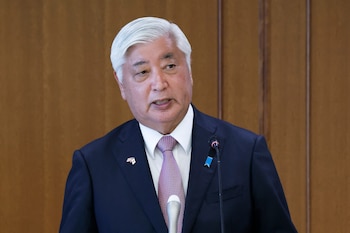
Japanese Defense Minister Gen Nakatani stated that there have been about 1,000 aircraft landings from the Chinese carriers since late May. This marked the first occasion on which Japan has publicly disclosed such specific data, indicative of the heightened tensions between the neighboring countries.
Proximity to Japanese Territory
According to Nakatani, one of these vessels recently approached the eastern regions of the Iwojima and Santon Islands . It conducted a staggering number of over 100 takeoffs and landings of fighter jets within Japan’s exclusive economic zone (EEZ) near Okinotori , the southernmost island of Japan, located approximately 1,740 kilometers south of Tokyo. This maneuver has been interpreted as an attempt by China to bolster its operational capabilities in open seas.
In response to these military developments, Japan has pledged to monitor and analyze the activities of these carriers closely, gathering intelligence to better understand the strategic intentions underlying China’s actions.
China’s Rhetoric and Japan’s Concerns
Meanwhile, China has asserted that its operations align with international law and has accused Japan of engaging in dangerous provocations . This rhetoric underscores the rising tensions in the region, where military posturing is becoming the norm rather than the exception.
Nakatani’s comments came shortly after Japan’s Self-Defense Forces released a detailed report analyzing these military operations, including maps illustrating the carriers’ movements and photographs documenting air engagements. Such transparency from the Japanese government highlights its growing apprehension regarding China’s military assertiveness.
Incidents in the Area
Adding to the complexity of the situation, on June 12, Japan conveyed its concerns to Beijing regarding an incident where a Chinese fighter jet armed with missiles reportedly shadowed a Japanese Maritime Self-Defense Forces patrol aircraft during a surveillance mission over the Pacific. This escalation led to speculation that Japan’s Takanami destroyer navigated through the Taiwan Strait , possibly as a countermeasure.
While Nakatani refrained from confirming these particulars, citing operational security, reports from local news agency Kyodo suggested that the Takanami entered the Taiwan Strait from the East China Sea on June 12 and spent more than ten hours maneuvering southward towards the Philippine island of Luzon . Throughout this transit, the Chinese military reportedly tracked every movement.
Joint Exercises and Regional Implications
On June 17, the Takanami conducted a joint maritime drill with the Philippine Navy in a contested area of the South China Sea . The Philippines asserts jurisdiction over this region, which has recently seen an uptick in Chinese claims and assertiveness . Traditionally, Japan has refrained from sending military vessels through the Taiwan Strait to avoid antagonizing China, but this strategy may be undergoing a change in light of Beijing’s increasing military boldness .
The timing of these developments is critical, coinciding with heightened global geopolitical tensions, particularly pertaining to the ongoing conflicts involving Israel and Iran. The situation is made even more complex by Iran’s alliance with China, which raises questions about the potential international ramifications of these military activities.
The U.S. is also observing these developments closely, with reports suggesting that President Donald Trump is expected to make a decision regarding America’s involvement in the region “within the next two weeks.” As both China and Japan navigate this complex landscape, the balance of power in the Pacific continues to evolve, raising important questions about regional stability and security.
Japan’s proactive stance in confronting China’s military maneuvers marks a significant pivot in its defense policy. As the geopolitical landscape shifts, it remains to be seen how this situation will develop and what implications it might have on international relations moving forward.
General News – 2