

Japan’s Tourism Boom: A Double-Edged Sword
Summer has undeniably highlighted two significant trends concerning Japan’s burgeoning tourism industry: an unexpected surge in foreign visitors and an inadequate preparation by the nation to handle this overwhelming influx. In a bid to alleviate congestion in hyper-popular areas like Tokyo, the government has even proposed offering free flights to foreign travelers. Interestingly, while international tourists flock to Japan, the locals seem to travel abroad much less. This peculiar behavior reveals myriad challenges currently confronting the nation.
The Shadow of Discomfort
Over the past two decades, Japan has transformed from being perceived as an expensive destination reserved for a select few to one of the main tourist hubs in the world. The number of foreign visitors has skyrocketed from 6.7 million in 2005 to nearly 37 million in 2024 , and projections for 2025 indicate a new record is on the horizon. The government aspires to attract 60 million tourists by 2030 , fueled by the rising popularity of manga, anime, and unique elements of Japanese culture, along with significant events such as the Tokyo Olympics and Osaka’s Expo.
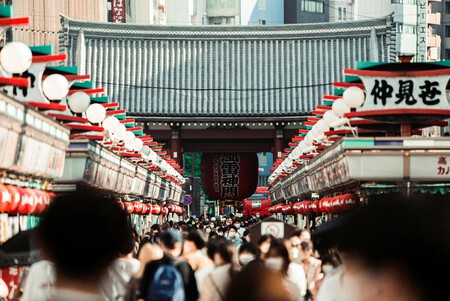
However, the so-called “Inbound Tourism Boom” has also led to what many describe as tourist crowds . Popular spots, such as the Kamakurakome intersection and temples in Kyoto, are often overflowing, leading to a plethora of complaints regarding noise, trash, and rising costs in housing and hospitality. What started as excitement has slowly morphed into concern about sustained tourist pressure on local communities.
The Weight of Economy and Demography
Amid the growing discomfort, Japan has uncovered that many issues arise from its own economic and demographic challenges rather than from tourism itself. The recent devaluation of the yen has made Japan a more affordable destination for foreigners but has simultaneously restricted local young adults from traveling abroad. This reality creates a painful contrast. In the 1980s, Japan proudly stood as the most expensive country globally, and its citizens enjoyed international travel.
With the rental prices in bustling cities like Kyoto seeing an upswing—over doubling since 2021 —the perception among locals is that the economic benefits of tourism are not commensurate with real improvements in their quality of life. More specifically, the rising costs for housing lead to growing discontent. Many residents feel excluded from the advantages of tourism even as the country attracts foreign currency inflow.
Redefining Kyoto
Kyoto serves as a poignant example of the challenges arising from increased tourism. Once cherished for its temples and geishas, the old capital is now deemed too congested by many Japanese, dissuading them from visiting. School trips, previously a rite of passage, are increasingly steering clear of Kyoto due to long wait times, mounting crowds, and rising expenses, opting instead for lesser-known cities like Kanazawa or Nagasaki.
The surge in tourists has resulted in inflated rental prices and significant shifts in the social fabric. Experts suggest that Kyoto has descended into a state of overtourism , where normal life for residents has become compromised.
Historical Memory and New Tensions
This is not the first instance Japan has faced issues related to tourist saturation. In the 1960s and 1970s, the domestic prosperity witnessed similar complaints, mirroring current concerns about tourist pollution and the local populace feeling alienated in their own land. Anthropologists even warned previously about residents becoming “strangers to strangers.”
The dialogue surrounding tourist saturation has resurfaced, amplified by social media’s viral videos featuring tourists in compromising situations, like chasing geishas or disrespecting cultural norms. This frustration has given rise to a new term: “touristphobia,” which encapsulates the irritation and fatigue resulting from overwhelming tourist crowds.
Tourism as a Political Weapon
The topic has now infiltrated Japanese politics, with some leaders linking tourists’ discomfort to debates surrounding immigration and the influx of foreign workers. This sentiment intertwines with national identity issues , framing the discomfort that locals feel towards tourism as a threat. Ultimately, the tourism debate in Japan has evolved into a symbol of deeper societal anxieties and challenges facing the nation.
The Forgotten Regions: While many regions, such as Fukui, remain under the radar, they stand to gain significantly from diversified tourism. With new infrastructure like bullet trains and world-class museums, these areas struggle with attracting foreign visitors, highlighting the necessity to promote lesser-known regions rather than simply managing overcrowded tourist hotspots.
In this context, Japan finds itself in a complex position: it must learn how to manage its immense allure while ensuring that its cultural and social fabric remains intact. The challenge lies not just in limiting crowding in famous locales but also in redefining the relationship between visitors and residents, thereby ensuring a balance between economic benefits and cultural preservation.
As Japan continues to adjust to its unexpected tourism influx, the focus will likely remain on maintaining both the integrity of its environment and the harmony of its populace. The nation that once exported tourists is now tasked with learning how to balance its role as a sought-after destination with the needs of its residents.
In Xataka | While Japan is crowded with tourists, the Japanese barely travel to other countries. The reason: only 17% have a passport. In Xataka | In Japan, tourism has become a problem. So have an idea: give away flights to foreigners.