
The Fascinating Journey of the Universe: From Its Birth to the First Images
The universe is an awe-inspiring, expansive realm, with an estimated age of approximately 13.7 billion years. Throughout this cosmic timeline, dramatic events have shaped the fabric of reality itself, from the birth of stars to the formation of galaxies. One remarkable achievement in modern astronomy is the capture of ancient images of the cosmos, pushing our understanding of the universe’s early days to new heights.
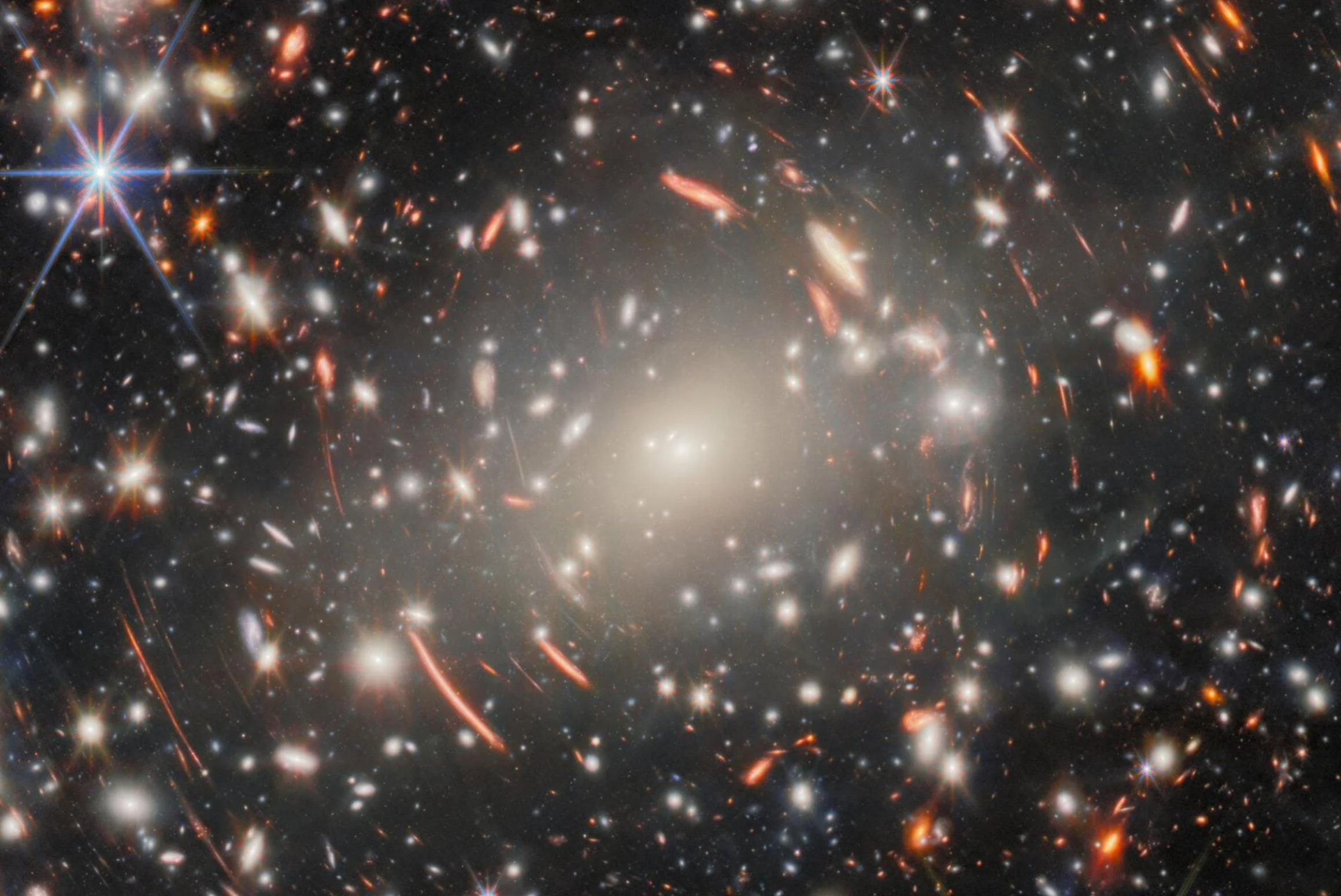
Picture this: a breathtaking image that dates back around 4.5 billion years, made possible through a collaborative effort involving prestigious entities such as the European Space Agency (ESA), the National Center for Scientific Research (CNRS), and the Institute of Astrophysics of Paris. These organizations spent 120 hours observing the universe using the state-of-the-art James Webb Space Telescope (JWST). The result? A stunning glimpse into our distant past.
Understanding the Significance of Abell S1063
At the heart of this groundbreaking image lies the Abell S1063 galaxy cluster, located nearly 4.5 billion light-years away from Earth. This particular cluster serves as a cosmic time capsule, allowing astronomers and scientists to study galaxies as they existed during the early moments of the universe. The period captured in this image closely corresponds to the formation of Earth, providing a striking reminder of our planet’s place in the grand cosmic narrative.
The galaxy cluster Abell S1063 is comprised of innumerable galaxies, each teeming with stellar activity and undergoing complex interactions. The high-resolution images from the James Webb Space Telescope provide intricate details that help researchers understand the processes involved in galaxy formation and evolution. Not only does this offer insights into the birth of our own galaxy, the Milky Way, but it also opens doors to comprehend the forces that govern the universe as a whole.
The Technology Behind the Discovery
The James Webb Space Telescope (JWST), launched in December 2021, represents a revolutionary leap in telescopic technology. It is equipped with a gold-coated mirror measuring 6.5 meters in diameter, allowing it to capture images with unprecedented clarity. Unlike its predecessor, the Hubble Space Telescope, which operates in the visible light spectrum, the JWST observes infrared light, enabling it to see through cosmic dust and gas that often obscure distant objects.
This ability to detect light from ancient stars and galaxies ultimately enhances our understanding of the early universe. While visible light gives us a snapshot of the universe as we see it today, infrared observations unravel secrets hidden in the cosmic darkness. This powerful synergy between the JWST’s technology and collaborative research efforts is propelling the field of astrophysics into new frontiers.
The Broader Implications for Cosmology
Studying the universe’s earliest moments through images like those of Abell S1063 aids not only in our understanding of cosmology but also in answering fundamental questions about existence. How did galaxies form and evolve? What are the underlying components of dark matter and dark energy? These questions remain some of the most profound mysteries in science.
The imaging efforts of the JWST and the data collected from galaxy clusters also provide crucial evidence that may support or challenge existing cosmological models. Researchers aspire to link observations from various epochs of cosmic history, creating a comprehensive understanding that could explain the universe’s structure and functioning.
Looking Ahead: What’s Next for Astronomy?
As scientists analyze the rich data gathered from the JWST, we can expect continued exciting discoveries about our universe. Future observations will likely focus on even more distant galaxies, further back in time, while researchers will delve deeper into the physics underlying galaxy formation and life cycles.
In addition, researchers hope to combine JWST data with observations from ground-based telescopes and other space missions. This will allow them to create a multidimensional picture of the universe, giving a more holistic understanding of everything from the formation of stars to the presence of potentially habitable exoplanets.
The continued collaboration among institutions such as ESA, CNRS, and various international partners highlights the spirit of cooperation in science. Each new discovery presents an invitation to explore the cosmos further, as the journey to uncover our universe’s secrets is far from over.
In this era of ground-breaking technology and astronomical discovery, the universe unfolds its narrative before our eyes. Each image captured, each cluster studied, adds another chapter to the story of creation—a reminder of our finite existence within an infinite cosmos.