
On August 31, Jaguar Land Rover faced a catastrophic event when it was forced to disconnect the vast majority of its systems to stop a cyber attack . This bold yet necessary action brought immediate and severe consequences. Factories across the United Kingdom came to a standstill, and operations in various international locations ground to a halt as well. Thousands of employees were sent home during what turned out to be an extended global shutdown lasting nearly a month. Fortunately, the company has recently announced its plans to staggered recovery , yet numerous challenges remain ahead.
On September 2, the company issued its first official statement. It referred to the attack as a “cyber incident,” justified the decision to disconnect its systems, and aimed to reassure customers by stating no data had been compromised. Initially, the disruption was expected to be brief, lasting only a few days. However, the reality turned out to be quite different. The shutdown persisted until September 24, and was subsequently extended by another week, with October 1 set as the tentative date for a gradual and phased recovery.
The Attack that Put Jaguar Land Rover in Jeopardy
The defensive disconnection not only halted production but also incapacitated a significant portion of Jaguar Land Rover’s internal systems. Key design and management tools became non-operational, delaying engineering processes for weeks . The commercial network did not escape unscathed either; retail and logistics were brought to a standstill, forcing operations to rely on manual methods. Despite these hurdles, the company managed to maintain performance by keeping dealerships operational and establishing alternative methods for processing payments, delivering finished vehicles, and ensuring the supply of spare parts.
The ramifications of the attack were felt globally. In addition to halting production in British plants, operations were disrupted in countries like Slovakia, Brazil, and India . The epicenter of the crisis was in the West Midlands, where Jaguar Land Rover’s headquarters and crucial factories are located, surrounded by hundreds of suppliers. The breakdown triggered a domino effect, leaving many of these supplier companies without orders. The company itself acknowledged that the repercussions extended throughout the entire supply chain, affecting both UK-based suppliers and those in other nations.
Forensic investigations are ongoing, and initial findings suggest a ransomware attack . Shortly after the crisis began, a group calling itself “Scattered Laps $ Hunters” appeared on Telegram , releasing images of Jaguar Land Rover’s internal systems. This name indicates a collaboration between notorious groups like Scattered Spider, Lapsus $, and Shinyhunters, all of which have a history of targeting major corporations. While the internal data leak bolsters the extortion theory, the company has refrained from confirming the authorship and has not disclosed whether it received specific ransom demands.
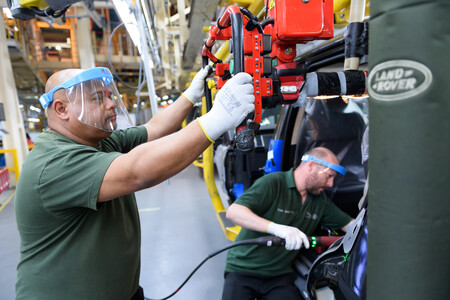
</div>The management of this attack has involved various entities beyond Jaguar Land Rover. The National Cybersecurity Center has collaborated with private specialists to analyze the situation, while the government has received regular updates on recovery progress. Company executives have participated in meetings with ministers, explaining that the recovery must be executed in stages. This has led to a phased restart strategy: initially focusing on restoring critical systems in controlled environments, followed by a gradual resumption of production—a process still unfolding, with an emphasis on mitigating risks.
The financial impact of the interruption is colossal, measured in the tens of millions. Each week without production costs Jaguar Land Rover approximately £50 million (around €59 million ). This staggering loss compelled Moody’s to downgrade its outlook from positive to negative. The disruption has not only hampered the company itself; hundreds of suppliers have seen their orders frozen, pushing some smaller firms to downsize their workforces. To address the crisis, the British government has offered a loan guarantee of £1.5 billion (about €1.79 billion ), coupled with Jaguar Land Rover’s own financing line of £2 billion (around €2.36 billion ) from commercial banking.
<img alt="The semiconductor industry has stretched to the fullest because of AI. And autonomous cars will stretch it even more" width="375" height="142" src="https://i.blogs.es/c0a183/waymo-imagen-gratuita/375_142.jpeg"/>The crisis has not just revealed the fragility of Jaguar Land Rover; it has raised alarms throughout the automotive industry. A manufacturer of this scale, equipped with global resources and experience, took nearly a month to begin its recovery from a cyber intrusion. This vulnerability underscores the urgent need for a review of cybersecurity strategies across the sector—from network segmentation to continuity planning. The lessons drawn from this incident will serve as a benchmark for other manufacturers. The arising question is no longer whether new attacks will occur, but how to minimize their consequences when they do surface.
Images | Robin Mee | Jaguar Land Rover