
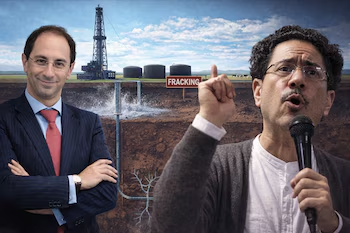
Iván Cepeda’s Concerns Over Fracking
Presidential candidate Iván Cepeda has raised significant concerns regarding the ongoing discussions about fracking in Colombia, particularly emphasizing the adverse effects such proposals might have on the environment. His statements come in the wake of Abelardo de la Espriella’s campaign, which advocates for the promotion of fracking projects amidst a context of escalating climate challenges, notably the El Niño phenomenon.
Context of the Debate
These debates gained momentum after José Manuel Restrepo Abondano, De la Espriella’s vice-presidential pick, released a video supporting fracking. He argued that with the right technological and environmental oversight, this hydrocarbon extraction technique could be viable. However, Cepeda counters this proposition by highlighting the operational risks associated with fracking, particularly given the alarming climate forecasts predicting a strong El Niño phenomenon this year.
Environmental Risks and Climate Forecasts
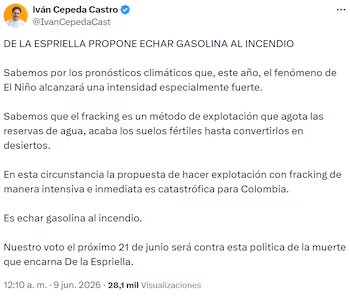
Cepeda underscores the importance of safeguarding water resources in a time where climate predictions show that “the El Niño phenomenon will reach especially strong intensity.” He warns that fracking exacerbates existing environmental threats by potentially depleting vital water reserves and damaging fertile soils, suggesting that “fracking is an exploitation method that destroys fertile soils until they turn into deserts.”
He categorically states that “the proposal to exploit fracking intensively and immediately is catastrophic for Colombia,” articulating that such actions are akin to “adding gasoline to the fire.”
The Political Implications
In linking his environmental stance to the upcoming elections, Cepeda declared that his campaign would stand firmly against such initiatives, urging voters on June 21 to reject what he describes as “politics of death that De la Espriella embodies.”
Responses from Advocates of Fracking
The discussions around fracking were reignited further by Restrepo, who, along with Sandra Bessudo, expressed that the method could be used responsibly with the correct environmental safeguards in place. They assert that strict regulations could facilitate an eco-friendly approach to energy extraction, paving the way for both economic growth and environmental sustainability.
In summary, the divide between Cepeda’s environmental vigilance and Restrepo’s optimistic view on fracking highlights the ongoing debate in Colombian politics centered around energy policy and ecological integrity. Various forecasts from organizations like the World Meteorological Organization and the NOAA stress that Colombia stands at a critical environmental crossroads, making this a pivotal issue for future political and ecological discourse.