
Tesla’s recent struggles in Europe are well-documented and known. The company, led by the controversial Elon Musk , faces numerous headwinds including shifting public sentiment and significant competition from Chinese electric vehicles . Current sales data indicates a drastic decline in registrations across several key European markets, but there are still some bright spots on the horizon.
The Data: The most important European markets for Tesla, reflective of the overall automobile market, include the United Kingdom , France , and Germany . In these countries, the drop in Tesla registrations—a key indicator of sales—has been particularly sharp.
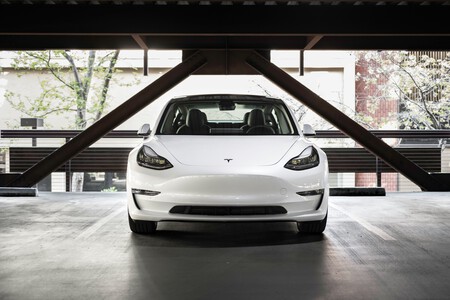
Image | Charlie Deets
According to reports from Reuters and Bloomberg, registrations fell by 60% in the United Kingdom, 55% in Germany, and 27% in France just in July alone. The situation is similarly grim in other countries with a staggering 86% drop in Sweden, 52% in Denmark, 62% in Holland, 58% in Belgium, 5% in Italy, and 49% in Portugal.
On the Whole: When examining the broader picture, the numbers are even more alarming: Tesla’s sales have plummeted by 45% across the ten European countries that account for 80% of its sales. In other words, the company’s sales continue to decline sharply in these vital markets. Thus far this year, Tesla has experienced a 33% drop in its sales across Europe.

Are There Any Markets Where Tesla Grows? Yes, Spain and Norway are standout exceptions. In Spain, Tesla registrations rose by 27% (702 cars) in July, a 1.1% increase year-to-date. This growth is paltry compared to the overall electric car market, which has surged by 89.6% in the same timeframe. Similarly, Norway saw an 83% increase—translating to 838 cars sold —and a staggering 97.2% of vehicles sold in July were electric.
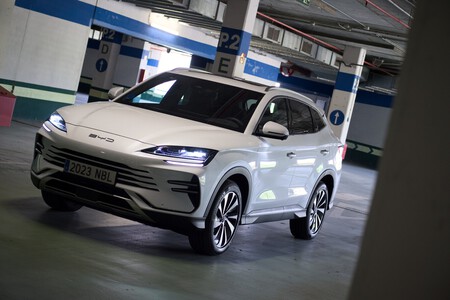
Image | Xataka
BYD Advances on Tesla: As expected, Asian manufacturers , particularly BYD, are capitalizing on Tesla’s decline. According to Jato consultancy data, in June alone, BYD sold 15,565 vehicles in Europe, with 9,153 of those being electric—an increase of 132% . The semiannual figures notably show BYD’s electric car sales soaring by 143% .
Best-Selling Cars: Despite the overall downturn in sales, Tesla’s Model Y remains the best-selling electric vehicle in Europe for the first half of the year, closely followed by the Volkswagen ID.4 . However, the landscape shifts noticeably when focusing on the Spanish market.

Best-Selling Electric Cars in July | Image: ANFAC
The Spanish Case: Reviewing the latest statistics from ANFAC reveals that the top-selling electric vehicles in Spain for July included the Toyota BZ4X (604 units), Dolphin Surf (531 units), and KIA EV3 (493 units). The first entry for Tesla appears in fourth place, with the Model 3 selling 456 units, while the Model Y drops to tenth place.

Best-Selling Plug-in Hybrids in July | Image: ANFAC
For the period from January to July, Tesla’s performance seems to be flat. The Tesla Model 3 has emerged as the best-selling electric vehicle, racking up 4,545 units . It is followed by the Model Y and KIA EV3 with 3,282 and 3,206 units sold, respectively. The BYD Seal U leads the plug-in hybrid category, with 738 units recorded in July—an incredible 1,616% increase.
Image Source: Martin Katler
Meanwhile, Elon Musk’s ambitious plans continue to evolve despite operational challenges. As the electric vehicle market shifts, only time will tell if Tesla can recalibrate its strategies to regain its once-dominant position in Europe.