
The Nuclear Posturing of Russia: Analyzing the Burevestnik Missile
In a significant escalation of tensions, Europe and the United States have crossed yet another red line imposed by Russia during its invasion of Ukraine. The deployment of long-range Storm Shadow missiles represents a tactical shift that has prompted a robust response from Moscow. The reappearance of the Burevestnik missile program, coinciding with the deterioration of diplomatic talks between Moscow and Washington, is more than a mere technical development; it communicates a strategic message that resonates deeply within the dynamics of global security.
The Ambitious Flight Profile of Burevestnik
The Burevestnik missile, touted by President Putin and General Gerasimov, boasts a staggering 14,000-kilometer flight range powered by nuclear propulsion. This missile, which promises a flight duration of about 15 hours, is part of a broader strategy that has been in development since 2018. The rationale for its creation springs from two pivotal events: the U.S. withdrawal from the ABM Treaty and the subsequent expansion of NATO.
What makes the Burevestnik so remarkable isn’t just its range; it’s also its purported capacity to evade current and future missile defense systems. Russia intends to convey that Western defenses cannot ignore the nuclear threat posed by such weaponry.
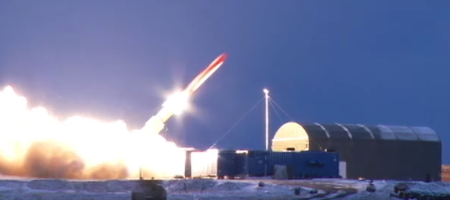
Screenshot of the launch of the Burevestnik missile program in 2018
A Dangerous Nickname: “Flying Chernobyl”
The moniker “Flying Chernobyl,” assigned by arms control experts, evokes memories of the 2019 Nyonoksa radiation accident that claimed the lives of five scientists and released harmful radiation. This legacy cautions against pursuing such ambitious technology, especially when it risks contaminating the environment.
The message is two-fold: while showcasing advanced military capability, it serves as a stark reminder of the potential costs associated with unlimited ranges.
Burevestnik as a Diplomatic Tool
The recent missile demonstration coincides with failed diplomatic attempts, including the abrupt cancellation of a planned summit in Budapest. During this time, the U.S. imposed sanctions on two major Russian oil companies and authorized Ukraine to intensify its strikes against Russian energy infrastructures. In response, Putin warned that any deep strikes would lead to severe retaliation. This back-and-forth illustrates how the Burevestnik has been weaponized, serving not only as a military asset but as a relationship tool in international diplomacy.
Contextualizing the Nuclear Signal
While Russia touts the Burevestnik, Ukraine has been executing its own tactical maneuvers by deploying swarms of drones to disrupt Russian operations. Moscow has reportedly shot down 28 drones in one night, but it has refrained from detailing the damage incurred from these attacks.
Ukrainian operations affect the Russian economy by targeting refineries and energy facilities, illustrating a bidirectional conflict where both nations are engaging in reciprocal strikes. The introduction of Burevestnik amid conventional bombings and punitive energy sanctions from the West indicates that the mere existence of such a missile serves to create a multi-layered economic cost for Western nations.
Conventional depth through drone warfare against Russia
A Sign of Deterrence and Power
For President Trump, who once described Russia as a “paper tiger,” Burevestnik serves as a symbolic countermeasure that aims to illustrate that even with mediocre conventional capabilities, Russia maintains a clear nuclear advantage. This serves to consolidate Moscow’s position on the international stage, demonstrating that it can leverage its nuclear capabilities to influence negotiations effectively.
Internally, Putin frames himself as a provider of “weapons without analogues,” projecting strength even amid crippling sanctions. Offering such innovations acts as an essential instrument of diplomatic signaling, blending military presence with tactical response.
The Implications of a New Era
With growing defense capabilities in Ukraine and ongoing sanctions from the U.S. and Europe, Russia is restoring the notion of nuclear deterrence as an essential element of its strategic calculus. The Burevestnik contradicts the expectation that prolonged warfare can occur without strategic risk. Its existence alone pushes Western nations to reconsider their assumptions about the duration and cost of the ongoing conflict.
The implications are profound. As each side derives new operational strategies in tandem with emerging technologies, both conventional and nuclear, the delicate balance of global security continues to fluctuate, underscoring the need for renewed dialogue and negotiations before the situation escalates further.
In light of these developments, the dynamic between conventional military strategies and nuclear posturing has never been more pronounced. Without a strategic understanding among nations, the risk of miscalculation will only heighten, making the global landscape increasingly fraught with potential conflict as nations strive to assert dominance in an age where military technology shapes the future of diplomacy.