
It’s Not All About the Filter: Understanding CADR for Allergy Devices
What is CADR and Why Does It Matter?
When choosing an air purifier to combat seasonal allergies, understanding the Clean Air Delivery Rate (CADR) is crucial. This unit measures how much filtered air a purifier can deliver, taking into account both the efficiency of the filter and the airflow rate. While many purifiers boast high filtration percentages, like 99.97%, these numbers become irrelevant if the unit cannot effectively move air.
Why Focus on CADR?
Efficiency Over Numbers: A high CADR ensures that allergens like pollen and dust are filtered effectively. It doesn’t matter if a filter is top-notch; if the purifier can’t circulate air adequately, dust and pollen will continue to linger in your environment, aggravating allergies.
Multiple Measurements: CADR values are provided for specific particles—pollen, dust, and smoke. If allergies are your primary concern, focus on the CADR for pollen.
Calculating the Right CADR for Your Space
To ensure your purifier is powerful enough for your needs, you’ll want to determine how much air needs to be cleaned in your room:
Measure Your Room: Multiply the length, width, and height of the room to get its volume.
Determine Air Changes Per Hour (ACH): The AHAM (Association of Home Appliance Manufacturers) recommends a rate of 5 to 8 air changes per hour.
Perform the Calculation: Multiply the room volume by the desired ACH. For instance, a room of 25 cubic meters wanting 5 air changes per hour needs a purifier with at least 125 m³/hour CADR.
Avoiding Common Pitfalls
It’s a mistake to opt for a purifier that narrowly meets your CADR needs. While a lower CADR may be less expensive, it can fall short if you decide to use it in a larger room later. Conversely, investing in a purifier with a higher CADR may lead to quicker air filtration and potentially less noise and energy consumption.
Comparing Purifier Options: Low, Medium, and High CADR
Here’s a breakdown to help you choose the right purifier based on CADR:
Low CADR (up to 400 m³/h): Ideal for small rooms like bedrooms. It’s cost-effective but may underperform if moved to a larger area.
Medium CADR (400-600 m³/h): Suited for average-sized rooms and provides a balance of speed and filtration efficiency.
High CADR (above 600 m³/h): Best for large rooms, ensuring quick and effective air cleaning.
Recommended Models for Every CADR Level
Low CADR Option: Xiaomi Smart Air Purifier 4 Lite
- CADR: 120 m³/hour
- Features: Quiet operation (max 61 dB), filter change indicator via mobile app.
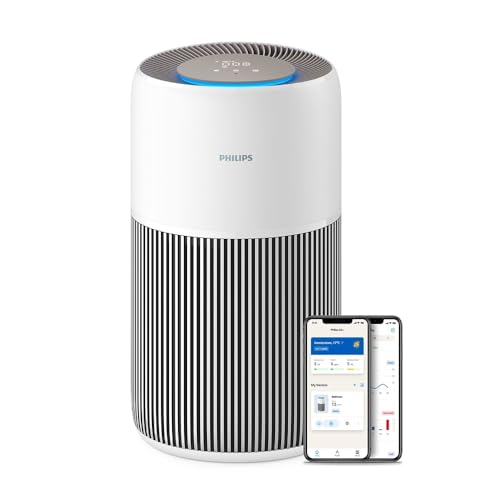
Medium CADR Option: Philips Series 2200
- CADR: 400 m³/hour
- Features: Automatic mode adjusting performance based on air quality, silent mode at 13 dB.
High CADR Option: Bosch Air 6000i
- CADR: 600 m³/hour
- Features: Effective for large spaces, offers a quiet night mode (25 dB) and programmable features via smartphone.
Final Thoughts
When investing in an air purifier to alleviate allergy symptoms, prioritize the CADR alongside purification capabilities. Understanding this critical metric ensures that you select a device that truly improves your indoor air quality. Choose wisely, and breathe easy this spring!