
## Challenges in the Chinese Tomato Sector
The Chinese tomato industry, which once dominated the global market, is currently facing significant challenges, particularly in its critical European customer base. Italy has historically imported a substantial amount of tomato paste from China, but recent controversies have caused a noticeable decline in demand. This situation sheds light on the complexities surrounding agricultural trade, labor practices, and consumer perception in the global market.
### Dramatic Decrease in Sales
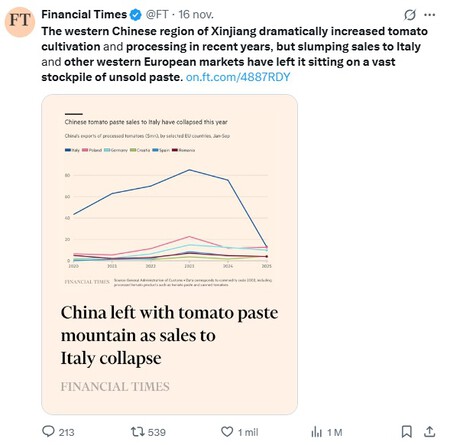
Data indicates that sales of Chinese tomato paste in Italy plummeted by approximately 80% in the third quarter of 2025. This decline underscores the shifting dynamics in consumer preferences and market confidence. The unfurling controversies related to the products from regions such as Xinjiang have cast a shadow over the brand image of Chinese products, creating a ripple effect throughout the entire export sector.
### China’s Tomato Production Dominance
China’s prominence in the global tomato market is indisputable. According to World Population Review, in 2023, China produced around 70.1 million tons of tomatoes, far surpassing other leading producers like India and Turkey. This massive output has allowed China to export vast quantities of tomato paste to Europe, generating a lucrative revenue stream—approximately $1.21 billion in processed tomato exports last year, with Italy alone accounting for about $83.8 million of that amount.
### Local Competition and Low Costs
However, local farmers, especially in regions like Extremadura, Spain, are voicing concerns about the competitive pressure posed by low-cost Chinese tomato paste. The cost advantages enjoyed by Chinese producers, largely due to low labor costs and extensive harvests, are making it increasingly difficult for European farmers to compete. Industry experts, including Francesco Mutti from a prominent sauce manufacturing company, have emphasized the impossibility of matching Chinese prices while maintaining European quality standards.
## Factors Leading to Declining Demand
Despite its production advantages, China is currently grappling with several challenges that have negatively impacted its export capacity and reputation.
### Allegations of Forced Labor
One of the most significant issues contributing to the decline in Western markets’ interest in Chinese tomato paste is the ongoing controversy surrounding the use of forced labor in Xinjiang. Allegations have surfaced regarding human rights violations against the Uyghur minority in the region, which have attracted international scrutiny and concern. This has led some Western nations, including the U.S., to reassess their import policies regarding products from this area.
### Changes in Consumer Behavior
As a result, consumer sentiment in Europe appears to be shifting away from products associated with such controversies. Reports suggest that Chinese tomato paste exports to Western EU countries saw a staggering 67% decline, while Italy recorded a 76% drop in purchases from China. This reflects a broader trend in consumer behavior favoring ethically sourced, transparent supply chains—a stark contrast to the opaque practices attributed to some regions in China.
### Excess Inventory Dilemma
Faced with shrinking demand, China now finds itself with a significant surplus of tomato paste, estimated at around 600,000 to 700,000 tons—equivalent to six months of exports. This situation forces producers to reevaluate their operational strategies, raising questions about whether they will cut production costs or seek new markets to mitigate this excess.
## Final Thoughts
In light of these developments, it becomes apparent that the once-gilded image of Chinese tomatoes in Italy faces a complex landscape of ethical concerns and economic realities. As European consumers become more conscious of sourcing practices, it remains to be seen how China’s tomato industry will adapt and navigate the turbulent waters ahead.