
In western Norway, an old mine has become the home of the most powerful machine in the country. Between galleries excavated in the rock and with the ice water of the fjord as ally, Olivia is already underway. This national supercomputer, managed by Sigma2, is presented as a key tool for the country’s researchers. Its design seeks to reduce energy consumption compared to previous generations and make the most of the security offered by an underground installation.
Norway aimed to strengthen its computation capacity without depending on other countries. Although it does not belong to the European Union , it is part of the European Economic Area. According to Sigma2, Olivia is designed to open up to all academic and scientific institutions in the country, regardless of their local infrastructure, and become a shared platform for data science , simulations, and the development of language models in Norwegian.
Underground Technology, Fjord, and Technological Sovereignty
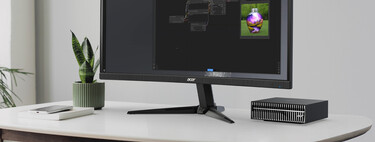
The machine is a HPE Cray Supercomputing Ex system with 252 nodes equipped with AMD Epyc Turin processors and a total of 64,512 CPU cores . It incorporates 304 state-of-the-art GPUs and 5.3 storage petabytes in a HPE Cray Cluster Tor E1000 system. With this configuration, the computational capacity available in national systems is multiplied by 17. All this, as the images suggest, occupies just 14 square meters and weighs about 15 tons , demonstrating remarkable power density in a small space.
Efficiency has been an objective from the beginning. Olivia uses direct liquid cooling and benefits from the infrastructure of Lefdal Mine Data Centers, which, according to Sigma2, operates 100% with renewable energy and uses fjord water to cool the systems. According to the same source, energy consumption has been reduced by more than 30% compared to the Betzy Supercomputer, while the computational power is more than three times higher.
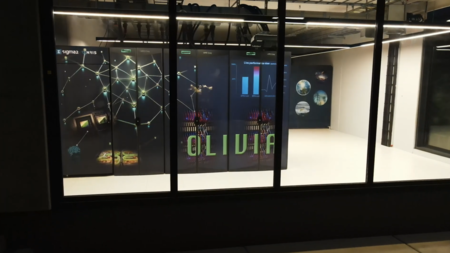
As of June 2025, these characteristics have earned Olivia the 22nd position in the Green500 list, which measures energy efficiency, and 117th on the Top500 of the fastest supercomputers. Topping the list is the leader of the National Lawrence Livermore Laboratory in the United States.
The data center where Olivia is installed is unique. Located inside an abandoned olivine mine, Olivia provides physical security and natural thermal stability . The supercomputer’s name pays tribute to the mineral extracted in the area for years. The project represents an investment of 225 million Norwegian crowns , around 20 million euros , and has been designed for future expansions without replacing its main structure.
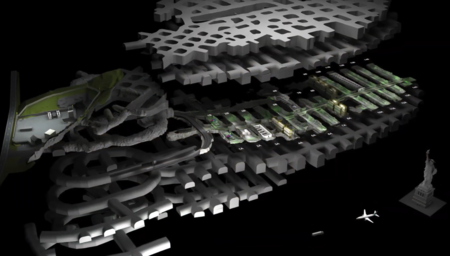
The project has followed a precise calendar: the room transfer was completed in December 2024 , and acceptance tests began in February this year. The official inauguration was held on June 17, 2025 , and this summer has served as a pilot period to validate the system before its general opening, scheduled for autumn. Sigma2 points out that the equipment is working to adjust the last configuration details and guarantee stability before opening full access to the research community .
Olivia is emerging as a central resource for health, marine, and climatological research projects. According to the operator, it will allow progress in the development of language models in Norwegian . Open availability for all universities and research centers seeks to democratize access to high-performance computing, which is key in fields where data grows at an exponential pace.
Norway, as mentioned, is not part of the European Union . In this context, the Nordic country is investing in its technological capacity, reinforcing its autonomy, and reducing dependence on external infrastructure. As it transitions from the test period to being fully operational, Olivia will serve as a reference point for how a small population can possess one of the most advanced computing infrastructures on the planet.
Images: Sigma2
In Xataka | The undisputed winner of the aggressive competition of TSMC , Intel , and Samsung is a European company: ASML.