
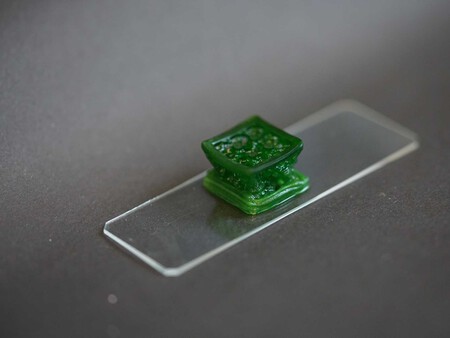
The Search for a Sustainable Cement Alternative
The cement industry is responsible for approximately 7% of global CO2 emissions, prompting a meaningful quest for sustainable substitutes. Researchers at the Federal Polytechnic School of Zurich have explored living materials—bacteria, algae, and fungi—as an innovative solution, and their findings highlight the advantages of using cyanobacteria.
The Challenge of Replacing Concrete
Replacing traditional materials such as steel and concrete isn’t just about finding something that works; it’s also about logistical implications for infrastructure and costs. The manufacturing of traditional concrete is resource-intensive and contributes significantly to environmental pollution, further complicated by its tendency to degrade over time.
Introducing Living Concrete
This groundbreaking approach utilizes cyanobacteria embedded in a unique, printable gel, creating a living, photosynthetic material. This material thrives under sunlight, artificial seawater nutrients, and CO2, effectively enabling it to grow while simultaneously filtering carbon from the atmosphere.
From Passive Material to Carbon Sink
Concrete has typically been a passive material, merely occupying space until it begins to degrade. However, ETH Zurich’s innovation shifts this paradigm by integrating cyanobacteria into the matrix of the concrete, transforming buildings from mere structures into active carbon sinks that combat atmospheric emissions. By reducing cement usage, the emissions generated during production can be significantly minimized.
A Self-Healing Concrete
Not only does this material store carbon efficiently, but it also possesses a self-healing capability. When microcracks form, moisture and oxygen stimulate the bacteria to secrete minerals that reinforce the structure. This natural healing process minimizes maintenance costs and extends the lifespan of the material by preventing steel corrosion in hybrid structures.
Real-World Applications
This research is not confined to laboratories. Prominent installations featuring cyanobacterial concrete were showcased at the Venice Architecture Biennale. One of these blocks can effectively store up to 18 kilograms of carbon dioxide per year—comparable to an adult tree.
Future Prospects
As Mark Tibbitt, a professor at ETH Zurich, points out, the next steps involve exploring its practical use as façade cladding to capture CO₂ throughout a building’s lifecycle. The jump from laboratory experiments to practical applications relies on overcoming hurdles such as scalability, cost, mechanical properties, and the viability of the cyanobacteria in diverse environments.
This innovative approach to construction not only paves the way for reduced carbon footprints but also presents an exciting future for architecture as functional living materials become a reality.