

The Unique Marriage Market of China: Where Parents Play Matchmaker
In an age where love often boils down to a simple “swipe left” or “swipe right,” finding a partner might seem effortless. However, navigating relationships has become increasingly complicated. While dating apps like Tinder , Bumble , and Hinge offer algorithmic compatibility, China hosts a distinctive event that doesn’t demand an internet connection, just a printer, an umbrella , and perhaps a few anxious parents.
Every weekend, parks in bustling cities such as Beijing , Shanghai , and Chongqing transform into vibrant scenes adorned with laminated posters that showcase personal descriptions of would-be partners. Interestingly, it’s not the singles themselves placing these advertisements but their parents. This practice is referred to as the marriage market , or xiangqin jiao (literally, “blind dating corner”), serving as an analog counterpart to digital dating platforms.
The Backdrop of Change: A Demographic Crisis
The rise of these marriage markets stems from a significant paradox in modern China: despite a multitude of dating applications and agencies, the numbers of weddings and births are in a steady decline . In 2024, only 6.1 million couples are anticipated to tie the knot, marking a staggering 21% drop from the previous year and the lowest figures since records began, as reported by the Wall Street Journal. Though there’s been a slight rebound this year with 3.54 million marriages in the first half, facilitated by a new civil registration policy, the overall trend remains troubling.
Multiple factors contribute to this decline, including long working hours , escalating housing prices , persistent gender inequality , and a shift in priorities among the younger generation. “Energy is limited, so I eliminate what exhausts me the most. The first thing? Dates,” reflects a 22-year-old student, indicating a shift in values. Many parents, concerned about their children’s relationship prospects, have opted to act, choosing to search for suitable partners in parks rather than online.
The Functioning of a Paper-Based Dating System
The first love market emerged in Shanghai’s People’s Park over a decade ago, as discussed in an article from Noema Magazine . Every weekend, rain or shine, parks fill with parents displaying their children’s details on signs fixed to ropes, benches, or open umbrellas. Information regarding age, height, weight, salary, property ownership, and even whether their child’s parents have a pension is prominently featured. Pictures are often deemed optional; “Those who do it best are the average ones: neither very good nor terrible,” explains a matchmaker known as Professor Gu , who charges about $16 to showcase a poster for six months.
Mixed Outcomes in the Love Market
While the dynamic is colorful, the outcome is less so. The Wall Street Journal describes scenes in Chongqing , similar to those in Shanghai, where retired parents crowd narrow paths, adorned with posters. Some parents utilize WeChat , China’s ubiquitous communication app, to scan QR codes or exchange contacts. A woman’s profile reads that she earns $560 a month and owns a house and car, while seeking a husband “without bad habits, under 29 years old and no taller than 1.73.” Conversely, a 26-year-old man seeks a university-educated wife “who is not too plump,” reflecting traditional expectations.
The cultural divide is stark. In China, marriages are predominantly viewed as economic and family alliances rather than purely romantic engagements. Consequently, the marriage market is described as “a fusion between Match.com and a farmer’s market,” where banners and handouts substitute for digital profiles, and parents shoulder the role of mediators.
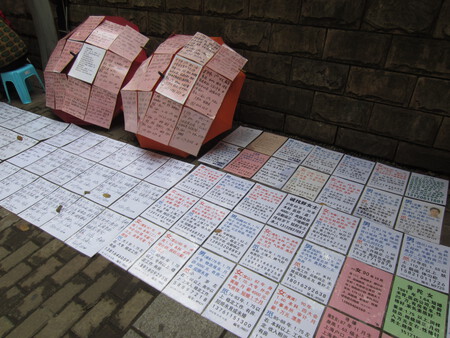
Marriage market in Shanghai
A Reflection of Societal Pressures
Though success is rare, the experience is not devoid of merit. Many attend the markets out of routine, companionship, or simply to pass the time. Men and women at these gatherings often engage in conversation about their experiences and emotions surrounding love and commitment. A father from Shanghai admits that, despite his year-long search on behalf of his 36-year-old son, he has only scored two matches, neither of which bore fruit. “I only act as an intermediary,” he shares, “but in the end, it depends on him.”
For many families, the marriage market has become a catharsis of sorts. Sister Gao , a veteran matchmaker, points out the generational shift: “Our kids think, ‘why should I settle?’ In our generation, people put up with more. Today they don’t want to tolerate anything.” Some young individuals challenge existing norms, as reported by state media CGTN . One participant at the Beijing market, Huang Junjie , acknowledges his preference for in-person interactions and even suggests being matrilocal , living with his wife’s family, which contradicts traditional expectations.
The Social Implications for the Older Generation
Behind the layers of laminated paper lies a deeper story of anxiety and family pride. Many parents feel that seeing their children married is their last mission in life. In a society where being single carries social stigma, these markets serve as arenas of both hope and embarrassment. Although some parents express humiliation for having to “offer” their children publicly, others defend their right to intervene. “The girls are not willing to say ‘I want a boyfriend,’ so we help them,” states a mother from Shanghai. Moreover, with over 300 million retirees , many of whom are widowed or divorced, these markets also serve as a social outlet to combat loneliness.
Nonetheless, the Chinese government has initiated various strategies to counter the declining marriage rates, offering economic incentives , child subsidies, and even university courses on “romantic education.” Nevertheless, analysts note that young people increasingly prioritize their personal freedoms over societal pressures to marry.
In a landscape where societal dictates place immense pressure on women, reaching single status beyond the age of 27 can earn a woman the term Sheng Nu , or “leftover woman.” This label, promoted by state media in the 2000s, has created a social stigma compelling many women to justify their choices to their families. Some resort to expensive matchmaking agencies or even practical courses entitled “how to find a boyfriend.” Yet others resolutely resist societal expectations, as one woman claims, “It’s not that we are demanding; it’s that they are not up to par.”
Ultimately, the parks of China serve as a fascinating intersection of tradition and modernity. Amidst umbrellas, laminated posters, and parents acting as cupids, love finds itself at a crossroads. The marriage markets are more than mere cultural phenomena; they reflect a society grappling with aging, individualism, and a complicated future. Perhaps this isn’t solely a Chinese dilemma. In an era defined by rising loneliness and the omnipresence of dating apps, many search for their perfect “match,” albeit outside the digital realm, suggesting a greater collective yearning for connection. And perhaps, it’s not a bad idea to take a step back and revisit the analog methods of matchmaking.
Featured image | JP Bowen
Text image | Another Believer