
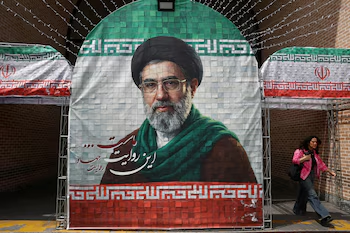
Mojtaba Khamenei’s Threats: A New Chapter in US-Iran Tensions
The recent comments from Iranian Supreme Leader Mojtaba Khamenei further escalate the already strained relationship between Iran and the United States. Khamenei issued a stark warning that Washington would receive an “unforgettable lesson” following renewed cross-attacks and accused former President Donald Trump of failing to adhere to the agreement signed on June 17.
The Nature of the Threat
Khamenei articulated that the United States was trying to “incite war,” declaring that Trump’s “violations” rendered the previous agreements meaningless. In his written message, which was broadcasted by state television, Khamenei stressed that the “beloved Iranian nation” and the broader resistance front were poised to teach the “American enemy” significant lessons.
Accusations Against the US
In a scathing critique, Khamenei condemned American actions, stating they have failed to uphold the ceasefire outlined in prior agreements. He argued that the “repeated violations” of commitments reveal the “insignificance of the president’s signature” from the United States. Khamenei characterized American behavior as one of “harassment, totalitarianism, and barbarism,” suggesting that the U.S. had displayed its “authentic face” in this conflict.
Khamenei’s Absence from Public View
Additionally, reports indicate that Khamenei is not appearing in public due to security concerns stemming from the ongoing war, reflecting on the previous loss of his father, Ali Khamenei, during a joint U.S.-Israeli bombing in February. His absence underscores the heightened fears within Iran’s leadership amid escalating tensions.
Suspension of Agreements
This weekend, Iranian Deputy Foreign Minister Kazem Qaribabadi announced the formal suspension of the Islamabad Memorandum, which included a ceasefire between the warring parties. He stated, “We have suspended our commitments and we are not going to implement them. We are busy defending our country,” signaling a clear departure from diplomatic efforts in favor of military readiness.
Recent Hostilities
The flare-up in hostilities has included U.S. attacks on civilian infrastructures, which Iranian officials claim resulted in extensive humanitarian crises. Reportedly, these attacks have left over 10,000 people in Bunyi without drinking water due to strikes on electrical installations and desalination pumps.
Iran’s Retaliatory Actions
Following these provocations, Iran has also launched attacks on U.S. positions in the region. One such operation targeted the Jordanian military base of Muwaffaq Salti, reportedly resulting in the casualties of at least two American soldiers.
International Reactions to Increased Tensions
In the broader context, nations such as Bahrain and Kuwait acknowledged attacks on civilian facilities without providing extensive details. The Gulf Cooperation Council (GCC) condemned these actions as “war crimes,” calling for accountability from Iran. Such statements hint at the potential for expanded regional ramifications should hostilities continue.
Moving forward, the situation remains precarious, with both sides appearing entrenched in their positions. The threat of further escalation looms large as diplomacy seems sidelined in favor of military posturing and retaliatory tactics. The world watches closely as this conflict unfolds within the already volatile Middle Eastern landscape.