
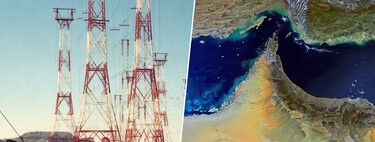
On the maps, the Strait of Hormuz appears as a narrow corridor of water flanked by arid deserts, yet it serves as a critical artery for global energy. Approximately 20% of the world’s crude oil traverses this strait daily. In its most confined sections, navigational lanes are merely a few kilometers wide, with the area closely monitored by radar, drones, and military fleets. For decades, even minor tensions in this region have significantly impacted oil prices worldwide.
A War at Sea
As bombings and missiles dominate media coverage concerning the ongoing conflict involving the United States, Israel, and Iran, a different battle is intensifying in the Persian Gulf. U.S. intelligence has identified signals suggesting that Tehran might disrupt maritime traffic in the Strait of Hormuz by deploying naval mines and fast boats. Such developments are alarming enough to trigger public warnings from Washington and even preemptive military responses against Iranian vessels implicated in these maneuvers.
The Strait: A Global Energy Lifeline
The evolution of this tension hinges primarily on the strategic role of Hormuz in global energy markets. This narrow passage facilitates the movement of millions of barrels of oil from Gulf nations to major economies, including China, India, and Japan. Consequently, any perceived threats in this crucial waterway create immediate global ramifications.
The New Phase of Threats
The situation has escalated into a new phase of the conflict involving oil tankers now navigating amid the growing threat of mines. Reports from American intelligence indicate that Iran has initiated the deployment of numerous explosives, thereby retaining a fleet of small vessels capable of installing further mines swiftly. The Iranian Revolutionary Guard controls a significant portion of the adjacent waters, equipped with speedboats and missile batteries that could morph this vital passage into a perilous minefield.
Economic Impact and Market Reactions
Iran’s strategy aims not just to target ships but to instill enough uncertainty to destabilize global energy traffic, elevating transportation costs, and triggering economic shocks. The implications are profound; even a single mine explosion can wreak havoc far beyond the immediate area. The ongoing threats have already begun impacting oil transit, leading to disruptions on a scale that reverberates through international markets as energy companies explore alternative routes and strategies.
Trapped Oil, Rising Tensions
In response to this emerging threat, the U.S. military has preemptively struck and destroyed vessels involved in mine-laying operations to prevent Iran from turning the Strait of Hormuz into a no-go zone for shipping. As U.S. officials rapidly act to mitigate risks, there are growing concerns about how long the current supply dynamics can remain intact.
A Fragile Geography
The strategic vulnerability of the Strait of Hormuz is further compounded by its narrow geography, with the passage being less than 34 kilometers wide at its narrowest. Past conflicts, such as the “tanker war” of the 1980s, demonstrate how effectively these tactics can disrupt global trade. Today, the stakes are immensely higher.
A Planetary Crisis
Market sensitivity to news from the Strait is acute. Recently, an erroneous social media message suggesting military successes caused an immediate spike in crude oil prices, which exemplifies the pronounced volatility in energy markets. The mine threat in Hormuz opens a precarious new chapter in global conflict, emphasizing that the fate of the world economy may rest on a maritime corridor scarcely a few kilometers wide.