
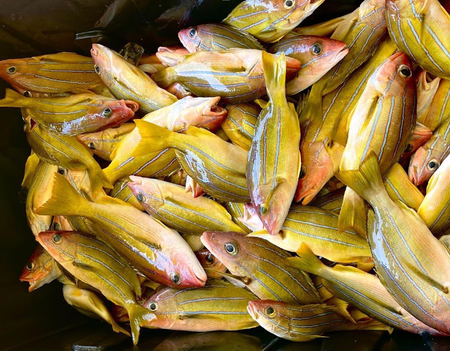
Honolulu’s Culinary Contest Against Invasives
Honolulu, Hawaii, known for its stunning beaches and idyllic landscapes, recently hosted an unusual tournament titled “Eat the Invaders”. This fishing contest challenged participants to catch three types of invasive species, which a chef would then prepare to showcase their culinary potential. Species like ta’ape and roi are not just problematic to local ecosystems but can also be delightful additions to gourmet dishes.
The Concept of “Invasivorism”
This intriguing event highlights a broader movement known as invasivorism, the practice of consuming invasive species to combat their population growth and mitigate environmental damage. Rather than viewing species like ta’ape or roi merely as pests, proponents of this idea encourage the reimagining of these fish as gourmet ingredients. This approach does not negate the need for eradication efforts; instead, it positions culinary creativity as a pathway to managing invasives.
Global Reach: Not Just a Hawaiian Trend
While the “Eat the Invaders” concept is gaining traction in Hawaii, it is not unique to the islands. The ABC network’s show “Eat the Invaders” explores similar themes in Australia. Additionally, initiatives like those launched by the U.S. Fish and Wildlife Service in 2025 encourage the consumption of invasive species as a means to protect native biodiversity.
Potential Benefits of Invasive Consumption
Erin Huggins from the Fish and Wildlife Service claims, “By trapping and consuming invasive species, we can reduce their population and the damage they cause.” Many invasive species listed, such as Myocastor coypus (nutria) and Channa argus (northern snakehead), pose significant ecological threats yet offer culinary opportunities.
The Risks: Is Invasivorism a Trap?
On the surface, the logic of invasivorism appears compelling: combat invasive species while benefiting local consumers. However, experts caution that this approach can be deceptively simplistic. A recent study published in Proceedings of the National Academy of Sciences raises concerns about the pitfalls of commercialization. The risk lies in establishing an economic incentive to maintain rather than eradicate these species, potentially leading to increased populations rather than declines.
Learning from the Past
Historically, other invasive species have led to unintended consequences. The introduction of the Paralithodes camtschaticus (Kamchatka crab) into the Barents Sea initially aimed to bolster fisheries but resulted in a population explosion and subsequent overfishing regulations to preserve the industry.
Looking Ahead: A Balanced Approach
As the invasivorism conversation evolves, it is crucial to remain vigilant. While raising awareness around invasive species is beneficial, it is vital to apply rigorous scientific research and coordinated strategies for long-term control. “Addressing biological invasions requires commitment and informed policy,” warns Fran Officialdegui at the Doñana-CSIC Biological Station. Simplistic solutions often fail to resolve complex environmental issues.
Images by Mr.TinMD (Flickr) and State of Hawaii Division of Aquatic Resources.