

The bikini became one of the most recognizable and discussed garments of all time. July 5, known as Bikini Day, marks the anniversary of its first public appearance when Micheline Bernardini presented it in 1946, surprising the Parisian public with its innovative design.
Since then, this two-piece swimsuit has left a mark on fashion history. It has evolved into much more than a simple beach outfit; it has become a cultural icon.
Celebrities and entertainers have played a significant role in granting it international visibility, transforming the bikini into a symbol of style that, over the years, has inspired debates, new trends, and continues to hold its ground in women’s closets.
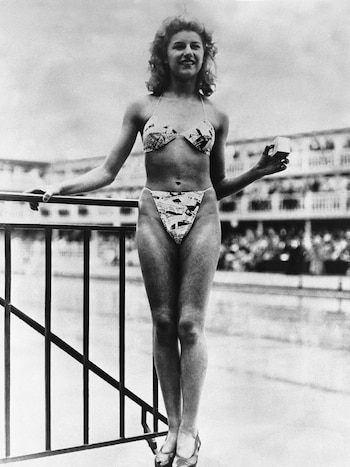
Although there are records of garments similar to bikinis in Greco-Roman art, the modern bikini emerged in the postwar period. On July 5, 1946, French designer Louis Réard presented the groundbreaking design in Paris; a minimalist creation that revolutionized the textile industry and challenged the moral codes of the time.
The model and dancer Micheline Bernardini, summoned out of necessity when professional models refused the risky design, was the first to publicly wear the bikini, generating significant controversy.
The name “bikini” refers to Bikini Atoll, the site of American nuclear tests, symbolizing a social and cultural explosion.
However, the public acceptance of the bikini was filled with challenges; it was banned on many beaches and labeled indecent by religious and conservative factions, attracting criticism since its inception in 1946.
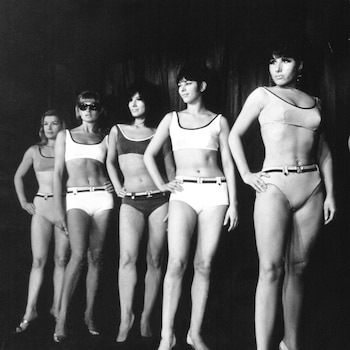
Nonetheless, this controversy fueled a broader discussion about the female body, autonomy, and freedom of choice, giving the bikini a political and symbolic character that cannot be ignored.
This dynamic tension between resistance and acceptance made the bikini an emblem for generations of women, reflecting social struggles regarding identity, morals, and civil rights that have accompanied the garment’s evolution through the years.
Prominent actresses and personalities of the entertainment industry carried out a decisive role in the diffusion and acceptance of the bikini, amplifying its social and cultural impact far beyond fashion.
The presence of celebrities in films, on beaches, and in photos gradually helped the bikini gain public visibility, despite strong initial objections.

In the 1950s, American actress Marilyn Monroe played a huge role in popularizing the bikini in Hollywood and worldwide.
Her stunning photo shoots and film appearances in two-piece swimsuits established a new standard of glamor and allure that continues to influence fashion today.

Brigitte Bardot became an undisputed icon of the garment in 1953, when she wore a checked bikini in the film “Manina, Fille Sans Voiles”.
Bardot broke with existing moral norms and transformed the bikini into a symbol of European liberation and sensuality, popularizing its usage across the continent.

In 1962, Ursula Andress emerged from the waves in a white bikini in the movie “Dr. No” from the James Bond franchise.
This iconic scene became a milestone in cinema and fashion, elevating the bikini to international fame and solidifying it as a must-have summer outfit.

In 1983, Carrie Fisher donned one of the most memorable outfits in the Star Wars franchise, wearing a golden metallic bikini in “The Return of the Jedi”.
This outfit became iconic, transcending cinema and solidifying itself as a cultural symbol in conventions and recreations.

Lady Diana, Princess of Wales, also played a significant role in changing perceptions of the bikini. During the 90s, after stepping back from her royal duties, Diana embraced colorful designs and daring prints during her vacations.
Her summer images set trends and contributed to normalizing bikini use among women of all ages, showcasing the stylistic diversity possible with this garment.

In the digital age, Kim Kardashian has revitalized the prominence of the bikini through her social media posts. Her choice of designs and media influence has triggered discussions on trends and body image in the 21st century.
After oscillating between resistance and controversy, the bikini has undergone constant evolution. It has embraced new materials, prints, and styles, adapting to both aesthetic and cultural dynamics over time.
Celebrities and icons from various eras have transformed the bikini into a means of expression, whether through cinema, music, or social media.

Today, this garment continues to reinvent itself through experimentation with asymmetric cuts, reversible designs, crochet, appliqués, and a wide range of floral, geometric, and animal prints.
The options range from minimalist pieces to bold designs, reflecting aesthetic and cultural diversity.
The bikini’s influence extends beyond the beach, often merging into urban styles at festivals and events, demonstrating its relevance and ability to adapt to contemporary preferences and discourse.