
Unearthing Hungary’s Elite Warriors: A 1,100-Year-Old Discovery
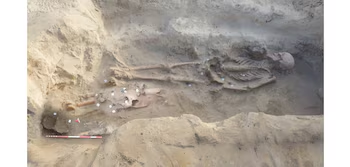
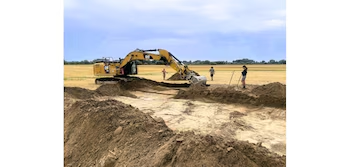
Excavations in Hungary have unearthed three remarkably preserved tombs of elite warriors, dating back over a millennium. Discovered in a rural area near Akasztó, approximately 92 kilometers southeast of Budapest, these tombs provide invaluable insights into the lives of the ancient Magyars.
Significance of the Discovery
The tombs date back to the 920s and 930s, a crucial period for the Magyar tribes as they consolidated power within the Carpathian basin. This remarkable find, coordinated by the Museum of Soldier József in Kecskemét, features a wealth of artifacts, including ornate weapons, coins, and jewelry that reflect both wealth and social hierarchy.
Remarkable Artifacts and Preservation
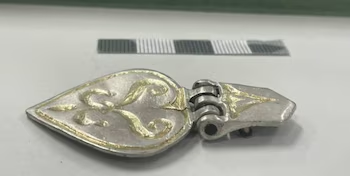
Among the treasures discovered, the first tomb contained the remains of a young man aged 17 to 18 years, adorned with impressive items such as a silver tarsal plate, a symbol of elite status, and several gold rings. This lavish burial ritual included the remains of a horse, suggesting a high ranking within warrior nobility.
The second grave belonged to a 15- to 16-year-old warrior, who was found with a quiver containing seven arrows and a beautifully ornamented bow. The third grave was identified as an adult male between 30 and 35 years old, buried with a 10th-century saber, coins, and archery equipment.
Cultural and Historical Insights
A remarkable 81 coins were also recovered, most minted during the reign of Berengar (888-924), reflecting extensive trade and possibly military campaigns in northern Italy. This discovery emphasizes the rich cultural exchange present at that time.
Laboratory analyses revealed a treasure trove of organic materials—silk, leather, and wood—that support the potential for unprecedented insights into the textiles and funerary practices of the Magyar elite.
Genetic Links and Social Structures
Genetic testing indicated a shared paternal lineage among the three individuals, suggesting strong familial ties within a warrior lineage. This discovery supports theories that they might have belonged to a single military unit, adding depth to the understanding of Magyar social and military organization during the early medieval period.
Conclusion: An Archaeological Sensation
This find has been heralded as an “archaeological sensation” due to the untouched status of the primary tomb, which promises to expand knowledge about the social structures and military organization of the 10th-century Magyar nobility. Continued research into the recovered items will undoubtedly illuminate the customs and identities of these elite warriors, further enriching our understanding of early medieval Europe.