
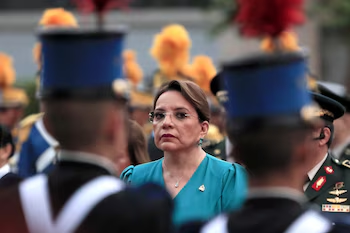
Rising Concerns Before Honduras Elections
As Honduras approaches its pivotal elections on November 30, escalating concerns have emerged from both the United States Congress and the Organization of American States (OAS). The apprehension centers around President Xiomara Castro and her potential use of the Armed Forces to influence electoral outcomes.
Xiomara Castro’s Controversial Stance
Xiomara Castro, known for her alliances with left-leaning regimes in Venezuela, Cuba, and Nicaragua, has a contentious history when it comes to electoral integrity. She has publicly denied allegations of electoral fraud in Venezuela, directly opposing the narrative that Nicolás Maduro manipulated elections to maintain power.
In a surprising move, Castro extended a state of emergency in Honduras until December 26, which has been in place since December 2022. This situation raises alarms because it suspends constitutional guarantees and permits the authorities to detain individuals deemed associated with criminal activities without concrete evidence.
The Electoral Landscape
The presidential race features three candidates: Rixi Moncada (official candidate), Nasry Asfura (opposition leader), and Salvador Nasralla (associated with the ruling party). Asfura currently leads in the polls, a fact that has intensified fears that Castro might replicate Maduro’s tactics, utilizing security forces to intimidate opposition candidates and influence the electoral process.
International Reactions
In the wake of rising political tensions, Elvira Salazar, Chair of the Western Hemisphere Subcommittee in the U.S. House of Representatives, convened a special hearing focusing on the situation in Honduras. Experts provided insights into the political climate, highlighting the risk of potential fraud and repression of opposition voices.
During these sessions, Salazar emphasized the United States’ commitment to ensuring free and fair elections in Honduras. She advocated for a clear message to the military: any electoral manipulation would not be tolerated. The hearing attracted significant attention, underscoring the implications of Honduras’ elections for regional stability.
Calls for Transparency
Democratic Representative Joaquin Castro voiced criticism of Xiomara Castro’s administration, pointing out the detrimental effects of the declared state of exception on civil liberties and the political landscape. He highlighted reported instances of violence and intimidation against candidates and journalists, which could severely undermine public confidence in the electoral process.
Diplomatic Efforts and Urgency
The U.S. State Department has expressed profound concerns regarding the upcoming elections. Alongside a coalition of nations, including Antigua and Barbuda, Argentina, Ecuador, and Paraguay, they called for an extraordinary meeting of the OAS Permanent Council, scheduled for November 25.
Christopher Landau, the U.S. representative at the OAS, has been actively communicating Washington’s stance on the Honduran situation. The urgency is palpable, as the outcomes of the elections could not only affect Honduras but also resonate throughout Latin America.
Conclusion
With only days left until the elections, the global community watches closely. The interplay of political maneuvering, social unrest, and international scrutiny will determine the destiny of democracy in Honduras. Ensuring electoral transparency and safeguarding civil liberties will be crucial in the coming days. The world hopes for a peaceful and fair electoral process that reflects the will of the Honduran people.