
Exploring the Uniqueness of Mackinac Island: A Car-Free Haven
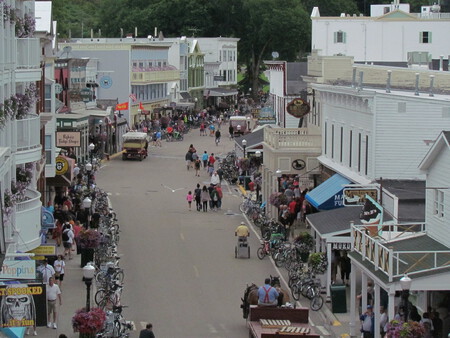
Before entering the subject, let’s make a game: Open Google Maps, type “Mackinac Island”. Let the search engine transfer you to a small island in Lake Huron, Michigan, USA. In the wide avenues, you will see people walking, biking, and riding in horse-drawn carriages, but what you will not find are cars. This charming peculiarity may come as a surprise to some.
Mackinac Island is known worldwide for its ban on motor vehicles, a decision that has defined its character since 1898. In an era dominated by automotive giants like Ford, General Motors, and Chrysler, Mackinac stands out as an anachronism, embodying a lifestyle that has deftly managed to avoid the noise and pollution generally associated with modern transportation.
A Historical Shift Towards a Unique Culture
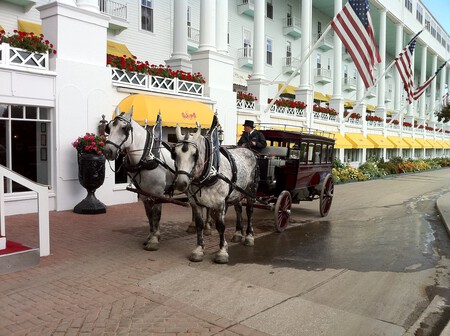
This unusual ban has its roots in the sentiments of the local residents who, amid rising vehicle use, expressed concerns about safety and noise. On July 6, 1898, the island authorities declared that “engine-less carriages” posed a threat to traditional horse-drawn services. According to local legend, the decision stemmed from an incident where a motor vehicle frightened a group of horses. The ruling was not only driven by a desire for safety but also served as a protective measure for the livelihoods of local carriage drivers.
A Unique Appeal
The ban on automobiles set a precedent that has endured for more than a century, creating a unique identity for Mackinac Island. Covering just 3.8 square miles, it has transformed into a sanctuary from the automotive industry that thrives just a short distance away. The only state highway in the U.S. where motor vehicles are prohibited is the M-185, which rounds the island. This singularity has left a mark on the culture and lifestyle, making the island a cherished locale for both locals and tourists.
Exceptions to the Rule
While the regulations are stringent, there are exceptions, such as emergency services, police, and ambulance vehicles. The authorities are lenient about a few instances, like when the U.S. Secret Service employed a car during President Gerald R. Ford’s visit in 1975. In another exceptional case, the filming of the movie ‘Somewhere in Time’ required special permission for vehicles to be present on the island. However, these scenarios remain largely the exception to the rule.
Life Without Cars
On any given day, residents and visitors navigate the beautifully kept streets on foot, by bicycle, or in horse-drawn carriages. The introduction of horses to Mackinac can be traced back to British troops around 1780. By the late 19th century, carriages became a popular mode of transport, and the first license for a carriage was issued in 1869. Today, the island features a reliable ferry service that connects the approximately 600 inhabitants with nearby communities like Mackinaw City and St. Ignace.
A Tourist Magnet
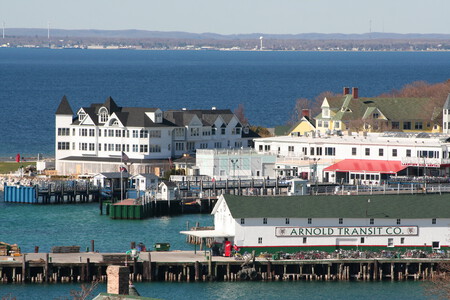
Over the years, Mackinac Island has transformed into a popular tourist destination , particularly during the summer months . Visitors flock to the island not only for its tranquility but also to experience other cultural elements, including the rich heritage of the Anishinaabe people, indigenous to the region.
Mackinac Island exemplifies the remarkable capabilities of a community to create a unique identity that stands in stark contrast to modern life. The decision to ban automobiles was not merely an act of preservation but also a commitment to safeguarding a way of life that respects both the history and environment of the island. In a world increasingly dominated by the hustle of vehicular traffic, Mackinac provides a refreshing retreat, inviting visitors to immerse themselves in a slower, more deliberate pace of life.