
Lithium-ion batteries have become a cornerstone of modern technology, powering everything from smartphones to electric vehicles. As the world pushes toward electrification to combat climate change, the limitations of lithium-ion batteries are coming into sharp focus. Lithium, a finite resource , poses both environmental and supply chain challenges. In this landscape, the future of solid-state batteries looks promising. However, in the interim, a team of researchers from the New Jersey Institute of Technology (NJIT) is working on a groundbreaking alternative: multivalent ion batteries.
The key to this innovation lies in multivalent ions. Instead of relying solely on lithium, these researchers propose using more abundant elements such as magnesium, calcium, aluminum, or zinc . The goal is to not only sustain the performance standards of existing batteries but also improve their energy storage capabilities without depending on lithium. This approach aims to provide a sustainable pathway for battery technology.
Multivalent ion batteries utilize elements that can carry two or even three positive charges , unlike lithium, which only carries one. This unique property theoretically allows for a higher energy storage capacity per ion, paving the way for batteries that can store more energy in a smaller footprint. The chemistry, however, presents challenges that need to be overcome.
However, not everything is perfect . The study that unveiled these findings explains that the size of multivalent ions poses a significant technical challenge. These ions are larger and possess greater charge than lithium ions, making their movement within existing battery materials more difficult. To visualize this, imagine the internal structure of a lithium-ion battery as a sponge, which has designated spaces for particles. In a multivalent ion battery, the sponge has more holes but is also bulkier, complicating particle movement.
To counteract this limitation, NJIT researchers have turned to artificial intelligence (AI) for solutions. By leveraging AI, these scientists can simulate a broad range of possibilities to identify the best candidates for new battery materials. The application of AI in this realm has proved to be revolutionary, allowing researchers to efficiently explore various configurations without undergoing exhaustive trial-and-error tests.
The research team employed a dual approach using a model called CDVAE (Variational Crystal Dissemination Self-coach). This model was trained on existing crystalline structures to generate new materials. By coupling this with a large-scale Language Model (LLM) , the researchers could filter out only the most stable thermodynamic structures for further evaluation. Ultimately, they identified five new porous metal oxides that show promise for quick and safe transportation of multivalent ions.
“One of the greatest obstacles was not the lack of promising chemicals for batteries, but the practical impossibility of trying millions of material combinations,” stated Dibakar Datta , the research team’s leader. His comment underscores the invaluable role of generative artificial intelligence in rapidly narrowing down viable materials that could lead to practical multivalent batteries.
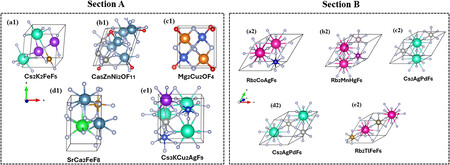
Structures isolated by AI models. Section A is that of the CDVAE. The B is that of LLM
Moving beyond the multivalent batteries, the team validated the AI-generated structures through mechanical simulations and stability tests. These efforts confirmed that the isolated materials possess immense potential for real-world applications. Currently, the NJIT team is collaborating with other laboratories to synthesize and field-test these AI-designed materials.
Datta also highlights that this research exemplifies how AI can serve as a “quick and scalable method” for exploring advanced materials across a variety of fields—ranging from electronics to clean energy solutions—without the need for extensive testing through trial and error. Once the optimal outcomes are established, real-world application becomes the next exciting phase.
However, one must question whether this approach serves merely as a quick patch . While altering the formula of lithium-ion batteries provides a temporary solution, the ultimate goal of the industry still leans toward solid-state batteries. Unlike their lithium-ion counterparts, these batteries utilize a solid electrolyte, which could solve many of the current technology’s issues while ensuring higher energy density and quicker charge times. Although companies like Mercedes are advancing into this domain, brands like BMW are hesitating due to the expensive development costs.
In conclusion, the exploration of multivalent ion batteries represents a significant step forward in battery technology. While they may not replace lithium-ion batteries immediately, their development could provide the sustainability and efficiency required for a greener future. The integration of AI in this research not only expedites the discovery of usable materials but also illustrates the vast potential of combining technology with eco-conscious innovation.
Images | NJIT, Cell Reports Physical Science, Kumpan Electric