
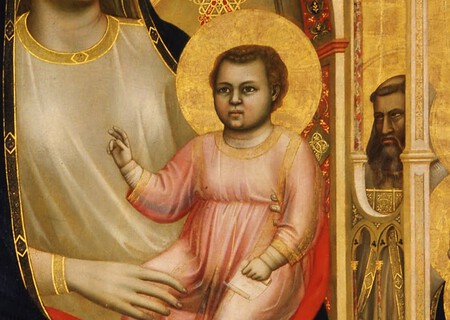
Unpacking the Medieval Portraits of the Child Jesus
The art of the Middle Ages has long fascinated scholars and art lovers alike, but one recurring question stirs intrigue: why does the Child Jesus appear as an oddly aged child in various Christian iconographies? From the thirteenth to the fifteenth centuries, countless artists created altarpieces that depict Jesus in a way that baffles modern viewers. Instead of cherubic innocence, these representations evoke an unsettling dichotomy, presenting the Holy Child with wrinkles and a profound, almost philosophical gaze.
The Art of Anomaly
When one looks closely at these medieval portraits—like the works of Duccio di Buoninsegna, Paolo Veneziano, and Giotto—a striking feature emerges: the Child Jesus often appears aged, as if he bears the wisdom of a philosopher rather than the naiveté of a toddler. These portrayals are not examples of poor craftsmanship; rather, they were driven by intentional artistic choices informed by the cultural and theological context of the time.
Art was not focused on realism or naturalism during this era. Instead, medieval artists set out to communicate deeper theological truths through their work. The childlike features we might expect were substituted for something more complex—and, arguably, more expressive.
Intentionality Behind the Art
As art historians have unpacked these disturbing depictions, it becomes clear that the “ugly babies” observed in medieval art were crafted with a specific purpose. According to experts like Phil Edwards from Vox Magazine, these representations were the result of established artistic conventions that prioritized theological expression over lifelike portrayals. In fact, most of these artists adhered to codes that were understood within their cultural milieu, leading to the creation of what some scholars have termed “homunculus”—literally meaning “little man.”
A Complex Message
The significance of these art pieces goes beyond mere aesthetics. Angela McCarthy, an academic from the University of Notre Dame Australia, highlights that these images were not merely reflections of childhood innocence but were deeply analytical works that emphasized Jesus’ divinity while still being fully human. This theological undertone was further compounded by the depiction of Jesus in an adult posture or with a knowing expression, illuminating his divine wisdom even in infancy.
Artists like Duccio and Giotto invoked age and wisdom through their portrayals as a means to draw viewers toward a more profound understanding of faith, encouraging them to perceive the divine nature of Jesus rather than viewing him solely as an adorable child.
Classical Conventions and Their Evolution
Gradually, the art of depicting the Child Jesus evolved, especially during the Renaissance when a new social class emerged that yearned for more realistic portrayals. This shift indicated broader cultural changes where society began to cherish naturalism and the authenticity of emotion in art. Works from this period demonstrated a transition toward more realistic, innocent representations of children, marking a departure from the conventions established in the Middle Ages.
Influence of Cultural Context
The Council of Ephesus in 431 and the Council of Chalcedon in 451 played vital roles in shaping the artistic narrative of the Child Jesus. The theological arguments proposed in these councils emphasized that Jesus was fully human while simultaneously being fully divine. This had far-reaching implications for how artists represented him, leading to the depictions that often resemble wise, aged beings rather than naive infants.
Conclusion
As art transitioned from the medieval era to the more humanistic perspectives of the Renaissance, we witness a profound shift in how Jesus was portrayed—from introspective old souls to adorable babies that reflect a newfound interest in the joy and innocence of childhood. By the late Renaissance and into later centuries, the shift redefined not only the appearance of the Child Jesus but also how society perceives childhood itself. The medieval “homunculus” ultimately paved the way for a more relatable and innocent vision of childhood, highlighting the dynamic interplay between art, theology, and cultural attitudes toward children.
In understanding these artworks, we gain insight into the values and beliefs that shaped an entire era, reminding us that art is as much about the message it conveys as it is about its form.