
## The Unexpected Resurgence of the Bayonet
During the Iraq War, British soldiers executed a remarkable bayonet charge against Iraqi militiamen near Al Amara, a tactic that seemed to echo a bygone era of warfare. Amidst a battlefield dominated by advanced technology—ranging from night vision to digital communication—the British Army deemed this close-combat maneuver a strategic success.
## A Modern Take on a Historic Weapon
Fast forward over two decades, and the United States Army has decided to reincorporate the bayonet into training programs, particularly at the rigorous Ranger School. This initiative might seem archaic—especially in an age characterized by drones, AI, and precision missiles. However, this strategy reflects a broader understanding of warfare dynamics today.
### Close-Combat Training
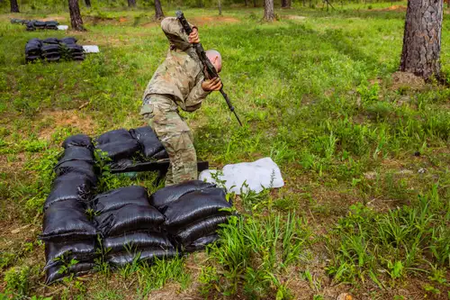
The Ranger School now features innovative training modules that include hand-to-hand combat with rifles affixed with bayonets. Soldiers navigate through smoke, tunnels, and trenches while simulating attacks on humanoid targets. While intuitively it appears to be an anachronism, military strategists believe that such training is critical for potential scenarios faced in future conflicts.
## Lessons from Current Conflicts
Recent conflicts, especially the war in Ukraine, have exposed vulnerabilities in modern military strategies. The reliance on technology—from GPS systems to electronic networks—creates weaknesses that adversaries can exploit. Jamming and electronic warfare can rapidly isolate troops, highlighting the need for soldiers to adapt to combat situations without technological support.
### The Pentagon’s Strategic Insight
In response, the U.S. Army recognizes the importance of maintaining combat effectiveness when technology fails. The emphasis on basic skills—advancing despite fear, staying cohesive with teammates, and pressing forward in extreme conditions—is becoming increasingly vital.
## Not Just an Arcane Tool
Although often associated with the harrowing charges of World War I, the bayonet never truly disappeared from military arsenals. American soldiers wielded it during the Korean and Vietnam Wars, and it saw renewed use in urban combat in Iraq during the mid-2000s.
### Psychological Significance
Beyond its utility as a weapon, the bayonet serves a profound psychological purpose. Military historians emphasize its role in cultivating aggression, discipline, and resilience. It reminds soldiers that even amidst advanced technological warfare, combat often culminates in chaotic, close-quarter confrontations.
## Revelations from the Ukrainian Front
Interestingly, the current state of warfare—with its drones and automated systems—has revealed unexpected disorder. Troops frequently find themselves cut off from command, facing days of combat in isolation. This reality has prompted military strategists to rethink training methodologies, emphasizing the necessity for soldiers to be self-reliant and effective in the absence of their technological crutches.
## The Existential Concern for Troops
Today’s military focus extends beyond merely enhancing weaponry. It involves preparing soldiers to function effectively in scenarios where the digital infrastructure collapses. The bayonet epitomizes this preparation: a nod to fundamental survival instincts, urging soldiers to persevere when all else fails.
### A Paradox of Progress
Ultimately, as warfare continues to progress technologically, there is an escalating apprehension about reversion to simpler, more physical forms of combat. The bayonet symbolizes the duality of modern combat: despite advancements, the essence of fighting remains rooted in physicality and resilience.
Image | Joey Rhodes/US Army