
Highway Sign Colors in Europe: A Tale of Blue vs. Green
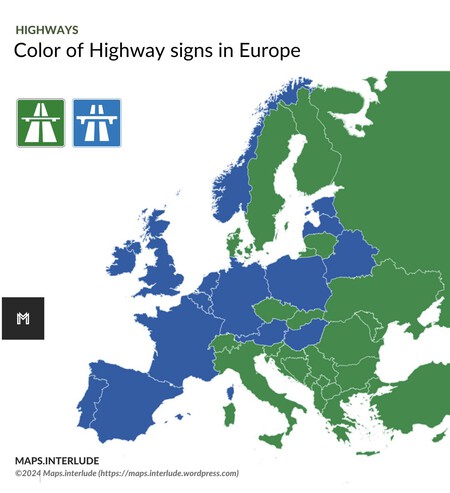
If you’ve driven through Italy, Belgium, Switzerland, or various other European countries, you may have noticed an intriguing detail: while Spain uses blue for its highway signs, many others favor green. This difference stems from a confluence of historical and cultural choices made by each nation when establishing their road networks.
The Origins of the Color Distinction
Since 1968, Europe has operated under a common road signaling framework established by the Vienna Convention on Road Signs. This agreement standardized shapes, symbols, and numerous traffic regulations, yet it allowed individual countries to choose their own colors for orientation signs.
While the convention specifies that road markings can be white or yellow, and that pictograms must be internationally recognizable, it does not mandate a single color for highways. Thus, color variations exist across different countries, despite more or less uniform rules.
Why Spain Chose Blue
In the 1970s, Spain developed its highway system, opting for blue signs on high-capacity roads and white on conventional ones. This decision was influenced by practical criteria, as blue offered superior nighttime visibility with the reflective materials available during that period. Other nations, such as those that also chose blue, made similar choices based on visibility and practical considerations.
The Prevalence of Green in Other European Countries
In contrast, many countries like Belgium, Finland, Croatia, Italy, Switzerland, and Ukraine selected green for their highway signs. This choice reflects the continent’s historical highway systems. For instance, the first major motorway networks—the German Autobahnen and the Italian Autostrade—were constructed using blue and green signals, respectively. The Italian preference for green likely influenced several Mediterranean and Eastern European nations, while the German model gained traction among countries with strong technical ties to Germany.
Is One Color Superior to Another?
Although it may spark friendly debate, neither blue nor green is categorically superior for road signs. The coexistence of both colors across Europe is largely due to the lack of standardization at the European level. Each color serves its purpose effectively when applied consistently within a given country.
Blue offers excellent nighttime visibility, while green provides clear readability during the day, often evoking a sense of progress and continuity. Ultimately, what matters most is that drivers can quickly recognize the type of road they are on.
The Benefits of Harmonization in Signage
The Vienna Convention ensures that, despite color differences, drivers understand road signs regardless of the country. The shared logic behind the shapes, pictograms, and symbols—such as triangles for warnings and circles for prohibitions—enables seamless travel across Europe without requiring extensive knowledge of each country’s traffic laws.
Looking Ahead: No Changes in Sign Colors
In 2025, a proposed amendment from the Global Forum for Road Traffic Safety may revise the Vienna Convention’s regulations, including new numbering for signs. However, the colors of road signs are expected to remain unchanged. Each country maintains its traditions, as these established systems function well and foster familiarity for local drivers.
Being accustomed to local signage not only enhances driver safety but also streamlines navigation, conserving valuable time on the road.
In conclusion, whether you’re driving on blue or green highways, the important thing is that the signs lead you safely to your destination.