

Like many of the largest cities worldwide, Madrid has witnessed a significant increase in accommodation prices, driven primarily by tourism demands. Hotels in Spain’s capital have become notoriously expensive , prompting travelers to seek alternative destinations, even outside Europe , such as Morocco . Consequently, traditional tourist spots are facing monumental challenges, leading hotels to explore creative solutions to remain appealing to budgets strained by high costs.
The New Narrative of Hotels in Madrid
The transformation of Madrid’s outskirts is turning heads. A few years back, the industrial polygon named Julián Camarillo was perceived as a desolate area, shrouded in disillusionment and abandonment . Today, the neighborhood has evolved into a bustling, vibrant location filled with trendy hotels, restaurants, and cultural spots. This change paints the polygon as a microcosm of urban innovation akin to Shoreditch in London or Barcelona’s 22@ district.
Evolution from Industrial to Touristic Hub
Once, Julián Camarillo was dominated by aging factories and empty offices. Now, it brims with new constructions, artisan breweries , and tech startups, signaling a palpable shift. The innovative spirit of this zone has led to its recognition as an urban laboratory , reflecting Madrid’s dynamic essence. Notably, the real estate landscape is increasingly catering to the tourism sector, transforming commercial spaces into hotels. According to a report, the area is on track to become a noteworthy hotel district , making it a favorable choice for tourists seeking affordable lodging near the city center.
Pioneers of Change
Entrepreneur Óscar Sánchez , founder of the Bestprice chain , has taken significant strides in this metamorphosis, heralding the area as an “oil well” brimming with opportunity. The hotels he established are strategically located just eight subway stops from Puerta del Sol , attracting budget-conscious travelers . The figures speak volumes; since 2020, eight new hotels have sprung up, with plans for more additions in the pipeline. This development cycle illustrates that many old office spaces are reinventing themselves to accommodate tourism, signifying a robust demand for affordable lodgings in an ever-growing market.
Redefining Spaces
Interestingly, this renaissance isn’t a new phenomenon; attempts to reimagine Julián Camarillo have faced challenges previously. Early 2000s initiatives that attempted to establish a loft culture reminiscent of New York’s Soho met hurdles due to regulatory setbacks. Conversely, the emergence of hotel chains has occurred organically, without bureaucratic hindrances or established branding. Real estate firms are overlooking traditional office designs in favor of hospitality properties, responding to tourism’s increasing demands amidst ever-tightening regulations on Airbnb homes.
Future Trends and Urban Development
International consultancy firms recognize this upward trend. Colliers has identified over 60,000 square meters available for new hotel developments in Julián Camarillo, albeit cautioning that urban regulations might slow progress. Most new establishments are functional and compact , focusing on efficiency with less than one hundred rooms, catering to the rising demand for business and leisure travel .
The evolution in Julián Camarillo mirrors broader shifts in other Spanish cities like Valencia and Barcelona , where industrial zones are similarly transitioning into tourist-friendly locales. Chains like Ibis and Spark by Hilton are establishing their presence, consolidating the area as one of the most financially attractive for investors.
Emerging Concepts in Accommodation
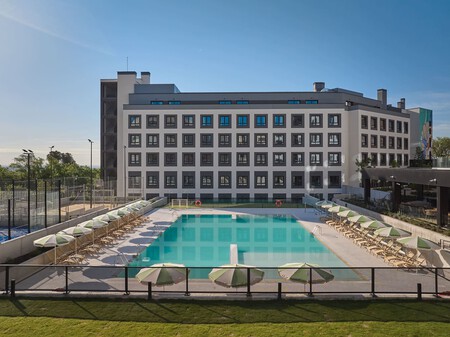
Similar transformations are underway in Carabanchel , where new developments aim to attract creative individuals and students. Node Carabanchel has launched an innovative concept, offering flexible accommodations designed for digital nomads and individuals in transitional phases of life. This extensive $100 million investment features fully equipped apartments and communal spaces that encourage artistic collaboration and lifestyle integration.
The Interplay Between Community and Tourism
Node is pioneering a symbiotic relationship with the community, collaborating with local schools and artists to create a shared living environment. This approach underscores the commitment of modern accommodation options to intertwine with their urban surroundings , promoting a cohesive community spirit while fulfilling the needs of transient residents.
Madrid is clearly undergoing a transformative journey . From industrial polygons evolving into dynamic hotel districts to community-driven accommodation projects, the capital exemplifies a model of urban evolution . Yet, while the drive for innovation is commendable, the challenge remains to ensure these rapidly developing areas remain sustainable and vibrant long-term, avoiding the pitfalls of over-commercialization .