
## Helsinki’s Innovative Heat Recovery Strategy
Helsinki has identified an unexpected ally in its efforts to decarbonize heating—waste heat from data centers. This byproduct, generated during the processing of data for AI models and Internet traffic, is no longer discarded. Instead, it is becoming a valuable resource for heating tens of thousands of homes across the Finnish capital.
### From Data Centers to Homes
Traditionally, data centers have been plagued by the challenge of excess heat production, requiring extensive cooling systems. However, the paradigm has shifted in Helsinki. The city has begun channeling this residual heat into its district heating network, thanks to partnerships with major operators like Equinix, Telia, and Elisa. Since the inception of pilot tests in 2010, this initiative has gained significant traction, with the thermal demands of the city rising alongside the digital economy’s expanding heat contributions.
A compelling statistic reveals that a single data center can provide heating for up to 20,000 homes. For instance, Telia’s plant has achieved a remarkable recovery of 90% of the heat generated by its servers, currently sufficient to warm 14,000 apartments. Plans are in place to potentially double this contribution to 28,000 homes in the near future.
### Transforming District Heating
The integration of digital heat recovery signifies a transformative approach to how district heating systems function. As noted by Finnish energy company Helen, “the electricity consumed by data centers always ends up being converted into heat.” The distinction now lies in the fact that this heat is effectively reutilized rather than dissipated into the environment.
#### Advanced Engineering Solutions
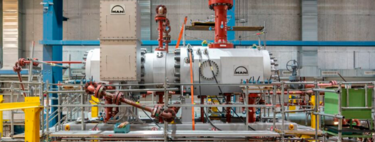
Finland has optimized its waste heat conversion process through an advanced district heating network, comprising a vast system of pipes that distribute hot water to residences and public buildings. The operational process is straightforward: data centers capture the heat produced by their incessantly running servers. This recovered heat is then transferred to an “energy platform,” where heat pumps elevate it to the necessary temperatures for distribution.
High-temperature heat pumps, including some models that operate efficiently even at -20ºC, are critical to this process. Once appropriately heated to 85–90ºC, the thermal energy is injected into the grid, providing warmth to thousands of buildings throughout the city.
### The Role of Heat Pumps in Sustainability
Finland’s success in converting digital heat into district heating is largely reliant on robust heat pump technology. The country boasts 524 heat pumps per 1,000 homes, making it a leader in this field, second only to Norway. This extensive infrastructure, combined with a commitment to electrifying heating, positions Finland as a pioneering urban energy laboratory.
### Limitations and Future Potential
While the data center heat recovery model has proven effective, it is not without limitations. Not all data centers are situated near dense urban areas with high thermal demands, and some may not generate adequate heat to justify the financial investment for recovery systems. Furthermore, replicating this model in warmer climates or dispersed cities presents additional challenges.
Nonetheless, the trend indicates that as AI and cloud technology grow, the volume of recoverable heat will also rise. Nordic countries like Sweden, Norway, and Denmark have already begun capitalizing on this potential, with industry giants such as Microsoft and Google exploring similar initiatives across Europe.
### Conclusion: A Sustainable Future
The Finnish model exemplifies how, even from the heart of our digital infrastructures—data centers that power daily online activities—there exists a practical source of energy for everyday life. The heat produced by countless server interactions can sustainably heat homes in Helsinki, showcasing a vital solution in a world increasingly focused on clean energy.
Finland has thus turned what could be a thermal burden of the digital age into an environmental asset, reminding us that sometimes the energy transition can be achieved through practical, innovative strategies that embrace existing technologies.