
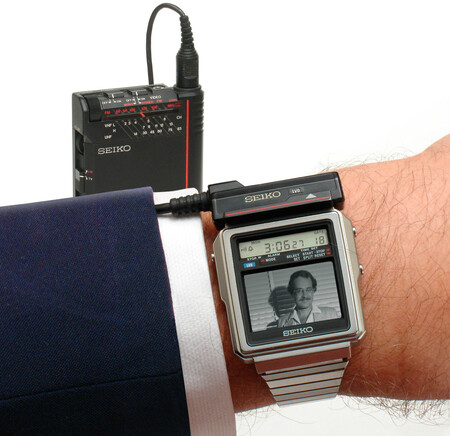
The Seiko TV Watch: A Pioneering Tech Marvel of 1982
History is replete with gadgets that strayed too far ahead of their time. Among these, the Seiko TV Watch, which debuted in 1982, stood out as an intriguing example, acting as a precursor to today’s smartwatches. Despite its revolutionary concept of integrating television viewing into a wristwatch, its timing proved unfortunate, leading to its decline in popularity.
The Journey to Innovation
The origins of the Seiko TV Watch trace back to 1972, spearheaded by American company Hamilton with the introduction of the first digital wristwatch, the Press P1. Seiko later acquired this technology and forged ahead, releasing their own digital watch in 1973. As society anticipated a transformative shift in visual information, Seiko began researching liquid crystal display (LCD) technology capable of displaying moving images, setting in motion the journey that would culminate in the creation of the TV Watch.
Features of the TV Watch
Unveiled in the summer of 1982, the Seiko TV Watch was engineered as a device that could display television broadcasts directly on your wrist. This innovative concept comprised three essential components:
- The Watch: The watch itself measured 40 x 49 x 10 mm and weighed a mere 80 grams. It sported a 1.2-inch LCD screen with a resolution of 32k pixels.
- Receiver: This component was akin to a walkman, serving as both a radio and a television receiver. Measuring 74.5 x 125 x 19 mm and weighing 140 grams, it connected to the watch via a cable.
- Headphones: These needed to be connected to the receiver to listen to broadcasts.
The watch’s design was ingenious yet cumbersome, requiring users to manage several components and cables.
Market Reception and Challenges
Launched with a price tag of 108,000 yen, the Seiko TV Watch garnered significant media attention. However, it was met with skepticism; notable companies like Sony doubted the demand for such a device. Despite initial interest—Seiko sold 2,200 units in Japan—the watch failed to achieve sustainable success.
Critically, the TV Watch was awarded the Nikkei Award for Superior Quality Products in 1982 and made a cameo in the 1983 James Bond film, Octopussy, further solidifying its pop-culture status.
A Step Backward, Not Forward
While the Seiko TV Watch won accolades for its inventive design, its shortcomings in practicality eventually led to its downfall. By 1984, it secured a spot in the Guinness Book of Records as the smallest television in the world; however, it was not enough to revitalize its commercial viability.
In 1983, leveraging their advancements in LCD technology, Seiko introduced the Color Pocket TV, which further extended their innovative streak, albeit as a separate product.
Conclusion
The Seiko TV Watch remains a fascinating artifact in the timeline of technology, a bold attempt to merge convenience with cutting-edge features that, in hindsight, felt like a forecasting of modern smart devices. While it ultimately couldn’t carve a niche in the market, it serves as a reminder of the innovative spirit that propels technological advancement.