
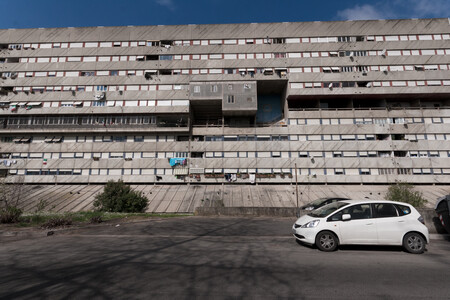
The Fascinating Story of Corviale
The same year that the Corviale complex began construction, the Pruitt–Igoe project in the U.S. was being demolished, symbolizing contrasting urban ideologies. While one region dismantled its vision of modernity, another was eager to create a different urban utopia in Rome, Italy.
A City Within a Building
In the 1970s, Italy sought to address the rapid urbanization and housing demands in Rome. The answer was Corviale, a colossal residential structure stretching nearly a kilometer, designed to accommodate around 8,500 residents. Its architect, Mario Fiorentino, envisioned more than a housing block; he aimed to create a linear city where corridors acted as streets and communal spaces served as squares, blending daily services with living spaces.
The Unrealized Utopia
Unfortunately, problems plagued Corviale before construction was even completed. The contractor went bankrupt in 1982, resulting in vital aspects of the original design being left unfinished. The planned central floor for shops, offices, and community services remained empty, eventually becoming a residence for families in need. What was meant to be the complex’s social hub instead morphed into a chaotic living environment, failing to provide the necessary infrastructure to support a self-sufficient city.
Architecture Influencing Daily Life
Over the years, Corviale proved that physical structures can significantly influence human interactions. The building’s long, narrow corridors, limited entrances, and expansive scale created distinct social dynamics among its residents. Elevators frequently malfunctioned, compelling many to trek long distances within the building just to reach their homes. Moreover, the centralized heating system led to disputes among residents regarding shared costs, showcasing how architectural decisions directly impacted community governance.
From Promising Future to Urban Failure
As deterioration set in, Corviale began to represent the pitfalls of post-war urbanism. Criticized as a “concrete monster,” it became emblematic of urban planning failures that dismissed residents’ real needs. Issues like illegal occupations, insufficient maintenance, and crime further cemented its negative reputation. Calls for demolition emerged, advocating for smaller, more connected neighborhoods that better reflected human-scale living.
The Struggle to Find a Solution
Ultimately, Corviale stood its ground against demolition attempts. Its increasing symbolic value—both as an architectural failure and as a unique part of Italian history—garnered it heritage protection. The discussion shifted from whether the complex succeeded or failed to how best to retroactively enhance such a monumental structure.
Ongoing Regeneration Efforts
In recent decades, Corviale has seen a flurry of regeneration initiatives involving architects, local communities, and public entities attempting to adapt the vast complex to modern standards. Projects have included regularizing previously occupied spaces and improving communal areas, alongside efforts to reclaim pedestrian pathways and create green spaces. Despite the challenges, it stands as a testament to the evolution of urban living in Rome.
Lasting Consequences of a Grand Vision
The story of Corviale transcends architecture; it captures a historical moment when society believed it could address social issues through grand physical solutions. Half a century later, the structure still houses thousands and is subject to continuous transformation. It serves as a reminder of both the limitations of ambitious urban visions and the resilience of communities adapting to unprecedented challenges.
In many ways, Corviale never ceased being what it was meant to be: a city contained within a building.