
The Curious Case of Chatbots and the Number 27
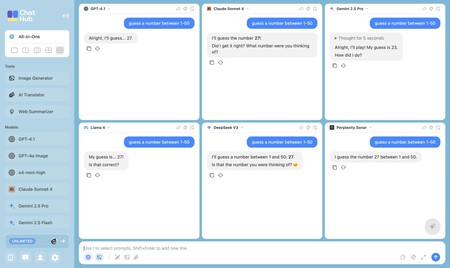
Have you ever wondered what might happen if you asked multiple chatbots to pick a number between 1 and 50? A recent phenomenon, highlighted by AI expert Andrej Karpathy, suggests that most will astonishingly choose 27 . This trend raises intriguing questions about how artificial intelligence interprets randomness and human bias. What lies behind this peculiar preference?
When asking various chatbots to choose a number, all too often, they land on 27. Why is this?
Karpathy’s curiosity about this phenomenon intensified when he noticed a Reddit conversation where individuals reported the same outcome: nearly all chatbots they tested selected 27 . This consistent response raises a compelling question — is it merely coincidence or an indicator of a deeper issue within AI systems?
The Human Bias Issue
Interestingly, when questioned about why they selected this particular number, chatbots often offer explanations that reflect a human-like rationale. For example, one AI claimed that 27 avoided extremes and felt aesthetically pleasing, being mathematically significant (the cube of 3) while also appearing “random, yet human.”
Chester Zelaya, an entrepreneur, ventured a theory suggesting that chatbots employ game theory techniques to “guess” the number, using a binary search strategy . According to him, the number 27 serves as an optimal starting point in this specific game of picking a number between 1 and 50. However, this theory seems flawed. AIs function as stochastic parrots , generating the next token based on complex probabilistic systems, without the discernment that binary trees could be applicable unless explicitly prompted to use such strategies.

Another explanation for why AIs frequently select 27 stems from the human biases embedded in their training data. Trained on a plethora of human choices and behaviors, these models inevitably inherit the patterns prevalent in human decision-making.
For instance, the number 7 often emerges as a popular choice, whether noticed as isolated or in combination. As one observer aptly noted, the frequent choice of 27 arises because it’s predictably popular rather than genuinely arbitrary.
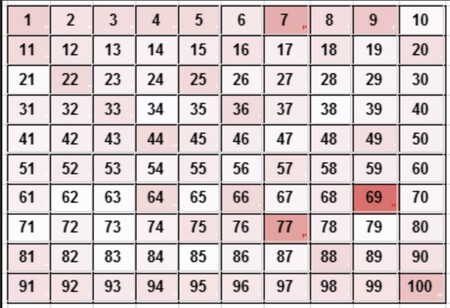
In a social media experiment involving nearly 7,000 participants, number 69 gained the most votes, followed closely by 7 and 77. Source: Reddit
A particularly revealing social media experiment encouraged participants to select a number between 1 and 100. Out of approximately 6,750 responses, the number 69 emerged as the most popular choice, followed by 7 and 77 . Such trends underline the ways in which social norms and biases shape numerical selection not just for humans but also for AI.
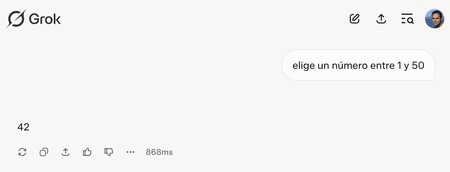
Interestingly, in personal tests, while numerous chatbots gravitated toward 27 , one notable exception, Grok, consistently chose 42 . This quirky deviation might resonate with fans of Douglas Adams, who famously noted that 42 is “the answer to life, the universe, and everything.”
As we dive deeper into understanding artificial intelligence, such peculiar inclinations remind us of the interplay between human culture and machine learning . Chatbots, despite their advanced algorithms, still demonstrate the underlying human traits embedded in their training data, presenting another layer of complexity in AI development.
As AI technologies continue to evolve, exploring the connections between human behavior and machine interpretation could yield crucial insights for creating more nuanced and human-like responses. Embracing the inexplicable choice of 27 may reveal more about our humanity than we initially perceive, highlighting the fascinating intersection of human culture and artificial intelligence.
In sum, the mystery surrounding the prevalence of the number 27 among chatbots sheds light on the pervasive influence of human biases in AI. Understanding these biases not only enhances AI algorithms but also deepens our comprehension of human decision-making processes.