
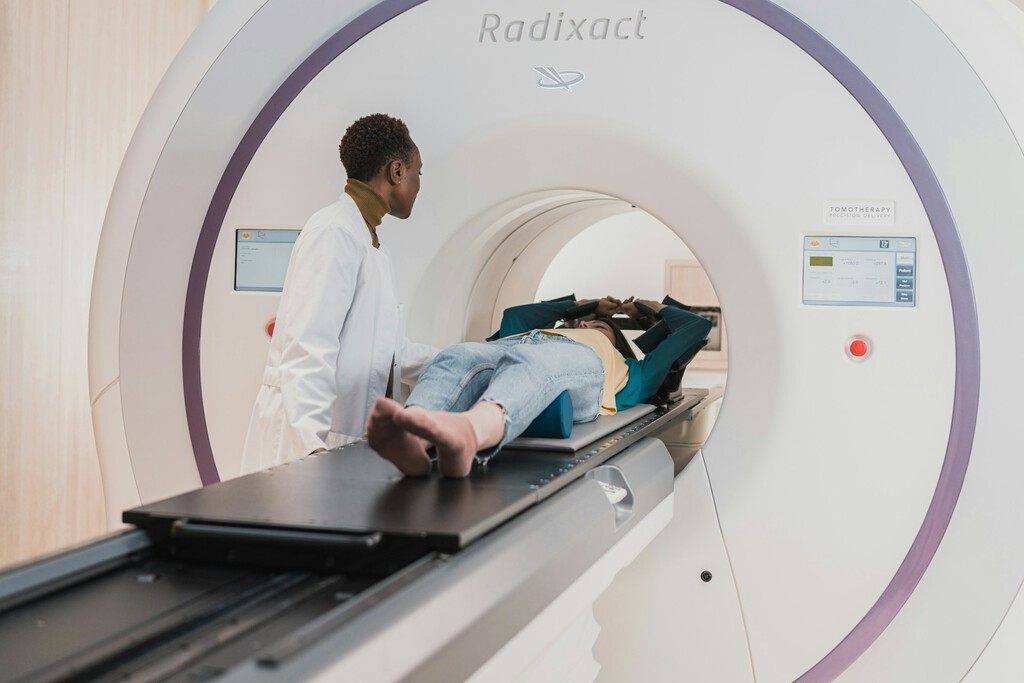
The Promising Frontier of AI in Medical Imaging
The expectations are high: Artificial Intelligence (AI) has been promising for some time to be the next great revolution in medicine. Even aware of this revolution, the tools based on this concept are gaining ground step by step in the area of medical sciences. One of the most recent advancements has been made by a team of researchers in Málaga . This innovative approach is set to change the landscape of medical imaging and diagnostics forever.
Improving Medical Imaging Techniques
Enhancing Image Quality. The breakthrough from Málaga involves a new tool that automates the segmentation of medical images . This tool significantly reduces errors in the analysis of complex images, as stated by the research team themselves. By improving the techniques used for medical imaging, this advancement has the potential to revolutionize how we diagnose and treat various medical conditions.
The Importance of Segmentation
Understanding Segmentation. But what exactly is automatic medical image segmentation ? According to the research team, medical segmentation is the process of “delimiting anatomical structures or lesions in medical images.” This is critical for accurate diagnoses and effective treatment plans.
With enhanced segmentation, healthcare professionals can more easily identify injuries and locate diseases within images. However, segmentation is often challenging due to the limitations of existing imaging techniques, such as magnetic resonance imaging (MRI) and computed tomography (CT) scans.
High Precision in Medical Image Analysis
“The precision in the segmentation of medical images is essential for improving diagnoses and treatments,” Ezequiel López Rubio, the study’s lead researcher, noted in a press release. He emphasized that their approach optimizes the reliability of AI models by applying test-time augmentation techniques . This opens up new avenues in the realm of computational medical imaging.
The Medsam Model. At the core of this innovative tool is a new model called Medsam , which employs the TTA technique. This combination allows for the introduction of small transformations in the images during the analysis process, making the system more robust against variations and enhancing precision in segmented contours.
Promising Results for Healthcare
Significant Improvements. The initial results from the research team indicate that their new tool significantly improves precision when compared to traditional segmentation methods, achieving greater reliability. This enhanced reliability is particularly crucial in images with noise or subpar quality—a scenario often encountered in clinical practice.
Another noteworthy aspect of the developed tool is its flexibility . It can adapt to various imaging technologies, making it a versatile asset for medical professionals. The comprehensive details of the study were published in an article in the journal Mathematics , showcasing the innovative methodologies employed.
The Expanding Role of AI
AI’s Growing Influence. The landscape of artificial intelligence in healthcare continues to expand rapidly. This includes its applications in diagnostic tools that have shown to surpass the traditional “clinical eye” of healthcare professionals. Investigations suggest these AI systems could eventually improve diagnostic accuracy and reduce human error in assessing medical images.
While we may not yet be at the stage of placing our full trust in AI for health-related decisions, the potential of these systems is undeniable. They promise a future in which healthcare professionals can deliver better patient care and outcomes through advanced technology. Although the journey is ongoing, it holds exciting possibilities for both medical practitioners and patients alike.
In conclusion, the advancements in AI for medical imaging not only demonstrate how technology can enhance our understanding of human anatomy but also underscore the importance of continued research in this transformative field. The potential for more accurate diagnoses and improved patient care is just the tip of the iceberg in what could be a revolutionary shift in healthcare.