

Exploring the HONOR Magic8 Pro Factory in China
Taking things for granted is all too easy. We often assume that when we buy a mobile device, it simply works out of the box. However, there’s a complex manufacturing process behind every device that remains invisible to most users. That’s why visiting a factory is truly exciting, as it offers a deeper understanding of how we obtain these everyday products.
What’s even more thrilling than visiting a factory?
Being among the first media outlets globally to document the process with a camera. Typically, companies are secretive about their manufacturing processes. They often restrict cameras from entering factories, as these spaces house processes that could hint at their competitive advantages. However, HONOR opened the doors to their factory and R&D lab, offering a firsthand look at how the HONOR Magic8 Pro is crafted from start to finish.
A Walk Through the HONOR Magic8 Pro Factory
Aerial view of the HONOR factory | Image: HONOR
Upon entering the HONOR factory, we were greeted by artwork painted by employees and a timeline detailing the company’s journey. Originally launched as a sub-brand of Huawei for younger consumers, HONOR has operated independently since 2020 after the US sanctions against Huawei, starting almost from scratch.
In 2021, HONOR unveiled the HONOR Intelligent Manufacturing Industrial Park, its first self-financed factory, which is more than just a manufacturing unit. The campus includes a product validation center, a mass production area for high-end phones, an incubation center for new processes and technologies, and a research and development center.
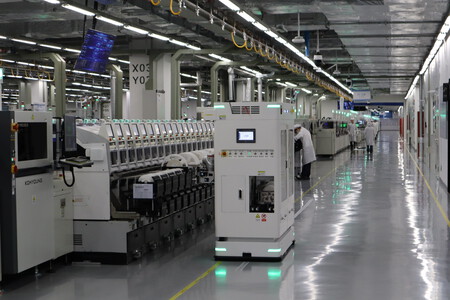
Production line of the HONOR Magic8 Pro. What starts as a motherboard comes out at the end as a packaged phone ready for sale | Image: Xataka
The company boasts advanced facilities where human presence is minimal. The line we visited employed around 20-25 workers focused on specific tasks like inspection and assembly, while the rest was fully automated. According to HONOR, 85% of the processes are automatic and 60% of their automation systems were developed in-house.
This level of automation allows HONOR to maintain strict control over the production and verification processes. An impressive feature is the laser-engraved QR code on each motherboard, ensuring 100% traceability. If a specific component fails, the company can swiftly identify its origin.
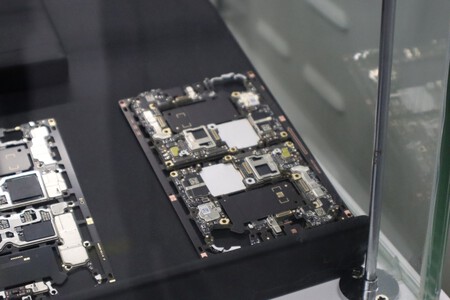
If you’ve ever wondered what the motherboard of a HONOR Magic V5 looks like, here it is | Image: Xataka
Components don’t arrive pre-assembled; they come in coils. It’s fascinating to see these coils, which contain everything from camera modules to charging ports and, of course, processors.
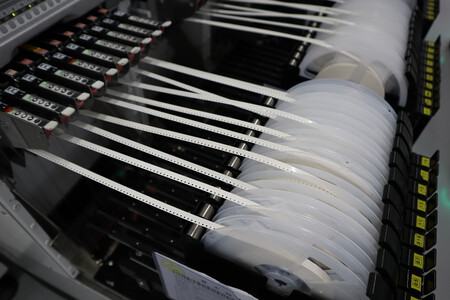
Coils of components that will be assembled on the motherboard | Image: Xataka
While specifics about components remain undisclosed, each chip costs approximately $200, and a total coil amounts to around $281,000. Each machine connected to the coil automatically assembles components onto the motherboard.
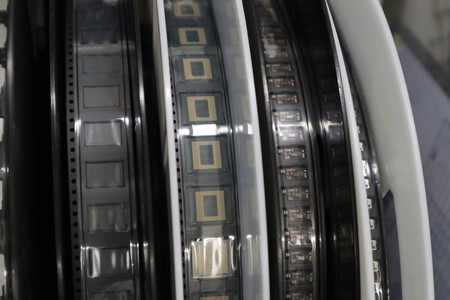
Yes, that’s a mobile processor in the center | Image: Xataka
Like computer processors, mobile SoCs require thermal paste. The precision needed for applying this paste is crucial; even the slightest error can compromise product reliability. If too much paste is applied, it may cause short circuits, while too little could lead to inadequate cooling.
To ensure proper thermal paste application, HONOR goes a step further with an automated system that consistently applies the same amount in a uniform pattern. They also developed an in-house AI algorithm that can detect the volume of thermal paste applied through imaging, reportedly achieving a “100% defect interception.”
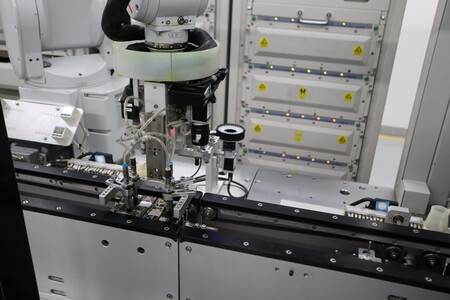
A robotic arm executes tests on a motherboard | Image: Xataka
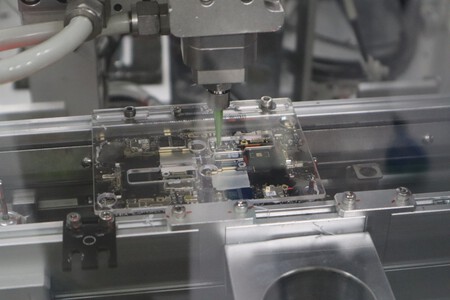
This image shows how thermal paste is applied completely autonomously | Image: Xataka
The entire assembly line features machines and robots synchroniously assembling device components, minimizing the chance of error. HONOR representatives noted that manual assembly areas are the most error-prone, yet still maintain a margin of error below 1%.
Automated Precision in Assembly
One particularly fascinating stage involved an automated double-track screwing machine. In a small device like a mobile phone, precision during assembly is crucial. Instead of having screws fastened manually, which is often seen in other factories, HONOR has developed a fully automated solution that not only screws but also detects anomalies in height, boasting a 99.99% success rate—the best in the industry, according to their claims.
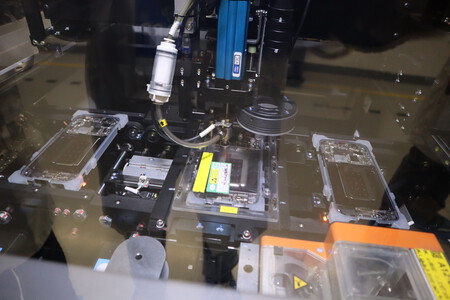
This screwing machine is a sight to behold | Image: Xataka
Throughout the assembly process, all phones undergo various automated tests. These devices have previously passed rigorous testing in the R&D lab, ensuring their durability, allowing for simpler synthetic tests in the factory. This setup enables HONOR to test more phones and provide additional guarantees.
Testing and Quality Assurance
For example, HONOR already knows their phones are waterproof; therefore, they test with air instead of water. The logic is simple: if air doesn’t enter, water won’t either. This approach extends to other tests, including signal and camera checks. Overall, testing takes several days and is fully automated.
Cameras are particularly interesting as they undergo manual checks at the end of the assembly line. Even though the phone has already been examined, three “Consumer Experience Officers” verify that the sound, camera, and screen meet expectations.
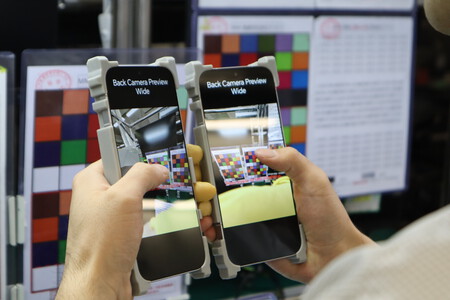
A ‘Consumer Experience Officer’ checks the cameras of the phones at the final stage of the manufacturing line | Image: Xataka
Before reaching this stage, the device goes through several hands, including those installing the batteries, wireless charging modules, and cameras—these are assembled manually. The sight of batteries and cameras arriving in blister packs akin to cough medicine was both surprising and amusing.
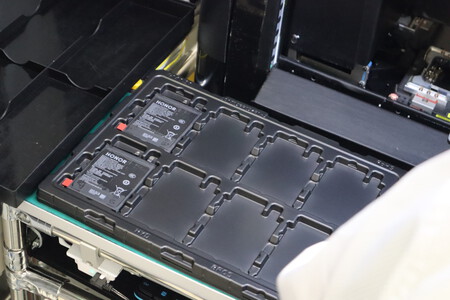
This is how the batteries arrive | Image: Xataka
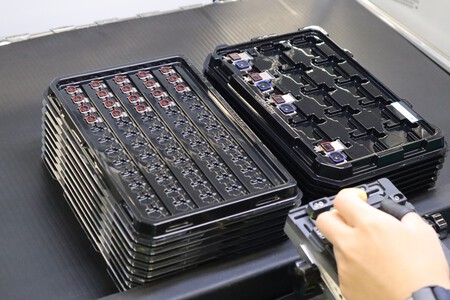
This is how the cameras arrive | Image: Xataka
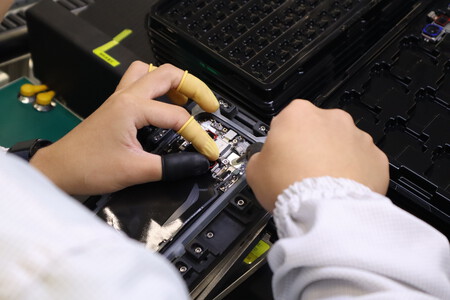
And this is how they are assembled | Image: Xataka
Once all components are assembled, an operator attaches the rear cover, placing the device in a pressure chamber for several hours to ensure the glue sets properly.
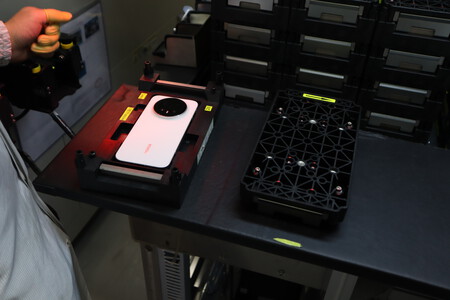
The mobile is prepared before entering the case that will seal it permanently | Image: Xataka
After this, the phone moves to the final area where the software is installed and camera verifications are conducted. Interestingly, instead of connecting the phone via USB, HONOR installs software wirelessly, which makes sense as it reduces potential errors.
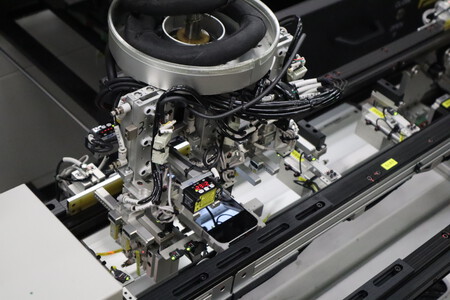
Though it doesn’t seem so, the camera is being tested | Image: Xataka
Every detail is scrutinized; they have a machine to ensure the logo prints correctly on the back cover—any failure triggers an alarm, and the phone is rerouted.
Ultimately, the last steps involve cleaning the screen, applying a screen protector (which, yes, is standard in China), removing all camera stickers, and conducting a final manual inspection before the phone is packed into its retail-ready box.
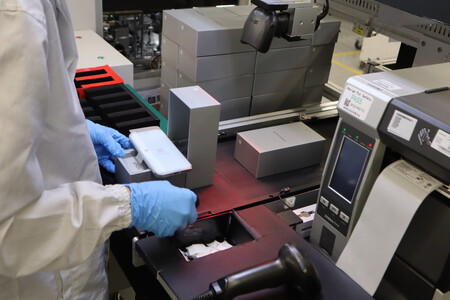
The penultimate operator places the phone into the box and moves it to the packaging area | Image: Xataka
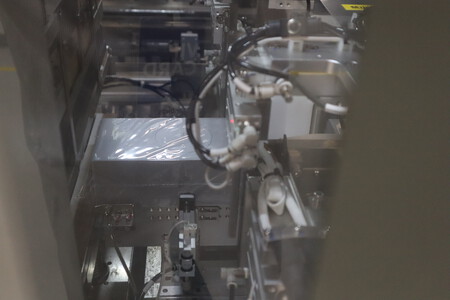
Packaging machine | Image: Xataka
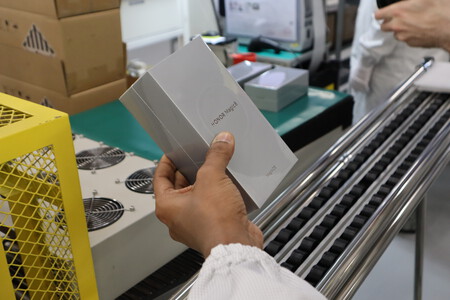
Final result | Image: Xataka
In a matter of mere meters, HONOR transforms primitive motherboards and coils of components into a packaged and ready-for-sale mobile phone. This level of automation, which photos do not fully capture, enables them to produce a phone every 28.5 seconds, although the entire manufacturing process takes longer due to the extensive tests conducted on each device.
The R&D Lab: A Torture Chamber for Innovation
The end product users see when they unbox their mobile wasn’t just born from a manufacturing line. To reach this point, a phone like the HONOR Magic8 Pro undergoes various tests at HONOR’s R&D lab located in Shenzhen, just a short walk from the factory.

Panoramic view of HONOR’s campus | Image: HONOR
Seventy percent of the company’s workforce is dedicated to research and development, which explains the presence of six centers and over a hundred labs addressing various needs. What happens in these labs? From torturing mobile phones to discover ways to make them more resilient to designing their own screens, this visit was truly eye-opening.
Durability Tests and Quality Control
Durability tests aren’t new to manufacturers, as they utilize different tools to test phones’ resilience, including machines for IP certification and drop tests. However, the proof is in the pudding. What caught my attention at HONOR were tests like the impact test with a steel ball. This involves dropping a steel ball on a specific area of the battery to see if it can withstand the impact. Spoiler: they often don’t.
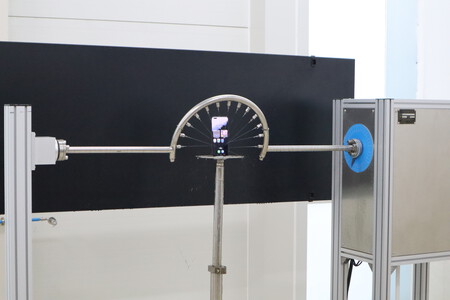
Water resistance test | Image: Xataka
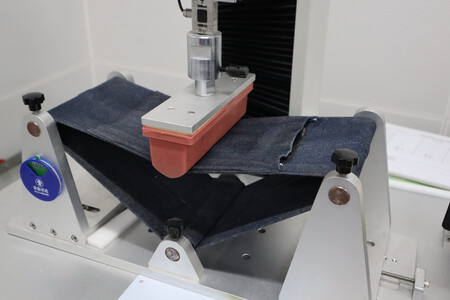
If your mobile doesn’t bend in your pocket, it’s thanks to this test | Image: Xataka
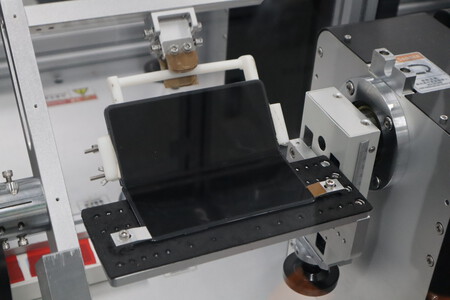
Folding and unfolding test | Image: Xataka
Through these rigorous tests, different material combinations are evaluated to achieve optimal durability. HONOR has established over 200 tests and more than 600 quality standards spanning from product design to battery performance.
The Screen Laboratory
The final stop was the screen lab, a secure area where HONOR investigates, designs, and develops its own displays. Unlike many manufacturers who merely source screens from others, HONOR creates in-house. Each OLED panel consists of multiple layers; the brand meticulously researches which material combinations yield the best outcome.

Display laboratory | Image: HONOR
In summary, it was a highly enlightening visit that reshaped my perspective on the HONOR brand—a company that may not yet have a strong foothold in Spain but possesses all the necessary components for success. The factory opened in early 2021, and by the end of that year, they were already mass-producing their first foldable device—the world’s slimmest foldable phone.
As we look to the future, it’s clear that technology is continuously evolving, and the industry must be ready for the innovations ahead.