
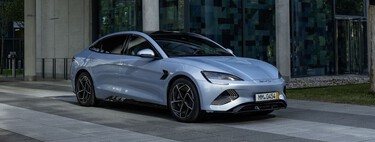
The Shift in Automotive Dynamics: From Android to Apple
For several years, European car manufacturers have harbored a specific fear known as the “Android scenario.” This term signifies the threat posed by tech giants like Google or Amazon, which could turn vehicles into mere interchangeable hardware. The underlying concern was that the true value of automobiles would migrate toward third-party software, relegating traditional manufacturers to the role of minor players, similar to PC manufacturers in the 1990s.
Misguided Focus on Silicon Valley
This anxiety led European companies to focus their attention massively on Silicon Valley. They invested heavily in developing their own connectivity and infotainment systems, all to avoid being sidelined in this rapidly evolving market. Unfortunately, they’ve concentrated their efforts on the wrong front.
The movement that is currently unfolding is not akin to the Android scenario; rather, it embodies a stark contrast. Companies like BYD are producing their own batteries, building their own operating systems, and operating their own charging networks. This strategy revolves around controlling every aspect of the user experience—without any intermediaries—much like Apple does, rather than creating a platform for third-party monetization.
The New Automotive Paradigm: A Self-Built Ecosystem
Paradoxically, the dreaded Android scenario that European companies feared is materializing, but it’s being developed by none other than themselves. They have inadvertently become the element that incites this shift, becoming what they once dreaded.
What sets the Chinese automotive movement apart is distinctly seen inside their vehicles. Brands like Denza, YangWang, Luxeed, Exeed, and Xpeng, which were virtually unknown in Europe three years ago, are now crafting cars that feature interiors that reflect a meticulous attention to detail. This evolution is strikingly similar to what transpired with the iPhone in 2007. The iPhone didn’t necessarily offer more features than its contemporaries; it distinguished itself through its well-thought-out interactions, smooth animations, and coherent gestures.
Experience Over Specifications
In today’s market, evaluating a mid-range or high-end Chinese car against its German counterparts is less about specifications and more about philosophical differences. The Germans are starting to recognize this shift, with recent models like the iX3, CLA, and i3 being serious attempts to reclaim coherence in user experience. However, there’s a crucial difference: reacting to a trend is not the same as taking the initiative to lead it.
Challenges for European Manufacturers
European manufacturers face a dilemma that transcends mere engineering skills. For years, they captured profit margins through mechanical engineering expertise, mastering optimization. However, they overlooked a critical oversight: in the 21st century, the margin increasingly goes to those who control the entire user experience—software, data, services, and ecosystems.
In their pursuit of innovation, many turned to Silicon Valley, believing that this model was the path forward. But only recently have eyes shifted to Shenzhen. Here, companies have crafted a more Apple-like model: integrated, cohesive, and remarkably swift in iteration—qualities that Western companies struggle to emulate. CEOs like those at Ford have even remarked on the humbling nature of China’s advancements.
Conclusion
The future of the automotive industry may no longer be dominated by traditional paradigms. As Chinese manufacturers adopt a model akin to Apple, controlling the entirety of the user experience, European manufacturers must recalibrate their focus and strategies to remain competitive in this rapidly changing landscape.