
A few months ago, I received four boxes from Huawei:
The idea was simple: to test the Huawei ecosystem as a whole—or as much as possible— from the perspective of someone who has lived within Apple for years. Mac, iPhone, AirPods, HomePod, Apple TV. Fully equipped.
I also requested a laptop, but they couldn’t send that. And this gap, as we will see later, speaks volumes about where Huawei stands today as an ecosystem.
What I sought was not merely an aggregate review. I wanted to find out: whether the sum of the parts offers greater value than they do separately. Is there a “glue” that connects these devices in a way that justifies betting on the brand as a whole? It’s what Apple has been perfecting over time: AirPods are great, but paired with an iPhone, an Apple Watch, and an Apple TV, they become something else entirely. Instant pairing, spatial audio, Siri (ugh), Handoff. One device feeds into another, and the ecosystem as a whole is worth more than the sum of its parts.
Does that happen with Huawei? Here’s the honest answer.
What I Tried (and What I Didn’t)
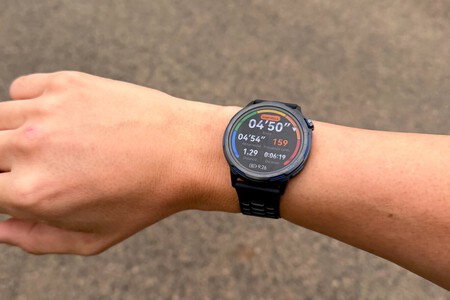
I will be transparent from the get-go. I tested the FreeClip 2 thoroughly for several weeks. My experience with Huawei watches comes from the GT Runner 2, which I tested against the Garmin Forerunner 970 that I use daily. What I learned applies to the GT 6 family, which I’ve tried for a shorter time. I used the Pura 80 Ultra as a secondary phone for a few days, enough time to get a feel for it but not enough to replace my iPhone, which I use as my primary phone due to its eSIM and Apple services I can’t fully renounce.
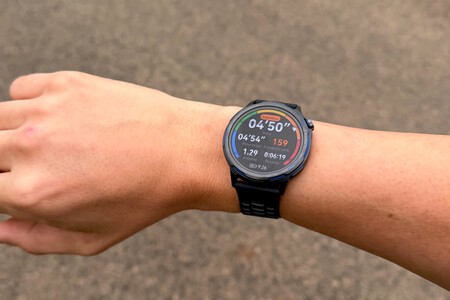
Huawei Watch GT Runner 2 during a run. Image: Xataka.
This isn’t the total immersion I wanted, but the partial experience ironically reveals something significant: the fact that an Apple user cannot take the full leap even when the devices are in hand speaks to the entry friction of the Huawei ecosystem.
Pura 80 Ultra: An Extraordinary Camera Amid Constant Compromise
The Pura 80 Ultra’s camera is probably the best I’ve used in a mobile until I tried the Xiaomi 17 Ultra in March. I’m not saying this lightly. The one-inch main sensor with variable aperture, combined with a dual-switchable telephoto system (3.7x and 9.4x sharing a 1/1.28-inch sensor), captures images that don’t look like they came from a phone. Our colleague Noelia Hontoria corroborated this with stunning photos in her detailed review.
The dynamic range outdoors is phenomenal. At night, where most phones start making concessions, the Pura 80 Ultra maintains a level of detail and noise control that’s a step above what Samsung and Apple offer in their high-end devices.
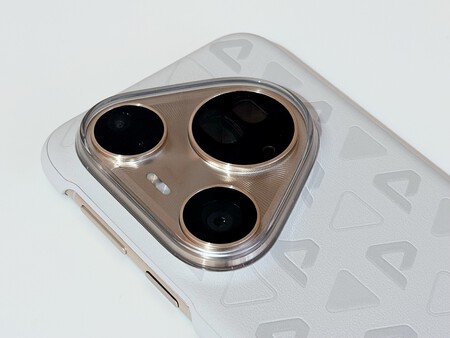
The back design of the Pura 80 Ultra isn’t for me, but I acknowledge its personality, something not always found in high-end devices. Image: Xataka.
DXOMARK awarded it the highest-ever score in mobile photography. Nearly a year after its launch, with all the iPhones, Galaxies, Oppos, or Xiomis that have come out since then, it still sits on top. That’s a fact, not an opinion. And in real use, the impression is confirmed: this phone makes you a better photographer without changing your technique.
But then there’s everything else.
Living without Google in Europe in 2026 remains an exercise in willpower. It’s not impossible. There are workarounds, alternative applications… You can install GBox to access Gmail, YouTube, or Maps. You can download APKs manually. You can search in AppGallery and find many necessary apps. But “you can” is not the same as “it’s convenient.” Every extra step you take to achieve what happens invisibly on an iPhone or Pixel is a small defeat in user experience.

The various zoom jumps and its absurd detail level. Image: Xataka.

Once again, a spectacular level of detail. Image: Xataka.
The initial setup already warns: while an iPhone guides you with the smoothness of a process perfected over fifteen years—something completely transferable to Android—the Pura 80 Ultra requires patience and some technical knowledge to set it up to your liking. The EMUI interface we have in the European version is functional, fast, and reasonably intuitive. That’s not the problem.
The issue is the gap where Google services should be: limited mobile payments, notifications that sometimes arrive late, banking apps requiring acrobatics, absent Android Auto… There are alchemic formulas, microG, GBox (both applications that Huawei integrates in their recent devices), and ways to bypass barriers. But justifying that leap of faith and extra effort is hard, especially for something that isn’t even Huawei’s fault.
There’s something I particularly appreciate about the Pura 80 Ultra that transcends the camera: it has personality. In a market of glass sandwiches that look increasingly alike, Huawei dares with a triangular camera module covering almost half the back of the phone. Aesthetically debatable, it wouldn’t be my choice if I were the chief designer. But it’s a statement of intent, and in a sector where everyone copies everyone else, that holds value.

FreeClip 2: The Surprise of the Lot
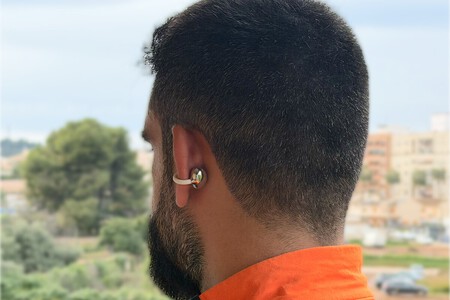
If I had to choose just one product from the four, it would be the headphones. I mentioned in the review: the FreeClip 2 is one of those products that fulfill their fundamental promise so quietly that their biggest achievement is making you forget you’re wearing them.
5.1 grams. Open design. No pressure in the ear canal. I’ve worn them for hours while cleaning the house, working, etc., and after a while, they just disappear. That sensation, often a compromise between comfort and stability in other open headphones, is resolved here effectively.
The sound won’t impress an audiophile, but it’s more than adequate for daily use: clear calls, reasonably present bass thanks to the double-diaphragm driver, and sound leakage control that works at moderate volumes. The inverted phase wave system does its job: if you’re not cranked to maximum volume, those around you hear nothing.
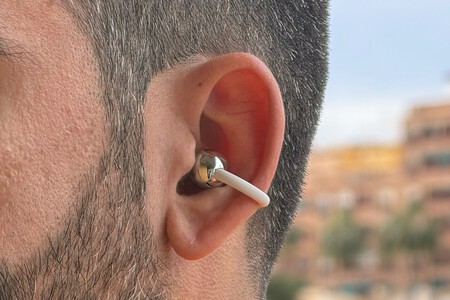
Huawei FreeClip 2. Image: Xataka.
Huawei FreeClip 2. Image: Xataka.
Now, what happens when you put them into the Huawei ecosystem versus using them with an iPhone? Here lies the essence of the ecosystem approach. With a Huawei device, pairing is instant: you open the case near the phone, and an animation appears reminiscent of AirPods with an iPhone. The multipoint connection works, switching between devices is reasonably smooth, and the Celia assistant is invoked directly from the earbud (though its utility in Spanish remains limited).
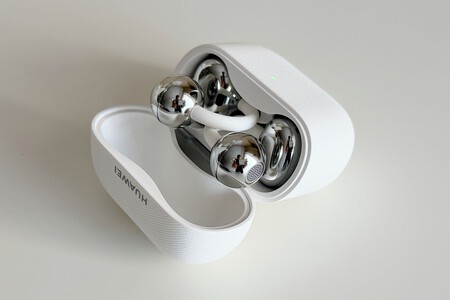
Image: Xataka.
With an iPhone, the FreeClip 2 works perfectly as Bluetooth headphones. But you lose the advanced functions provided by the Huawei app (which is available on iOS, unlike what’s found in Google Play). It’s not a disaster, but it’s also not the seamless ecosystem experience Apple achieves with AirPods, where pairing with any Apple device is automatic, iCloud synchronizes settings, and switching between iPhone, Mac, and Apple TV is transparent.
The Watch: Solid Foundation, Ecosystem Needs Maturity
My experience with Huawei watches comes primarily from the GT Runner 2, rather than the GT 6. However, the family shares enough DNA that my conclusions can be extrapolated, and they are mixed.
The hardware is surprisingly good for its price. The optical heart rate sensor responds faster than that of my Garmin Forerunner 970: when effort increases, the watch reflects it sooner; when you ease up, it also drops quicker. For a runner who uses pulse as a training reference, this is crucial.
Sports metrics offer depth: stride length, cadence, ground contact time, vertical oscillation… Data that in other ecosystems require additional accessories are standard here. Huawei presents them understandably with context and color coding, something Garmin, with all its depth, doesn’t always achieve.
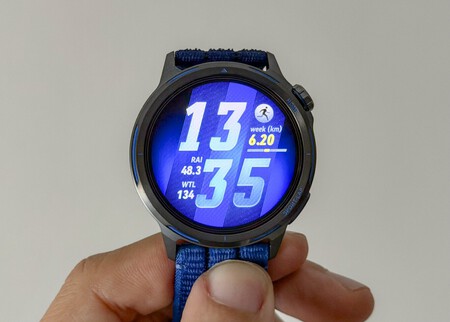
Huawei Watch GT Runner 2. Image: Xataka.
But then come the caveats of the ecosystem. Integration with Strava works but requires a detour due to the absence of Google Play, and shared activities appear poor compared to Garmin’s. Prediction algorithms for race times tend to be overly pessimistic, especially initially when there’s no accumulated history. And while the battery life is good (seven real days with training), it doesn’t reach the fourteen promised in marketing.
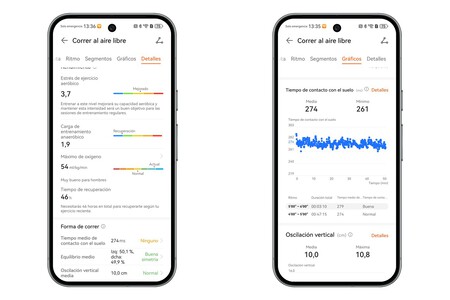
Image: Xataka.
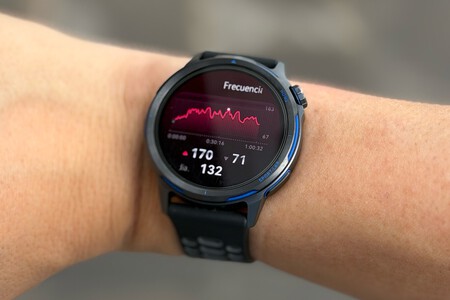
Image: Xataka.
The deeper issue is the weight of the rival ecosystem. Those who have been using Garmin Connect or Strava for years have a history, routes, training plans, and a community. Huawei Health works well as an app, but it lacks a critical mass. For someone starting from scratch, the price-quality argument is strong. But for those already entrenched in another sports ecosystem, the cost of switching is real and doesn’t appear in the specs.
The MatePad 12 X: The Piece I Tried Least and Taught Me Most
I’ll be brief about the tablet because the setup process spoke more than the use did.
The MatePad 12 X boasts an excellent screen and hardware worthy of a premium tablet. Using it for streaming content was enjoyable, nothing more. However, the setup process was somewhat tedious: installing apps, searching for alternatives not available in AppGallery, signing in, adjusting preferences… In an iPad, you’d spend minutes; here, I took considerably longer.
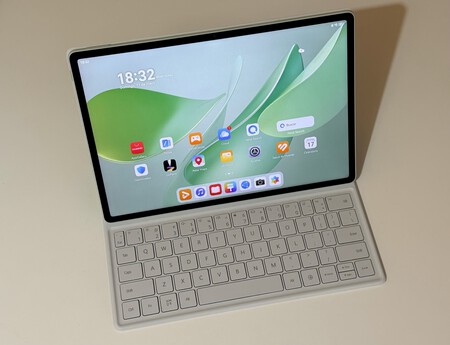
Image: Xataka.
Notably, despite having the tablet at home for months, I never felt the urge to use it beyond casual multimedia consumption. Not because it’s bad (it’s not), but because the entry friction discourages casual adoption. An ecosystem is precisely built on casual adoption: that instinct to grab the device that’s closest to hand without a second thought.
That said, for a multimedia consumption tablet as a primary use, I think it’s more than decent and I wouldn’t spend money to switch it for an iPad.
The Missing Piece: The Laptop
I couldn’t test a MateBook, leaving the experiment lacking. In Apple’s ecosystem, the Mac is the piece that closes the circle: Handoff to continue tasks between devices, universal clipboard, AirDrop, Continuity Camera. Without a laptop, I can’t fully evaluate the Super Device feature (the Huawei equivalent that allows projecting your phone onto a computer, dragging files between screens, or using the tablet as a second monitor).
What I can evaluate are the functionalities I tested among the available devices. Huawei Share works for transferring files between the phone and tablet. The screen projection from the phone to the MatePad works. But they are isolated functions, not a connective tissue that transforms the experience. In Apple, integration is invisible: things just happen without you needing to do anything. In Huawei, things happen only when you decide to activate them. That difference, subtle in description, is enormous in experience.
The Ecosystem Question: Does the Sum Add Up?
Back to the initial question. In Apple, 1+1 = 3. Devices enhance each other in ways that go beyond their individual capabilities. Does that happen with Huawei?
My answer: 1+1 = 2, perhaps 2.2. Huawei devices work well together. There are connections, synchronization, and cross functions. But there’s no multiplier effect that turns an ecosystem into something more than a collection of good products. There’s no moment where you think, “this is only possible because I have all these devices from the same brand.”
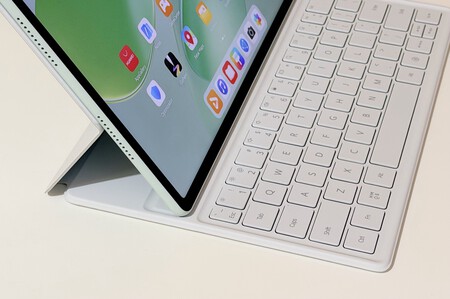
Image: Xataka.
There’s a structural reason for this. Apple has built its ecosystem around services (iCloud, Apple Music, Apple Pay, iMessage…) that act as invisible connective tissue. Burdened by U.S. restrictions, Huawei has been unable to replicate that layer of services with the same depth outside of China. Huawei Cloud exists, Huawei Music exists, Celia exists. But their scope, catalog, and integration into the daily lives of Europeans aren’t at the level necessary for the ecosystem to generate that effect of “once you’re in, you don’t want to leave.”
The Verdict: A Parallel Reality with a Future, but Not for Everyone
Huawei manufactures extraordinary products. The Pura 80 Ultra features a top-three camera. Its two companion products were released afterward. The FreeClip 2 is the most comfortable open earbuds on the market… if you like that form factor. The watch offers a quality-price ratio that should worry Garmin in its mid-range. The MatePad 12 X is a more than competent tablet.
But an ecosystem is not built solely on good hardware. It’s built on services, integrations, and the certainty that everything will work without you having to think about how.
Huawei has constructed a parallel reality. In China, where HarmonyOS has surpassed iOS in market share and where AppGallery has the necessary catalog, that parallel reality functions. Outside of China, it still requires concessions that most users are unwilling to make. Not even the curious, not even those who admire the hardware.
I don’t see myself leaving Apple for this. Not even leaving Android. And I believe that most European readers feel the same. Yet it would be a mistake to underestimate Huawei. This is a company that was banned by the world’s leading power and responded by designing its own operating system, its own service ecosystem, and its own chips. They don’t do things like everyone else; they do things they believe should be done. And in some areas (the camera, earbuds, sports sensors…), they are at the level of the best or exceeding it.
The question is no longer whether Huawei can make good products. They have already proven that. The question is whether they can weave the invisible network of services and experiences that transforms four good products into an ecosystem you don’t want to leave. In this regard, they are not there yet.
But knowing them, they will keep trying.
Featured image | Xataka
In Xataka | Huawei is no longer competing: it’s building its own parallel reality
These devices were provided for testing by Huawei. You can check how we conduct reviews at Xataka and our policy regarding relationships with companies.