
Colombian Political Leaders Gather for Dialogue Amid Rising Tensions
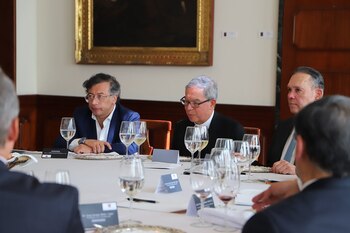
On June 16, a meeting convened by the Colombian Catholic Church gathered prominent representatives of the political spectrum, including President Gustavo Petro . This initiative aimed to alleviate the political tensions affecting the nation.
The gathering took place amid an atmosphere of institutional uncertainty , with the goal of establishing a collective commitment to moderate political discourse and forge a path toward understanding .
Now you can follow us on Facebook and in our WhatsApp Channel.
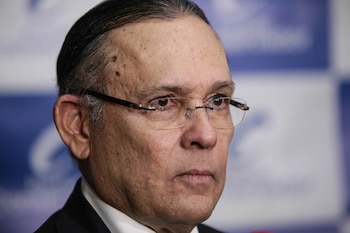
The event was steered by Cardinal Luis José Rueda Aparicio , who served as a mediator between the various factions. Among the attendees were the President, Efraín Cepeda , the President of the Senate, and representatives from the judiciary.
Despite acknowledging the event’s importance for dialogue, there were expressions of dissatisfaction upon its conclusion.
One of the incidents that sparked frustration was President Petro’s late arrival ; reportedly, he entered nearly an hour after the scheduled time. Furthermore, attendees felt that the President’s arguments in favor of government reforms, including a proposed public consultation , were not sufficiently conciliatory given the meeting’s context.
When the session closed, Efraín Cepeda voiced his dissatisfaction with the inconsistency between the rhetoric and actions of various participants. He stated, “It’s pointless to sign documents if actions suggest otherwise; I must express my regret.”
During the meeting, all participants signed a document pledging to publicly commit to lowering the intensity of their political discussions, encouraging mutual respect and a spirit of reconciliation . This document reads:
“In a global, national, and local context marked by deep tensions, contradictions, and transformations, as citizens and representatives of Colombia’s state institutions, we collectively commit and invite the entire nation to listen to one another, cherish, and respect each other in a brotherly manner, to disarm and harmonize language, and reject all forms of violence.”
This declaration aims to foster a climate of better understanding amid debates concerning structural reforms in areas such as pensions, labor, and health, alongside the controversies surrounding the government’s intent to engage the populace through direct participation mechanisms.
In the days leading to this meeting, various political sectors had called for the Church to intervene as a neutral facilitator to mitigate escalating polarization. The gathering received consensus from leaders of the three branches of power, all acknowledging the necessity of institutional dialogue.
However, the commentary from some participants and the overall atmosphere indicated that significant tensions still exist. According to reports, one high-ranking magistrate reportedly left early in disagreement with how the session unfolded.
The Catholic Church confirmed its willingness to continue facilitating dialogue between institutions and citizens. Sources close to the clergy noted that the objective of these meetings is not to impose positions but to promote understanding during a critically important phase for the nation’s political and social future.
The symbolic act of signing the commitment occurred in a serious atmosphere. However, comments like Cepeda’s indicate that the effectiveness of such agreements will depend on their practical implementation.
From the Colombian Congress, some legislators emphasized the necessity of building real bridges between the government, opposition, and citizens. They note that doing so requires respect for the institutional framework and enhancing dialogue across all sectors.
The meeting concluded without additional announcements, but a signed commitment remains. Attention now shifts to how these pledges will be reflected in forthcoming legislative and political discussions. The coming weeks will be vital to assess whether the commitments made translate into changes in the tone and content of public debates. Meanwhile, the Church and other stakeholders will persist in creating conditions for understanding, aiming to decrease the levels of confrontation that have intensified in the country over recent months.