
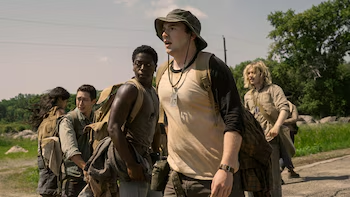
Exploring Youth Resistance in “Walk or Die”
Stephen King’s adaptation of his novel “The Long Walk,” titled “Walk or Die,” offers a haunting commentary on youth, competition, and the tyranny of authority. Directed by Francis Lawrence, known for his work on “The Hunger Games,” this film pushes the boundaries of youth resistance within the dystopian genre, intertwining moral dilemmas and the harsh realities of authoritarianism.
A Gripping Premise
Set in a war-torn alternate America, “Walk or Die” presents fifty teenagers who must navigate an oppressive competition. Participants are forced to walk at a minimum speed of five kilometers per hour. The stakes are high: stop walking, and face dire consequences. This brutal setup challenges the characters to endure not just physical exhaustion, but also psychological strain, serving as a metaphor for societal pressures faced by today’s youth.
The Human Element
The film is distinguished by its focus on character development amidst visceral action. Cooper Hoffman stars as Ray Garraty, with a supporting cast including David Johnson and Charlie Plummer. Mark Hamill, playing the Commander, adds a layer of unsettling authority that critiques institutional violence. This dynamic showcases how camaraderie blossoms, even in dire circumstances, making the audience ponder the true cost of survival in a ruthlessly competitive environment.
Cinematic Technique and Direction
Running for 108 minutes, “Walk or Die” adopts an intense pacing that mirrors the relentless journey of its characters. Lawrence employs a deliberate camera rhythm, immersing viewers in the stress and tension the teenagers experience. The film’s violence is not gratuitous; it serves as a continuous reminder of the stakes at hand. This unsettling landscape forces the audience to confront their own views on obedience and compliance.
Psychological Depth
Stephen King himself has noted the profound psychological themes within the narrative. In particular, the chilling moment involving Gary Barkovitch—a character crafted from extreme psychological distress—highlights the impact of enforced competition on mental health. King remarked that certain scenes haunted him, echoing the psychological violence that permeates the lives of young people in high-pressure environments.
Cultural Relevance
“Walk or Die” resonates strongly with modern audiences, particularly young viewers, gamers, and social media enthusiasts. It raises crucial questions about the nature of competition, solidarity, and the relevance of authority in contemporary society. Moments of humanity emerge even amid chaos, showcasing the resilience and spirit of youth.
Innovative Marketing Strategies
To enhance the immersive experience of the film, some countries introduced unique marketing strategies, such as treadmill installations in theaters. This interactive element forces viewers to engage physically with the film’s themes of perseverance and resistance, making the viewing experience not just observational but participatory.
Conclusion: A Reflection on Limits
As one of Stephen King’s most personal works, “Walk or Die” serves as a poignant exploration of the sacrifices extracted from youth in a relentless system. Unlike traditional youth dystopias that glamorize heroism, this adaptation portrays a harrowing reality where survival becomes a bitter quest. Ultimately, it invites audiences to reflect on the limits of human will and the costs of survival when faced with oppressive societal structures. Through this lens, “Walk or Die” not only entertains but also challenges us to examine the moral dilemmas surrounding youth resistance in our world.