
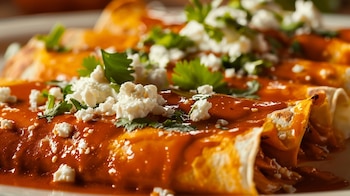
Enchiladas: A Delicious Dive into Mexican Cuisine
Enchiladas are one of the most representative dishes of Mexican cuisine . Their preparation varies across regions of Mexico, but they generally consist of corn tortillas filled with various ingredients and bathed in flavorful sauces. Common accompaniments include chicken, cheese, cream, and lettuce. While their rich flavors and historical significance render them irresistible, it’s crucial to analyze their nutritional value and determine how they can fit into a balanced diet.
Understanding the Enchilada Composition
A traditional enchilada typically comprises a corn tortilla that is stuffed with chicken, meat, cheese, or beans, then drenched in a sauce—be it green, red, or mole. Each ingredient significantly influences the overall energy and nutritional content of the dish.
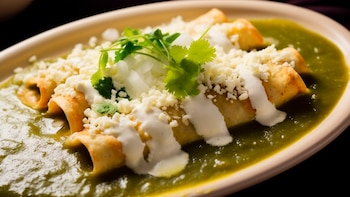
A basic enchilada, baked and filled with chicken and topped with green sauce, contains between 120 and 180 calories . This number can considerably increase when ingredients like cream and fatty cheeses are added, or when tortillas are fried beforehand. The frying process alone can add significant saturated fats and calories. Additionally, mole versions are often more caloric due to the inclusion of ingredients like peanuts, chocolate, and oil.
Nutritional Benefits and Considerations
Nutritionally, enchiladas provide complex carbohydrates from corn tortillas and quality protein if filled with lean meat or chicken. They are also rich in vitamins A and C from the sauces and vegetables, along with essential minerals such as calcium and iron. However, the inclusion of cream and cheese, as well as frying, can lead to increased fat and sodium content.
A moderate portion of enchiladas, especially when made with fresh, low-fat ingredients, can be part of a balanced diet . It’s important to note that the choice of tortilleria plays a role too; corn tortillas tend to be healthier compared to flour tortillas due to lower fat content and greater fiber levels.
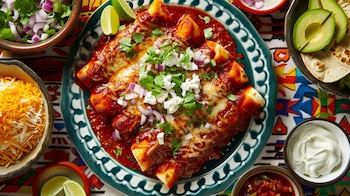
The cooking method is crucial. Baking tortillas or lightly sautéing them without oil can significantly decrease calories. Opting for chicken or turkey filling instead of red meat, incorporating vegetables, and minimizing cream and cheese can enhance the nutritional profile effectively. Fresh garnishes, such as lettuce or pico de gallo, add fiber and nutrients, enhancing the overall healthfulness of enchiladas.
Portion Control and Healthy Consumption Tips
Portion control is vital. For adults with moderate physical activity, a recommended serving size is two to three medium enchiladas , paired with ample vegetables and a modest portion of rice or beans. This combination can yield approximately 350 to 500 calories when keeping cream and cheese to a minimum.
Indulging in enchiladas occasionally, as part of a diverse diet and complemented by regular exercise, does not pose a significant risk for weight gain. It is advisable to avoid frequent consumption of fried variants or those scattered with greasy ingredients, such as chorizo or high-fat cheeses.
Consulting a nutritionist can help adjust your enchilada intake to align with your caloric needs. For most healthy adults, limiting enchiladas to once or twice a week while opting for baked versions with lean fillings strikes a balance between enjoying a beloved dish and managing weight effectively.
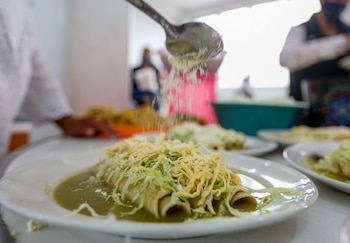
- Take advantage of corn tortillas without frying.
- Fill with lean and vegetable proteins.
- Reduce cream and cheese.
- Prepare natural homemade sauces, without excess oil.
- Accompany with fresh salads and avoid sugary drinks.
In conclusion, enchiladas can be a delightful, healthful addition to your diet if prepared and consumed thoughtfully, ensuring a balance of flavors and nutrition to relish one of Mexico’s most cherished culinary treasures.