
The Absurd Death of Albert Camus: A Tragic Paradox
On January 4, 1960, along Route Nationale 5 in Burgundy, France, a tragic event unfolded that would forever mark the legacy of Albert Camus. Known for exploring the absurdity of existence through his works, Camus himself met an ironically absurd fate when he died in a car crash. This event not only silenced a profound literary voice but also starkly illustrated the themes he so often examined in his philosophy.
A Fateful Change of Plans
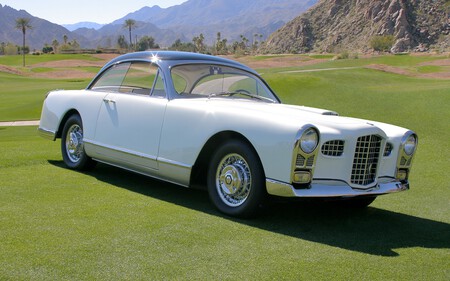
Initially, Albert Camus intended to return to Paris by train after spending Christmas in Lourmarin. He had even purchased a ticket, which he allegedly held onto until his unexpected demise. However, under the persuasive influence of his friend and editor, Michel Gallimard, Camus opted for a ride instead in Gallimard’s luxurious Facel Vega. The change in plans would prove to be a catastrophic mistake.
The Accident
While driving through Burgundy, the Facel Vega FV3B suffered a burst tire. This sudden malfunction caused the car to lurch uncontrollably, going off course before ultimately colliding with a plane tree. The crash was so violent that it resulted in severe damage to the vehicle, ripping the engine from its moorings and twisting the chassis into a heap of metal.
Camus, riding in the front passenger seat, was the most severely affected. After the car’s initial collision, the vehicle bounced off the first tree and struck a second one, leading to his instantaneous death.
The Aftermath and Media Response
As news of the accident spread, it captured immediate attention from the media. French public radio interrupted its programming to announce that this tragic event had stolen away one of France’s literary titans. Federico García-Requena, a journalist covering the incident, aptly described Camus’s death as “unforeseen and absurd,” encapsulating the irony that enveloped his demise.
Understanding the Absurd
To grasp the nuance of why Camus’s death is labeled as absurd, one must delve into his philosophical explorations. In works like The Myth of Sisyphus, Camus scrutinizes the inherent absurdity of human existence and the relentless search for meaning in an indifferent universe. He posits that rather than resulting in resignation, accepting the absurd can lead to a kind of rebellion that confers value to life.
Despite his early departure from life, Camus had already left an indelible mark on literature and philosophy. Just two months before the accident, he celebrated his 46th birthday and was recognized as the second youngest Nobel Laureate in Literature. His thoughts on the absurd made his untimely demise all the more ironic.
Born to Embrace the Absurd
The irony of Camus’s fatal accident lies in the very essence of his teachings. He advocated a life lived in confrontation with the absurd condition of humanity. The universe is indifferent, devoid of inherent meaning, and his writings urged individuals to create their own sense of purpose. Yet, he found himself fated to die in what he considered an idiotic manner, in a traffic accident—a circumstance seemingly devoid of meaning itself.
Legacy and Speculation
In the wake of the crash, some conspiracy theories suggested possible KGB involvement, stating that his criticisms of the Soviet regime may have led to foul play. However, such hypotheses lack substantial evidence and remain within the realm of speculation. Most historians agree that the crash was a tragic accident—a chaotic series of events culminating in an unexpected end.
Conclusion
Albert Camus’s life and death illustrate a profound paradox. He delved into life’s absurdity, only to encounter a finality that echoed his own philosophical inquiries. The man who encouraged us to confront life’s meaninglessness abruptly left this world, emphasizing the very lessons he imparted through his work. As we reflect upon his untimely departure, we are reminded of the fragile line separating life from death and the absurdity that defines our existence.