
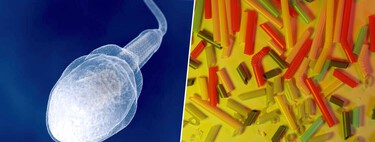
Transforming Infertility Solutions: AI’s Role in Overcoming Azoospermia
For couples facing severe male infertility diagnoses, such as azoospermia, the journey can be overwhelmingly discouraging. Traditional treatments often involve costly and invasive procedures, offering little hope of achieving the dream of parenthood. However, recent advancements in artificial intelligence have paved a new path, introducing revolutionary solutions to this deeply personal struggle.
The Groundbreaking Milestone
Columbia University has made history by confirming the first clinical pregnancy via artificial intelligence technology aimed at recovering sperm from semen samples that initially showed none. This significant breakthrough serves as a beacon of hope for couples grappling with severe male infertility.
This innovative approach was utilized in an extraordinary case involving a couple with a traumatic 19-year history of infertility, marked by numerous unsuccessful attempts to conceive. After undergoing 19 egg retrieval cycles and two testicular removal surgeries without success, they finally experienced a breakthrough thanks to AI.
Sperm Tracking and Recovery (STAR) Technology
The technology at the forefront of this success is known as STAR, which stands for Sperm Tracking and Recovery. STAR integrates three key components:
- A microfluidic chip: A small, disposable device that facilitates the flow of the semen sample.
- High-speed imaging: A system capable of capturing 300 frames per second as the sample moves through the device.
- A deep learning AI: This sophisticated algorithm analyzes images in real-time to identify viable sperm for fertilization.
STAR can process samples at an impressive rate of 400 microliters per hour, analyzing around one million images in that time. The AI employs the You Only Look Once architecture, ensuring it scans each frame meticulously to identify potential sperm candidates.
Precision Through Repetition
The system guarantees accuracy by confirming sightings across multiple frames. This strategy ensures that identified sperm candidates are genuine, enhancing the likelihood of successful fertilization.
A Success Story
The couple involved in the study faced significant challenges. The man, 39, had previously undergone multiple manual searches and failed surgical attempts to retrieve sperm, while the 37-year-old woman struggled with a severely low ovarian reserve. Initial efforts by embryologists yielded no viable sperm, prompting the switch to the STAR system.
In an astonishing two hours, STAR analyzed 2.5 million images and successfully identified seven sperm, two of which were motile. These previously overlooked sperm were injected into two eggs, leading to fertilization and embryo development. Remarkably, thirteen days later, the couple received the joyous news of their first positive pregnancy test.
A New Era of Hope
This AI-driven identification technique marks a transformative development for couples facing infertility due to sperm retrieval challenges. Currently in the research phase in the United States, the promise of STAR technology may eventually extend to Europe, offering hope to countless couples striving for biological parenthood.
In a world where infertility can feel insurmountable, scientific innovations such as STAR bring renewed optimism and possibilities, making the dream of parenthood more accessible for those in need.