

A few years ago, Twitter decided that giving gold stars to favorite tweets wasn’t enough. That love had to manifest in the form of little hearts. This shift prompted a reflection on the heart icon itself: ♥ How did a piece of meat, designed primarily as a blood-pumping organ, evolve into this neat symbol? Moreover, when did we transition it into a representation of love?
The Shape of the Heart
The story of the heart’s symbolism is reminiscent of how Pandora’s Box became a misinterpreted icon due to a translation error by Erasmus of Rotterdam. Similarly, our conception of the heart has undergone transformations. Dutch neurosurgeon Pierre Vinken examined the history of this symbol in his study The Shape of the Heart. He revealed how our ancestors pondered the organ’s purpose millennia before we understood it scientifically.
The heart symbol’s history stretches back to French caves where anthropologist Genevieve von Petzinger identified a recurring heart-shaped figure. These early symbols marked the transition from concrete representations, like bison in rock art, to abstract ideas—perhaps a proto-alphabet of sorts.
The Center of Man
The Egyptians believed the heart held intellect and emotions, choosing to leave it in mummies instead of other organs, essential for a soul’s journey in the afterlife. The Greeks shared similar views, but Aristotle touted the heart as the center of reason, dismissing the brain’s role. For him, the heart housed movement and sensations.
Centuries later, Galen contested Aristotle’s views, describing the heart’s structure as symmetrical, resembling a pine cone—the foundation for the romantic heart shape we know today.
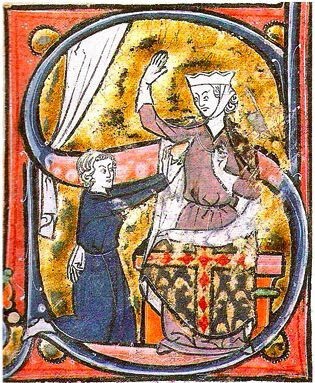
Because it was a pear! Well, no.
The first known romantic portrayal of the heart appears in the 13th-century French romance Roman de la Poire. Here, a man offers his heart to his beloved. Although not yet resembling the familiar shape, this depiction marked the beginning of the heart as a love symbol.
Art and Symbolism
This heart motif then permeated various romances, symbolizing love throughout the ages. The illuminated manuscripts of the 14th century depicted the heart more cleanly—free from anatomical complexity. For instance, Andrea Pisano sculpted a heart held by Charity on the Baptistery doors in Florence, offering a stylized version of the organ.
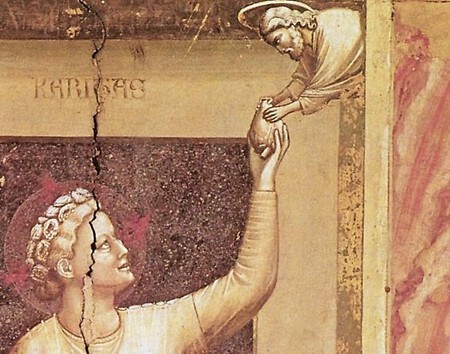
Interestingly, around 1320, miniatures began illustrating the heart with a distinctive slit, altering its orientation. This design popularized during the late 14th century coincided with the introduction of playing cards in Europe, where the heart symbol became integrated into various suits.
The Modern Heart
By the second half of the 15th century, the heart symbol as we know it featuring the slitted shape emerged in card decks. This artistic evolution symbolically bridged literature and visual culture, leading us to today’s ubiquitous use of the heart icon—from emojis to social media reactions.
Thus, the journey of the heart from a meat organ to a symbol of love demonstrates humanity’s unique ability to transform misunderstandings into lasting icons.
Image | Unsplash