

The Strategic Shift: Ukraine’s Toloka Submarine Drones
As Europe buzzes with rumors and discussions surrounding potential military shifts, Ukraine continues to face relentless Russian attacks . Over the weekend, one of the most significant air attacks since the invasion began struck Ukrainian cities, and the response from Kyiv was unprecedented. The focus has shifted to enhancing naval capabilities, an area that Ukraine has actively begun to develop.
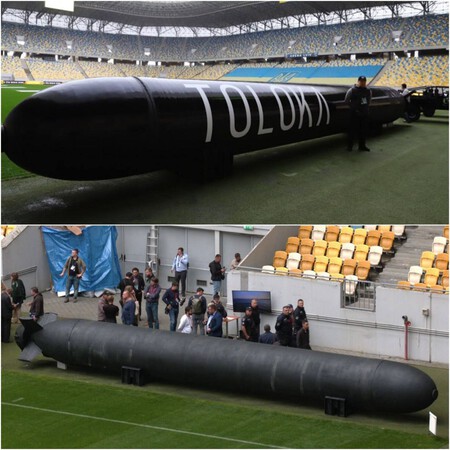
At the recent Defense Tech Valley 2025 event in Leopolis, Ukraine unveiled its latest weapon in this ongoing conflict—the Toloka submarine drones . This revolutionary class of underwater vehicles marks a significant technological advancement in naval combat, specifically targeted at the Black Sea . The Toloka family comprises three models—each with distinct features tailored for various mission profiles.
Introducing the Toloka Models
The TLK-200 is a compact underwater drone, measuring just 20 centimeters in diameter. It operates via electric propulsion and boasts an impressive range of 100 kilometers. With a payload capacity of up to 15 kilos, this drone is designed for exploration and quick strikes, making it a versatile tool in naval warfare.
Next in the line is the TLK-400 , representing a substantial mid-range advancement. This hybrid drone can cover distances of up to 1,200 kilometers while carrying a payload of 500 kilos. It has the endurance to perform for two months and is ideal for mine-laying and reconnaissance missions, along with direct attacks on enemy infrastructure.
Finally, the crowning piece in this arsenal is the TLK-1000 . Measuring 12 meters in length and 1.5 meters in diameter, this powerhouse can carry five tons of explosives across distances exceeding 2,000 kilometers . Equipped with advanced navigation systems—including optical, thermal, acoustic, and inertial networks—this drone’s primary function is to incapacitate large, fixed targets, thereby redefining underwater combat scenarios.
The Strategic Threat to Crimea
This new class of drones fits into Ukraine’s broader strategic objective to target critical Russian infrastructure in the Black Sea. A prime target is the strategically vital Kerch Bridge , which has been subjected to multiple drone attacks in the past. The TLK-1000 could potentially carry a payload five times greater than previous strike attempts, making it a formidable tactical asset .
Success in taking down the Kerch Bridge would not only disrupt logistics between Russia and the Crimean Peninsula but also deliver a significant symbolic victory against Moscow. In addition to the bridge, other targets range from radar-equipped maritime platforms to ports, which are currently protected by existing physical barriers. The ability to deploy Toloka drones will make these fortified positions susceptible to underwater offensive actions .
International Comparison: Ukraine vs. Major Powers
The introduction of the Toloka drones highlights the doctrinal differences between Ukraine and traditional naval powers. While the United States , United Kingdom , and China have focused on developing large, sophisticated unmanned submarines like the Orca XLUUV, Ukraine opts for a different strategy. The economical design of the Toloka drones emphasizes rapid production and offensive capabilities , presenting an innovative approach to asymmetric naval warfare.
Similar to how FPV drones changed warfare dynamics on land, the Toloka submarines are poised to alter the battlefield beneath the waves. They offer a cost-effective means of disrupting traditional naval operations, allowing Ukraine to reframe the debate over naval supremacy.
Strategic Implications and Reactions
The announcement of the Toloka drones significantly pressures Moscow to bolster its underwater defenses with advanced sensors and anti-submarine measures, leading to increased operational costs. The destruction of the Kerch Bridge would send shockwaves through Russian logistics, akin to the psychological impact of the sinking of the Moskva in 2022. This would demonstrate that Ukrainian ingenuity can outsmart conventional Russian defenses.
The reach of the Toloka drones extends the threat to distant Russian ports and infrastructure, compelling Moscow to reconsider its naval strategy and its perception of security in the Black Sea. This shift heralds a new chapter in naval warfare and may prompt a larger reevaluation of military tactics and doctrines for NATO and its allies.

Conclusion
Ukraine’s strategic use of the Toloka submarine drones showcases a significant evolution in naval warfare. By leveraging innovative technology, Ukraine is attempting to shift the balance of power in the Black Sea, presenting a formidable challenge to Russian dominance. As the landscape of military conflict continues to change, these advancements will likely influence not only Ukraine’s defensive capabilities but also the broader strategic approaches employed by nations around the globe. The future of naval engagements may be defined by this new class of technology, marking a significant turning point in modern warfare.